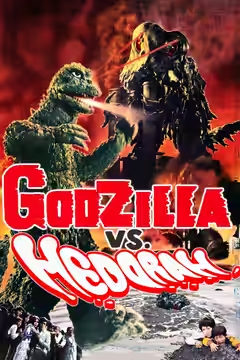
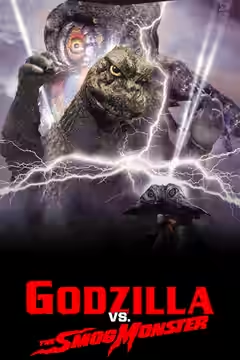
Yoshimitsu Banno’s one Godzilla film is the strangest in the series: a grubby, sincere, often frightening picture about pollution, stitched to a children’s monster fight with cartoon interludes. Much of it does not work. None of it is dull.
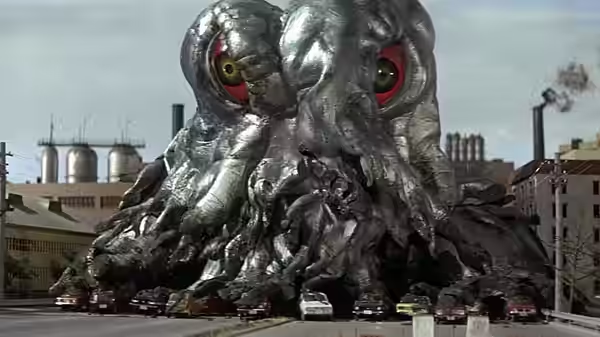
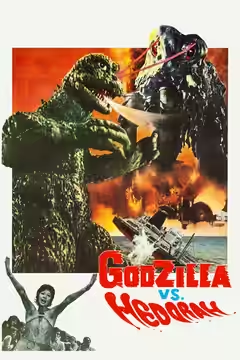
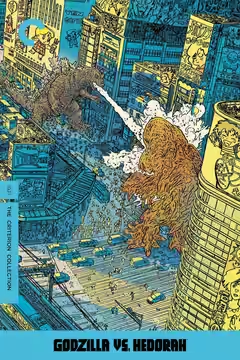
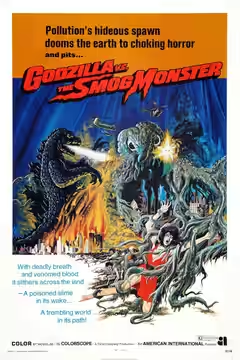
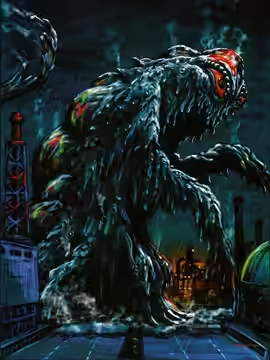
Eleven films in, Toho’s monster had become a mascot, and Godzilla vs. Hedorah is the first film to seem embarrassed about it. Yoshimitsu Banno, directing his only entry in the series from a script he wrote with Takeshi Kimura, takes a real subject, the filth that Japanese industry was then pumping into its bays and skies, and builds a monster out of it. Hedorah is a heap of living sludge that drinks smoke from factory chimneys and grows. That is a good idea, and Banno is serious about it. He is also making a film for children, with a cheerful theme song and animated interludes, and the two halves of his intention sit side by side for 85 minutes without ever quite agreeing.
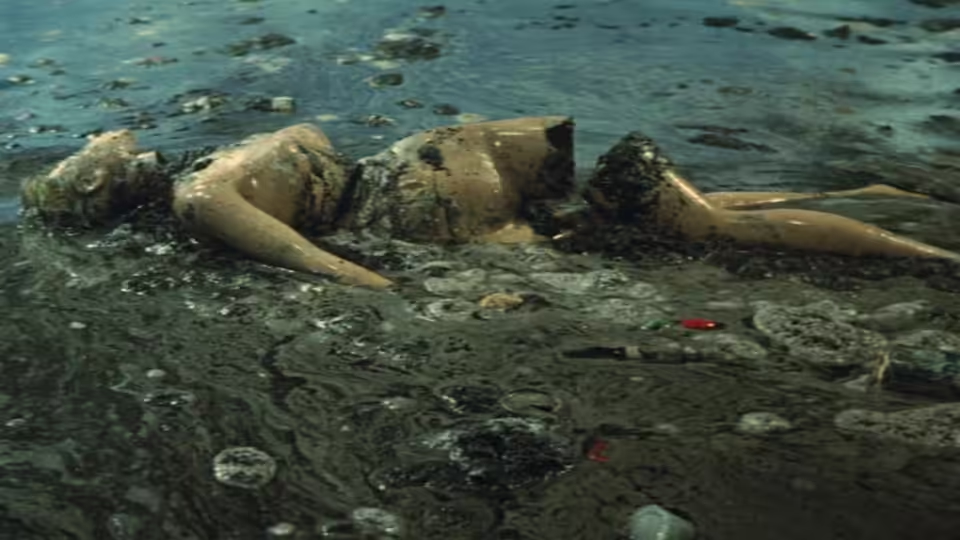
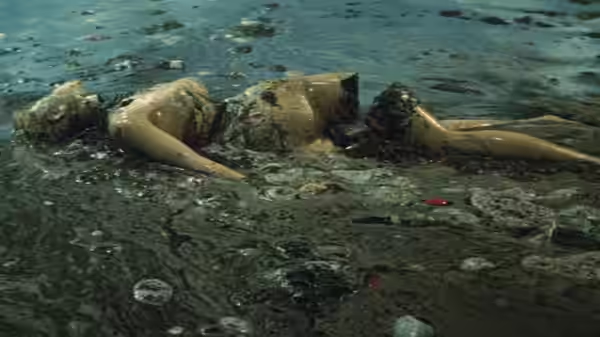
The first half hour is the film’s best and the reason to see it. Yôichi Manoda shoots the polluted bay as it must have looked: brown water, a dead fish floating past a dead crab, a kitten on the beach coated to the eyes in oil. Dr Yano (Akira Yamanouchi) goes diving and comes up with half his face burned off, and his son Ken (Hiroyuki Kawase) is scalded on the hand by something that is barely there. Later a man falls into a pool of the stuff and comes out as bone. We were horrified, and by more than we expected from a film with a cartoon tadpole in its opening credits. The horror works because Banno keeps it small and physical, a hand, a face, a drainpipe, before he lets the thing stand up.
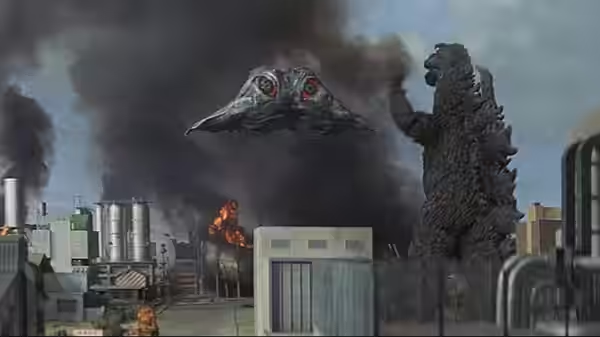
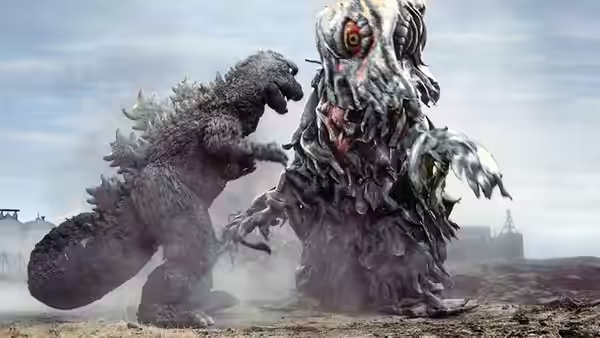
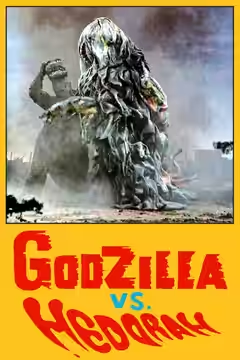
When it does stand up, Nobuyuki Yasumaru’s costume work gives it red eyes set in a slumped, dripping body that never holds a shape for long, and Yasuyuki Inoue’s designs put it against smokestacks and refinery tanks that look like the sets they are. That is not a complaint. The miniature Japan of these films has always been half toy and half nightmare, and here the nightmare gets more of the time. Riichirō Manabe’s score is a different matter. It is jaunty brass and a wobbling, comic motif for Godzilla that undercuts nearly every entrance he makes, and it is used often. We came to dread it.
The young people belong to a different film. Miki Fujiyama (Keiko Mari) sings in a nightclub while the dancers’ faces are replaced, for a few frames, by fish heads, and Yukio Keuchi (Toshio Shiba) proposes a party on a mountainside to see the end of the world in. Banno throws in split screens, negative images, a cartoon Hedorah eating a cartoon factory, and a montage of real belching chimneys cut straight into the story. Some of this is arresting and some of it is a director trying every idea he has been saving up. We laughed at the fish heads, and then realised the film meant them.
Yoshitami Kuroiwa’s editing does not help the middle stretch. Whole minutes pass with the Yano family watching television reports of what Hedorah has done, and we watch them watching. The film also has a habit of stopping for a lecture: Yano explains the creature’s chemistry to a room, an announcer explains it again, and Ken explains it to Godzilla. By the halfway point we were bored, which felt like an achievement given what had been on screen twenty minutes earlier.
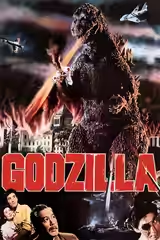
Against the series’ own standards, this is closer in spirit to Ishirō Honda’s 1954 original than anything made in the fifteen years between. That film was about the bomb and did not shout it; this one is about smog and shouts little else. The monster fights themselves are slow, two suits pushing at each other in mud, and Godzilla’s role as protector of children is taken as read. There is a moment in the final battle we will not describe, except to say that no one who had seen the previous ten films could have predicted it, and Banno plays it entirely straight.
It is worth an evening if you already like these films and want the odd one out, and worth a look even if you do not, for the first thirty minutes and the kitten. Watch it late, at home, with the sound a little lower than usual, which will spare you most of the trumpet.