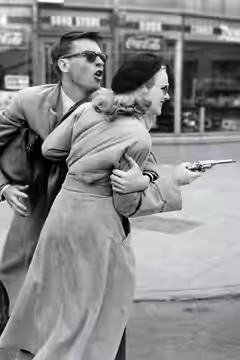
Joseph H. Lewis’s gripping crime romance earns its tension through Peggy Cummins, John Dall and a camera placed uncomfortably close. The writing can simplify their dependence, but we recommend it for the performances and the nerve.
Joseph H. Lewis asks us to believe that a fascination with guns can be part of falling in love, and Gun Crazy makes the proposition disturbingly plausible. It is a tense, persuasive crime romance, recommended with a small reservation about how fully the lovers are explained. Lewis understands that their attraction has to hold our attention before their criminal adventures can matter. The film’s force comes from how closely it watches them together.
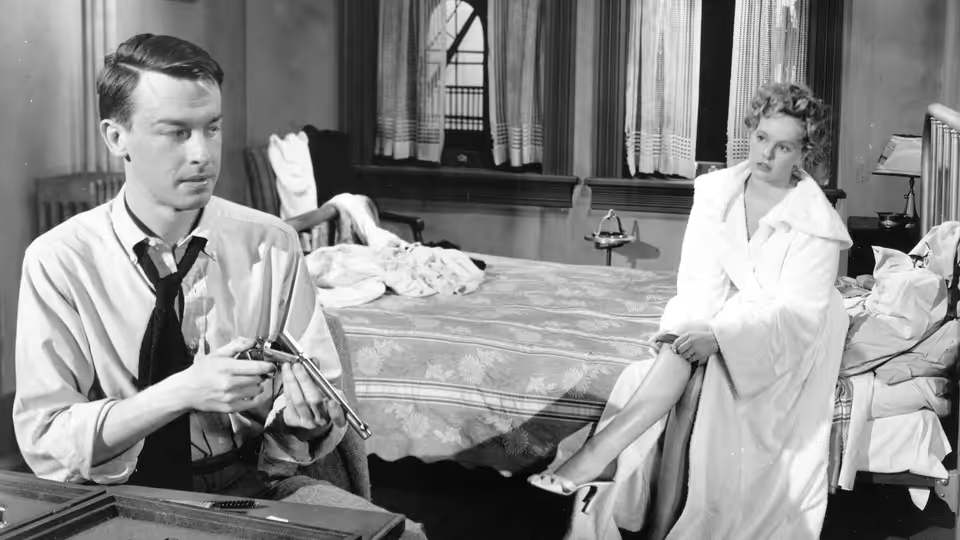
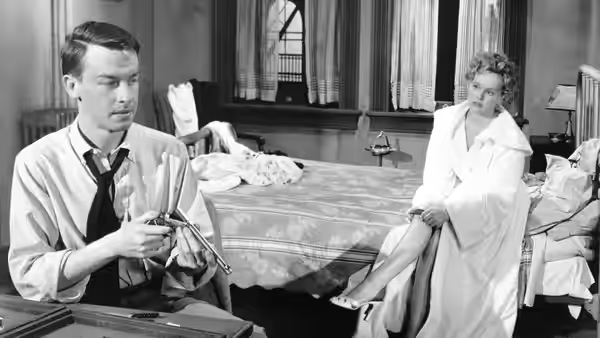
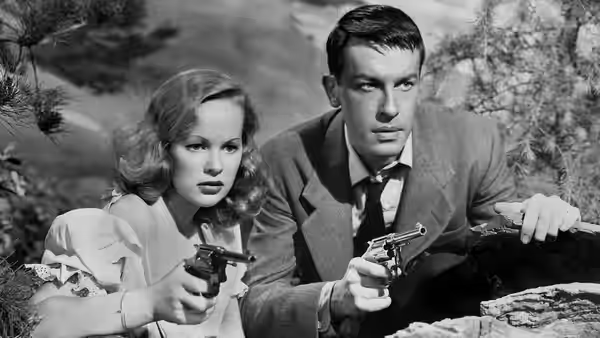
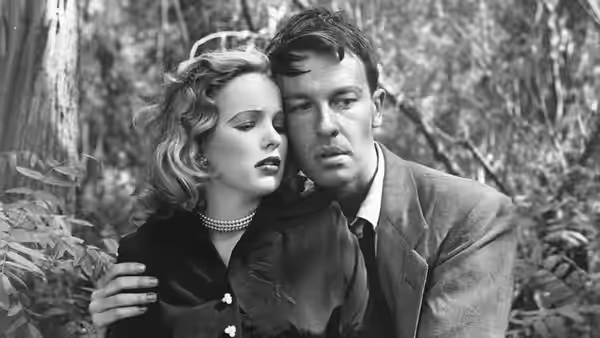
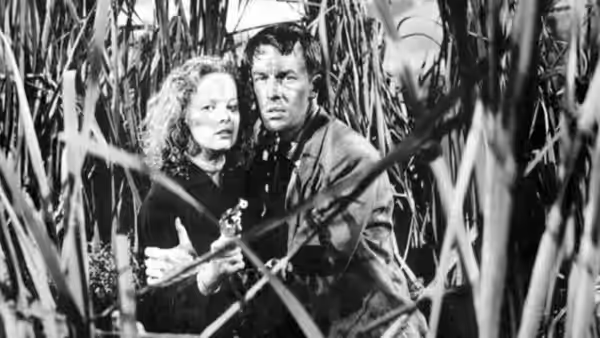
Peggy Cummins plays Annie Laurie Starr with enough volatility to make her appeal worrying from the start. We can see the manipulation, but it takes effort to look away from the woman doing it. John Dall’s Bart Tare gives that performance someone worth working upon: his attachment makes the pairing more affecting than a simple contest between a schemer and a fool. There is vulnerability in their dependence, and both actors let it show without making the relationship seem healthy.
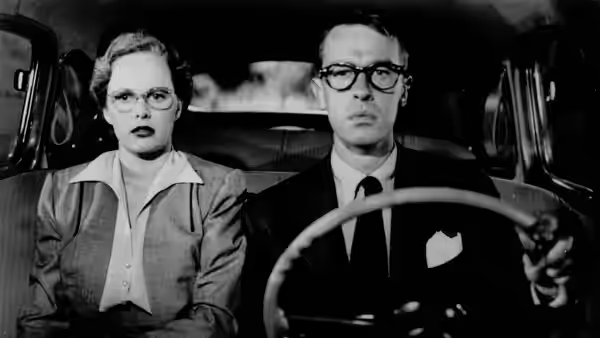
The robbery filmed in a continuous take from inside the getaway car is the clearest example of Lewis’s judgement. Russell Harlan’s camera keeps us in that confined position, making the decision not to cut increasingly hard to ignore. We felt trapped in the car, because the shot would not give us the relief of looking elsewhere. The length of the take makes the waiting itself tense. It is an audacious piece of camerawork that never feels detached from the couple’s predicament.
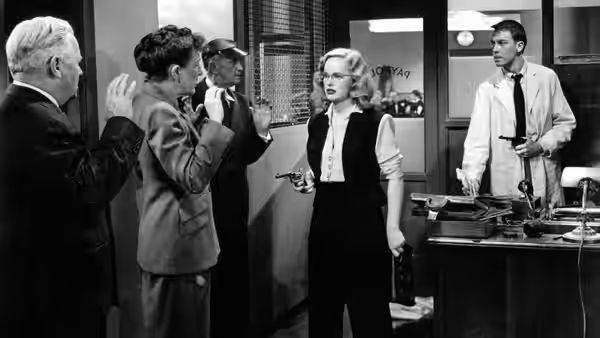
Harry Gerstad’s editing gives the chase passages a speed that keeps the danger immediate. The contrast with the unbroken robbery shot matters: Lewis does not use the same method for every kind of suspense. Gordon Wiles’s production design is less conspicuous, and we remember the people within the spaces more clearly than the spaces themselves. That seems right for a film so preoccupied with its lovers. Victor Young’s music contributes to the excitement, although the performances hardly need encouragement.
The screenplay credited to MacKinlay Kantor, Millard Kaufman and Dalton Trumbo is less sure when it comes to explaining the attachment. Laurie’s power over Bart can sometimes stand in for a fuller account of what keeps him there. Dall makes the dependence credible, but there are stretches where we would welcome a little more resistance from the writing. It is the film’s main limitation, and it leaves the actors supplying some of the emotional complexity that the plot takes for granted.
Among films about lovers on the run, this one gives unusual weight to the couple’s need for one another. The gunplay does not make the romance incidental. Watching Cummins and Dall, we understand why a sensible warning would have trouble getting a hearing, even if we cannot accept every turn of their behaviour. Their attraction is worrying enough to sustain the tension without constant action, and Lewis gives the performances room to do that work.
At 87 minutes, it asks for little patience and rewards close attention. Allow for the thin patches in the writing; the two leads keep finding feeling where a less careful film would settle for excitement. See it for Cummins, and keep an eye on what Dall lets her do to him.