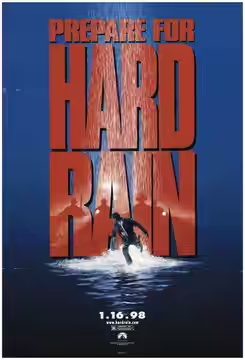
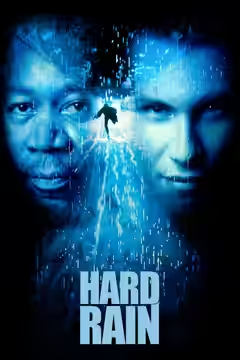
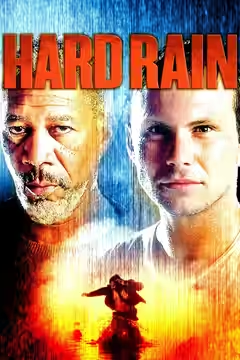
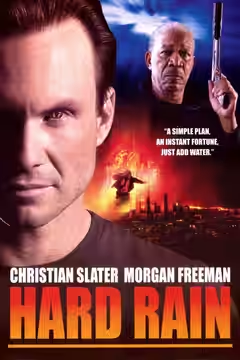
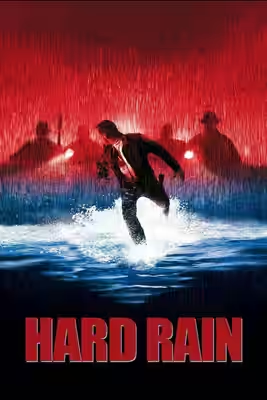
Hard Rain is a serviceable crime thriller with an inventive use for a flooded school. Morgan Freeman helps, but thin characters and occasionally muddy action keep the pleasure modest.
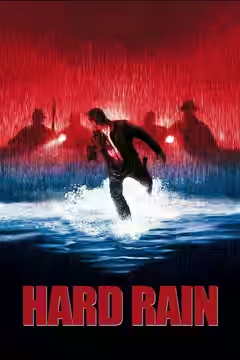
Mikael Salomon’s Hard Rain is entertaining enough for a forgiving evening, with a premise that produces better action than characters. An armoured-car courier caught in a flood-struck town gives the film two immediate problems to keep moving: a robbery and rising water. At 97 minutes, it gets through most of its business before the thin writing becomes exhausting. We would have liked rather more suspense between the bursts of activity.
Graham Yost’s screenplay relies heavily on the assumption that bad weather will make familiar crime-thriller behaviour feel fresh. The setting helps, but the people remain predictable enough that their conversations seldom create much tension. Christian Slater is a particular difficulty: he gives Tom energy without quite convincing us that he can handle the physical demands. We need to worry about the courier’s decisions, and too often we are simply waiting for the next obstacle.
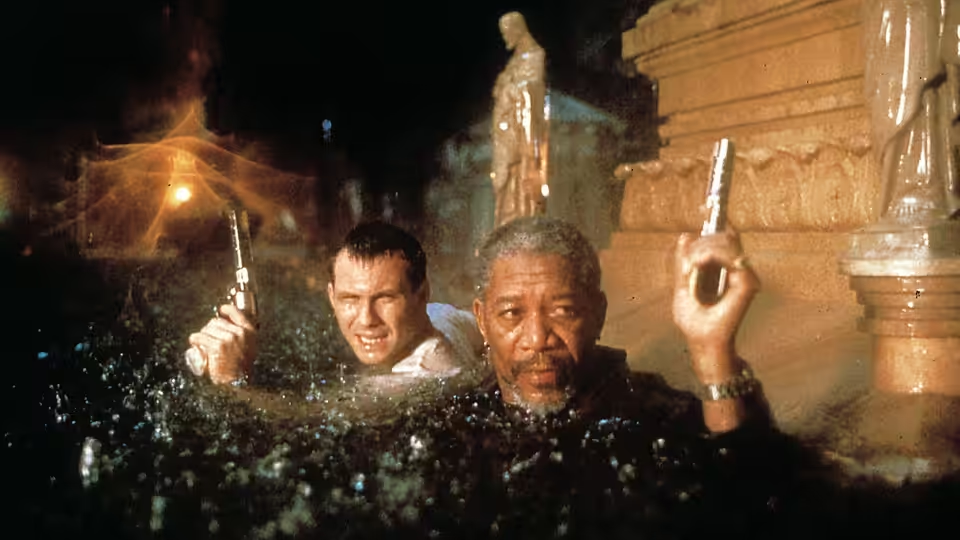
Morgan Freeman does more with the material. His Jim has enough intelligence in the performance to suggest someone thinking through a problem, even when the writing offers little support. Randy Quaid’s Sheriff Mike Collins adds a welcome willingness to treat the proceedings with some humour. Minnie Driver gets too little to develop as Karen; the thinness of the part is more noticeable because we keep expecting her to be given something useful to do.
The school jet-ski chase is the clearest reason to give the film a chance. We were delighted by it: putting that pursuit inside a flooded school gives the action a specific problem to solve, and the solution is cheerfully impractical. J. Michael Riva’s production design turns the building into a convincing place for this ridiculous pursuit. Water changes where people can move and what can pursue them. The chase exploits those restrictions rather than simply putting another exchange of gunfire somewhere wet.
The flood effects are convincing enough to make the water feel like a persistent physical hazard. Peter Menzies has the difficult job of making the action legible within all that murk, and the cinematography does not always manage it. There are stretches when we can register the danger without getting a firm sense of where everyone is. That matters in a film whose main attraction is watching people negotiate an increasingly difficult place. The impressive work with the flood deserves clearer staging around it.
Editors Paul Hirsch, Amnon David and Gillian L. Hutshing keep events moving briskly, though speed cannot quite disguise how little substance connects the set-pieces. The film rarely hangs about long enough to become a chore. Christopher Young’s score supplies urgency, but it cannot make the confrontations carry the same threat as the water. Individual action passages work well enough; the suspense tends to subside whenever people have to explain themselves.
The disaster-thriller side gives it a reason to exist beyond the familiar robbery plot. Anyone looking for a tightly worked heist will have to forgive a good deal of flimsy character writing. The cast and the school chase make that easier than it ought to be. Give it an evening if elaborate physical predicaments matter more to the household than plausible human behaviour.