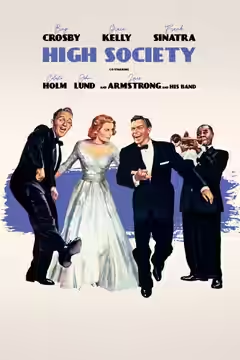
Cole Porter’s songs and a companionable cast make High Society an enjoyable musical, though its comedy needs more urgency. The singing earns a recommendation; the romantic complications are less persuasive.
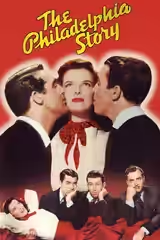
High Society is a good musical with a comedy that could stand to move faster. Charles Walters gives the performers room to enjoy Cole Porter’s songs, and their ease often carries us through the less nimble conversation. As a musical remake of The Philadelphia Story, it invites a comparison that does the dialogue few favours. The romantic manoeuvring is agreeable, but the singing gives the evening its purpose.
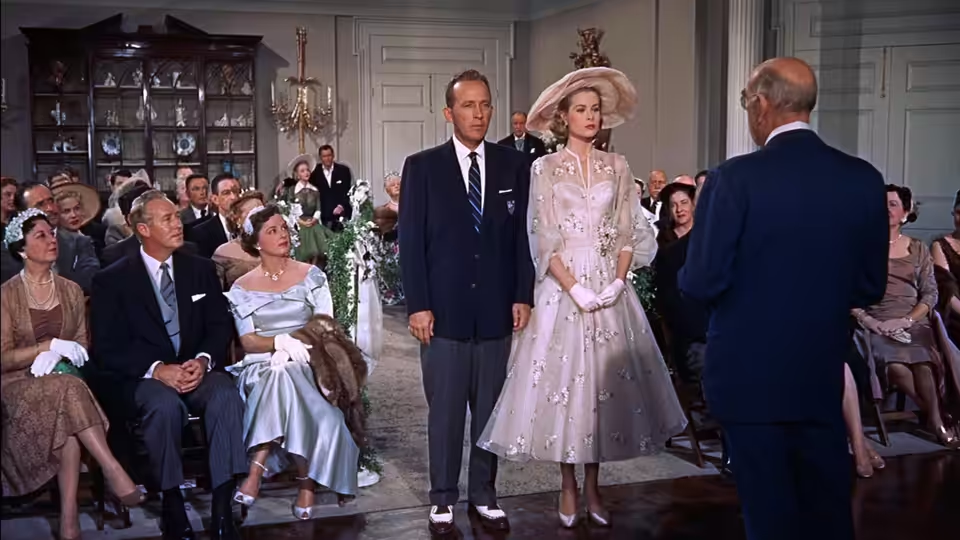
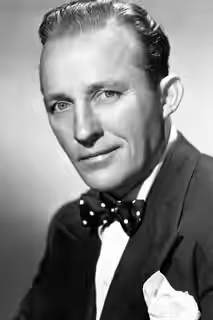
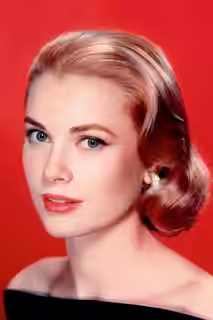
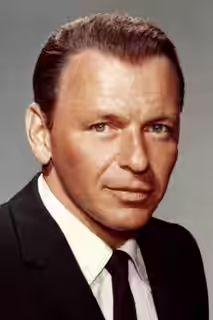
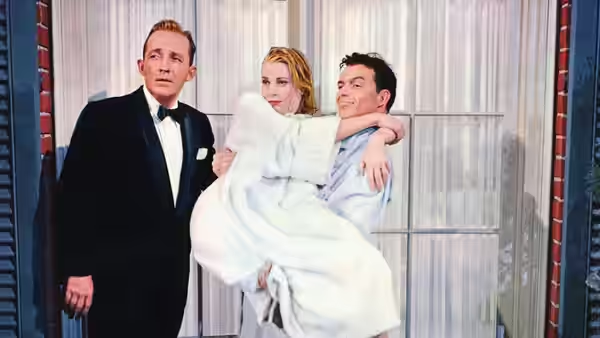
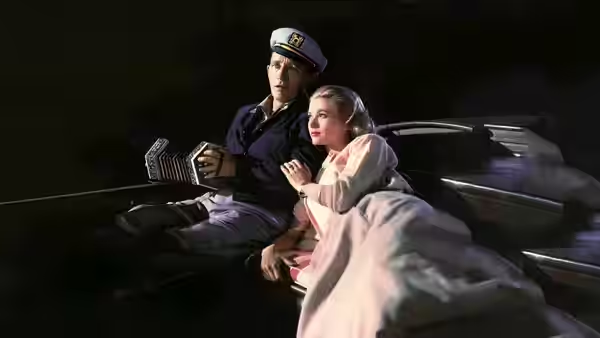
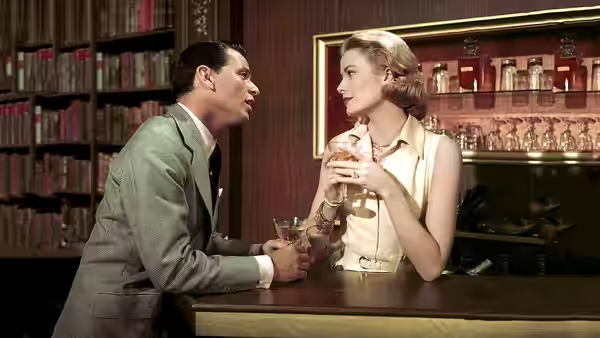
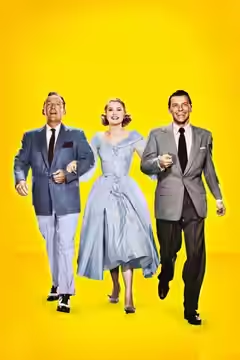
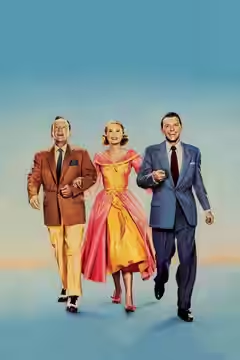
Bing Crosby plays C. K. Dexter-Haven with such settled confidence that anxiety about the romance has little chance to take hold. His relaxed delivery is a considerable musical pleasure, though it sometimes leaves the dramatic scenes short of urgency. Frank Sinatra gives Mike Connor more impatience, and the contrast helps keep the company from becoming uniformly comfortable. Grace Kelly makes Tracy Lord’s composure funny without making her a caricature. She is particularly good at suggesting how much effort goes into looking entirely untroubled.
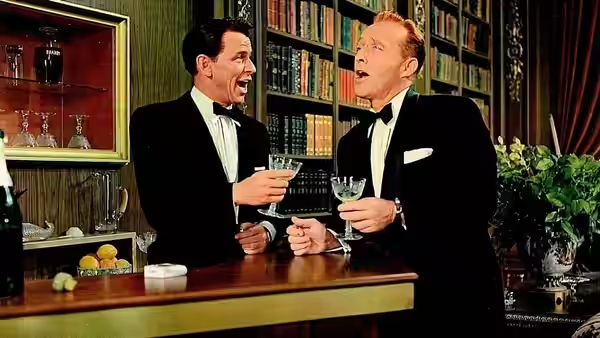
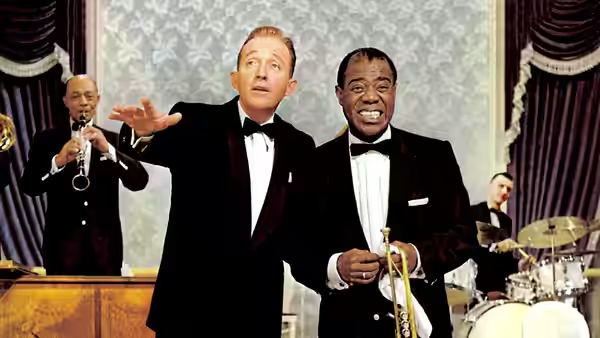
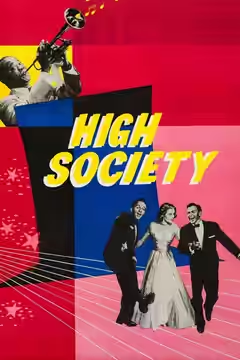
We grinned through the duet between Bing Crosby and Frank Sinatra. The pleasure comes from two distinct voices making room for each other, with neither performer appearing to strain for the laugh or the next phrase. Cole Porter’s music suits that conversational ease; the songs let people sound witty without stopping to congratulate themselves. Louis Armstrong adds a more direct musical exuberance, welcome in a film whose romantic leads can seem reluctant to disturb their own good grooming.
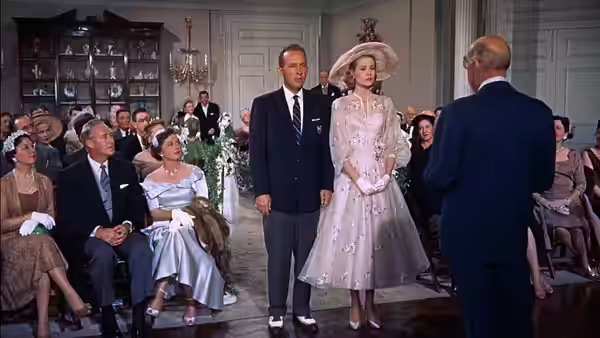
Paul Vogel’s photography is most persuasive when it simply lets us look at the performers together. The flattering light suits this well-dressed comedy, although the images rarely make the conversations feel less static. Helen Rose’s costumes give Grace Kelly an immaculate finish that helps explain Tracy Lord before she says much. There is a useful joke in that degree of polish: even the prospect of romantic disorder seems to require the right clothes.
Ralph E. Winters allows the musical performances to breathe, a sensible choice when the attraction is the phrasing as much as the tune. The difficulty is that the stretches between numbers can feel equally unhurried. Charles Walters does not always find enough comic movement within a scene to justify that patience. At 112 minutes, the film is not punishingly long, but we notice how often we are waiting for someone to start singing again.
John Patrick’s screenplay fares better when it lets the characters expose their own self-importance. Celeste Holm, as Liz Imbrie, brings a welcome sharpness, suggesting how much firmer the comedy might have been with less deference to its central trio. Her comparative lack of fuss is refreshing amid all that practised charm. The screwball exchanges need more friction, and too often the cast seem comfortable when they ought to be making trouble for one another.
A taste for leisurely musical comedy helps here. Anyone wanting quick reversals and accumulating embarrassment may tire of its politeness, regardless of how well everyone sings. There is enough pleasure in hearing these voices share a film to make the slower passages tolerable. Choose it for an evening when the songs are allowed to matter more than who ends up with whom.