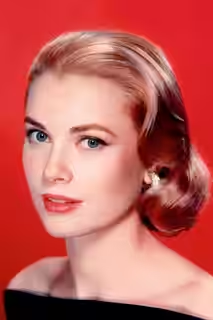
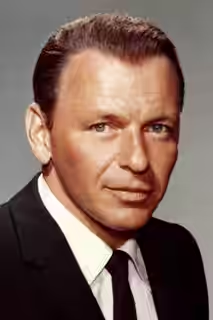
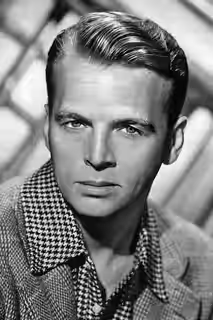
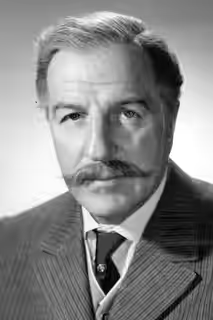
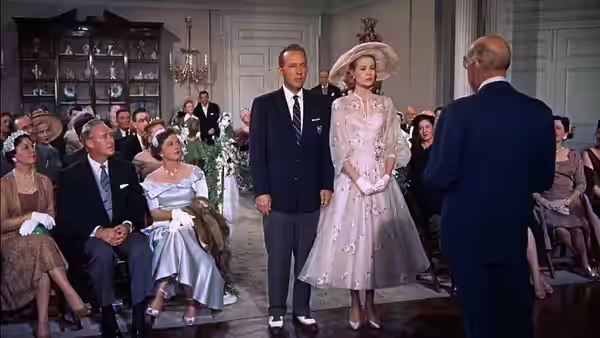
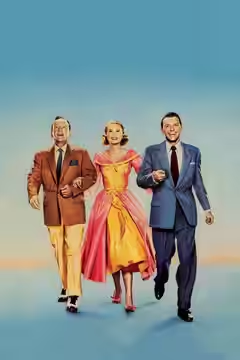
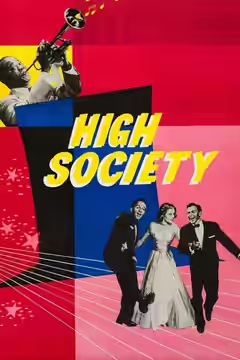
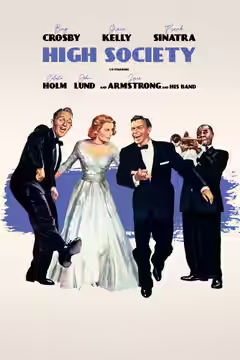
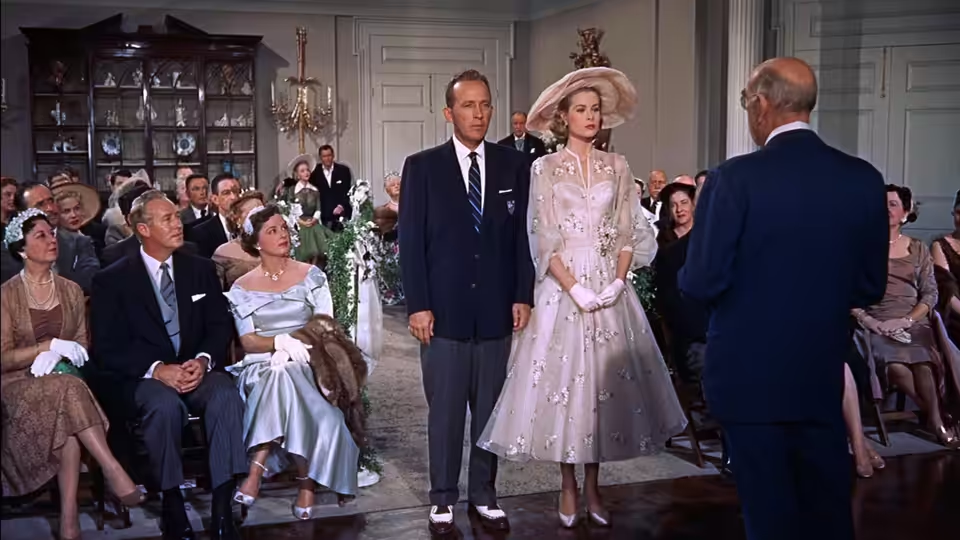
Tracy Lord (Grace Kelly) stands beside George Kittredge (John Lund) before seated wedding guests
Film review

High Society

1956 · Directed by Charles Walters · 1h 52m

In a sentenceBing Crosby and Frank Sinatra make a wedding look like an interruption to the singing

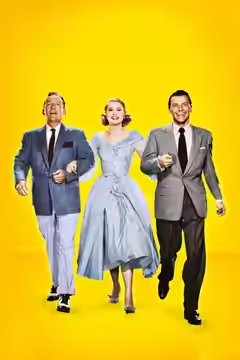
In Newport, Rhode Island, Tracy Lord (Grace Kelly) prepares to marry George Kittredge (John Lund). Her former husband, C. K. Dexter-Haven (Bing Crosby), lives nearby and wants her back. Reporter Mike Connor (Frank Sinatra) and photographer Liz Imbrie (Celeste Holm) arrive to cover the wedding for a society magazine, bringing unwelcome scrutiny into the Lord household. Tracy Lord wants to control the occasion, but an ex-husband, a fiancé and two visiting journalists leave her little privacy. Music supplies a further distraction, with Louis Armstrong appearing as himself.

Plays from YouTube when you press play; nothing loads from them until then.

Fi1m review

Cole Porter’s songs and a companionable cast make High Society an enjoyable musical, though its comedy needs more urgency. The singing earns a recommendation; the romantic complications are less persuasive.

High Society is a good musical with a comedy that could stand to move faster. Charles Walters gives the performers room to enjoy Cole Porter’s songs, and their ease often carries us through the less nimble conversation. As a musical remake of The Philadelphia Story, it invites a comparison that does the dialogue few favours. The romantic manoeuvring is agreeable, but the singing gives the evening its purpose.

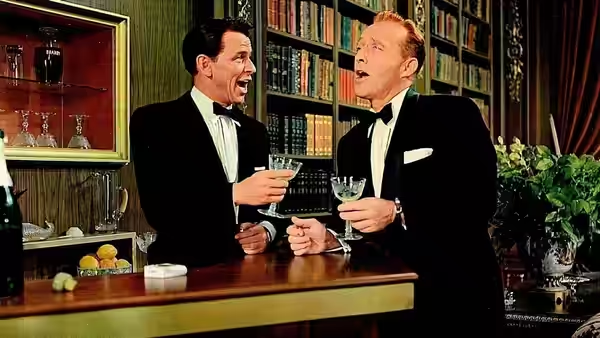
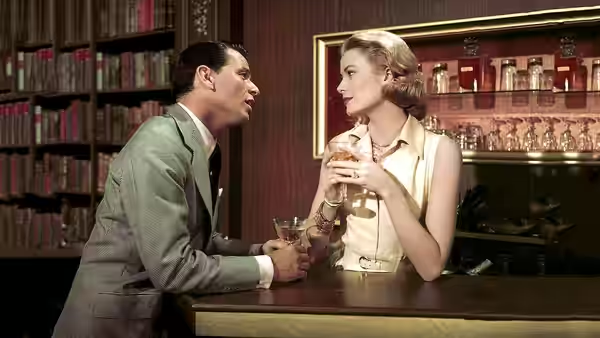
Bing Crosby plays C. K. Dexter-Haven with such settled confidence that anxiety about the romance has little chance to take hold. His relaxed delivery is a considerable musical pleasure, though it sometimes leaves the dramatic scenes short of urgency. Frank Sinatra gives Mike Connor more impatience, and the contrast helps keep the company from becoming uniformly comfortable. Grace Kelly makes Tracy Lord’s composure funny without making her a caricature. She is particularly good at suggesting how much effort goes into looking entirely untroubled.

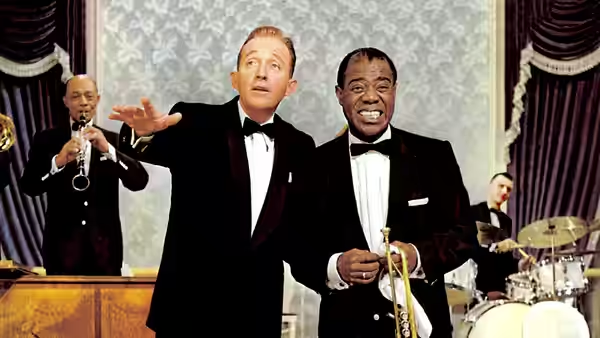
We grinned through the duet between Bing Crosby and Frank Sinatra. The pleasure comes from two distinct voices making room for each other, with neither performer appearing to strain for the laugh or the next phrase. Cole Porter’s music suits that conversational ease; the songs let people sound witty without stopping to congratulate themselves. Louis Armstrong adds a more direct musical exuberance, welcome in a film whose romantic leads can seem reluctant to disturb their own good grooming.

Paul Vogel’s photography is most persuasive when it simply lets us look at the performers together. The flattering light suits this well-dressed comedy, although the images rarely make the conversations feel less static. Helen Rose’s costumes give Grace Kelly an immaculate finish that helps explain Tracy Lord before she says much. There is a useful joke in that degree of polish: even the prospect of romantic disorder seems to require the right clothes.

Ralph E. Winters allows the musical performances to breathe, a sensible choice when the attraction is the phrasing as much as the tune. The difficulty is that the stretches between numbers can feel equally unhurried. Charles Walters does not always find enough comic movement within a scene to justify that patience. At 112 minutes, the film is not punishingly long, but we notice how often we are waiting for someone to start singing again.

John Patrick’s screenplay fares better when it lets the characters expose their own self-importance. Celeste Holm, as Liz Imbrie, brings a welcome sharpness, suggesting how much firmer the comedy might have been with less deference to its central trio. Her comparative lack of fuss is refreshing amid all that practised charm. The screwball exchanges need more friction, and too often the cast seem comfortable when they ought to be making trouble for one another.

A taste for leisurely musical comedy helps here. Anyone wanting quick reversals and accumulating embarrassment may tire of its politeness, regardless of how well everyone sings. There is enough pleasure in hearing these voices share a film to make the slower passages tolerable. Choose it for an evening when the songs are allowed to matter more than who ends up with whom.
Critical consensus AI synthesised

71
Positive
4
Mixed
1
Negative
1

Most critics respond warmly to High Society, with praise clustering around Cole Porter’s songs and the pleasure of watching its performers together. The score is the clearest point of agreement, earning approval even from the negative review. The favourable notices also find charm in the romance and confidence in the musical performances, particularly Crosby’s singing and his duet with Sinatra. Kelly’s lead performance and the cast’s chemistry draw further praise.

The disagreement centres on how well the cast and comedy serve the adaptation, and the spread is wide. Empire considers it a successful musical but a weaker screwball comedy than its source, suggesting that the songs do more of the work. Time Out takes a markedly harsher view, finding Crosby and Sinatra miscast and judging the score the remake’s only improvement on the original.

Radio Times
★★★★★ · Calum Baker
100

The review finds the film an elegant romantic delight with charm to spare. It particularly praises the famous Cole Porter song score.

Read the full review →
Variety
31 December 1955 · Variety Staff
75*

Variety finds the film a pleasant, consistently entertaining musical romp. It praises the Cole Porter score and highlights the performers’ showmanship, especially Crosby’s songs and Kelly’s lead performance.

Read the full review →
Empire
1 January 2000 · Kim Newman
70*

Newman finds the film a terrific musical, though a weaker screwball comedy than its source. He singles out the Cole Porter songs and performances, especially the lively Crosby-Sinatra duet.

Read the full review →
Film Comment
· Sheila O’Malley
64*

The piece considers how the cast measures up in this musical adaptation of The Philadelphia Story. The accessible text gives no verdict or specific praise or complaint.

Read the full review →
Time Out
· SG
30*

The review is negative, arguing that the musical remake improves on the original only through its score. It singles out Crosby and Sinatra as miscast.

Read the full review →
Collider
12 October 2024 · Cathal McGuinness
90*

The critic calls the film an underrated, utterly fantastic Golden Age musical worth watching and celebrating. They especially praise its star-studded cast and the chemistry of its performers.

Read the full review →

Straight answers AI written, from our review

Is High Society worth watching?
High Society is worth watching for its singing and companionable cast, and we score it 74 out of 100. We especially enjoy Bing Crosby and Frank Sinatra making room for each other in their duet, though the leisurely romantic comedy between songs suits a patient evening rather than an appetite for sharp screwball exchanges.
How long is High Society, and what is it rated?
High Society runs 1h 52m. It is a music and comedy film.
Where can I watch High Society in Hungary?
High Society is not on any streaming or rental service in Hungary at the moment. It is available in 23 other countries; change your country at the top of the page to see where. Availability is checked daily.
How does High Society compare to The Philadelphia Story?
High Society is the more song-centred choice, while we recommend The Philadelphia Story for sharper dialogue and considerably more comic friction. The musical remake gives the same romantic complications a leisurely treatment, with Cole Porter’s songs supplying its chief pleasure; the earlier film is the stronger comedy, though its treatment of Tracy Lord is harder to embrace.
What should I watch after High Society?
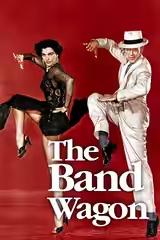
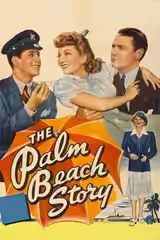
After High Society, try The Philadelphia Story (1940, Fi1m 84): The same romantic complications, with sharper dialogue and considerably more comic friction. Then The Band Wagon (1953, Fi1m 84): Another musical that lets seasoned performers make difficult things look comfortably easy; and The Palm Beach Story (1942, Fi1m 80): For the rich behaving foolishly at the speed this comedy sometimes lacks.

Cast

Awards

Academy Awards, 1957

Nominated
Best Original Musical Score

If you liked this, try…

  1. The Philadelphia Story (1940, Fi1m 84)The same romantic complications, with sharper dialogue and considerably more comic friction.

  2. The Band Wagon (1953, Fi1m 84)Another musical that lets seasoned performers make difficult things look comfortably easy.

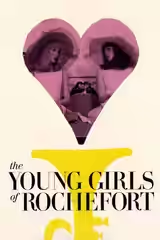
  3. The Young Girls of Rochefort (1967) · not on Fi1m yetBrighter colours and more dancing, with romance moving to a distinctly French rhythm.

  4. The Palm Beach Story (1942, Fi1m 80)For the rich behaving foolishly at the speed this comedy sometimes lacks.

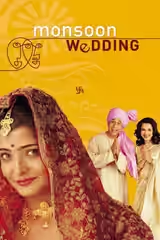
  5. Monsoon Wedding (2001) · not on Fi1m yetA wedding brings private tensions into public view, with warmth and sharper consequences.