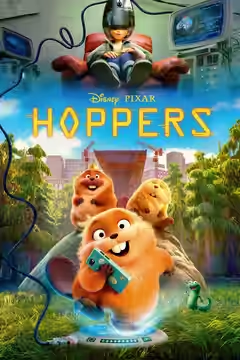
Pixar’s beaver body-swap is the studio’s funniest film in some years: quick, odd and unafraid of a nasty joke. The plot carries more than it needs and the last act loses its nerve, but the first hour is a pleasure.
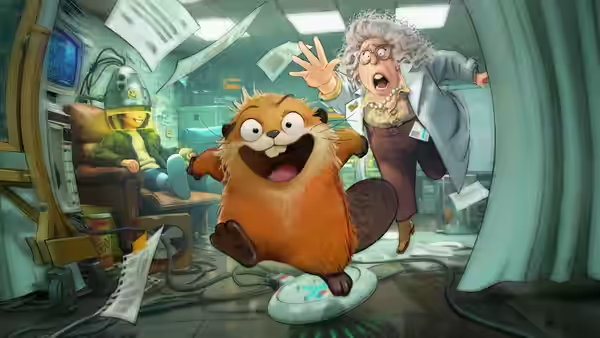
Pixar has borrowed the premise of Avatar, a human mind piloting a body that can pass among the natives, and handed it to a beaver. Mabel (Piper Curda) is a teenager who cares about the woods and water near her town, and about the creatures in them, more than anyone around her does. A piece of technology puts her consciousness into a robot beaver, and once she is inside it the film becomes a comedy about pretending to be something you are not while everything around you carries on being exactly what it is. This is the funniest film Pixar has made in some years. It is also carrying more plot than it needs, and its last act is not as brave as its first.
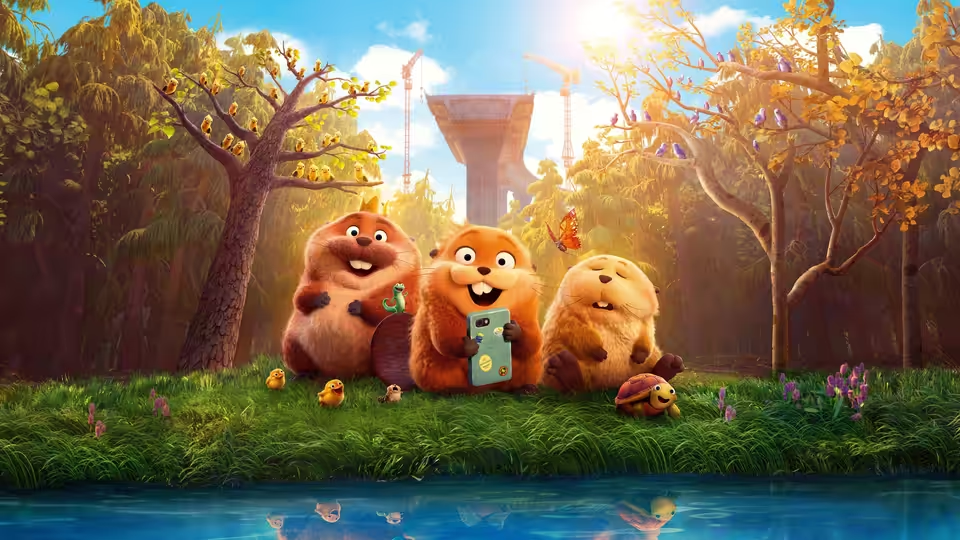
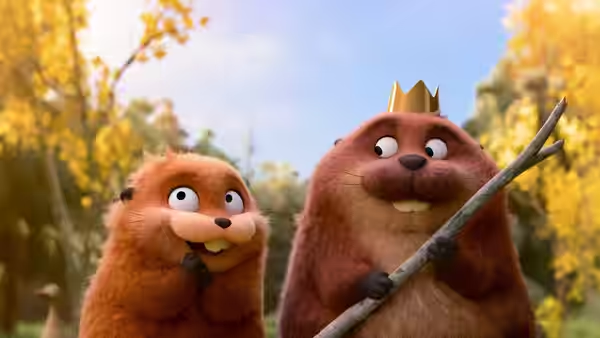
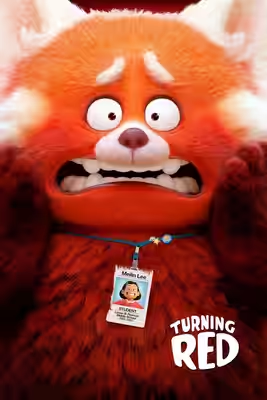
The animal world is the best idea in it. The creatures have a society, and it is divided into kingdoms by class: an Insect King (Dave Franco), a Bird King (Isiah Whitlock Jr.), an Amphibian King (Steve Purcell) and King George (Bobby Moynihan), whom Moynihan voices with the self-regard of someone who has never lost an argument. Bryn Imagire’s design keeps everything soft-edged and slightly squashed, the beavers in particular built like cushions, and the animation moves them with the elastic violence of a Looney Tunes short. We laughed more than we have at a Pixar film since Turning Red, mostly at the gap between how these animals see themselves and how they look to us. And the film lets nature be unkind. It is a U, but it does not pretend the woods are a nursery.
Jeremy Lasky and Ian Megibben photograph the woods and the water with the patience of a nature programme, and seen from the animals’ height the human town looks large, flat and faintly ridiculous, which is the point. The sound design leans on birdsong and running water rather than cartoon noises, and it is doing more work than you notice. Mark Mothersbaugh’s score bounces rather than swells; it is written for chases and pratfalls and it stays out of the way when the film wants to be quiet. Axel Geddes cuts the whole thing to 104 minutes and it never dawdles.
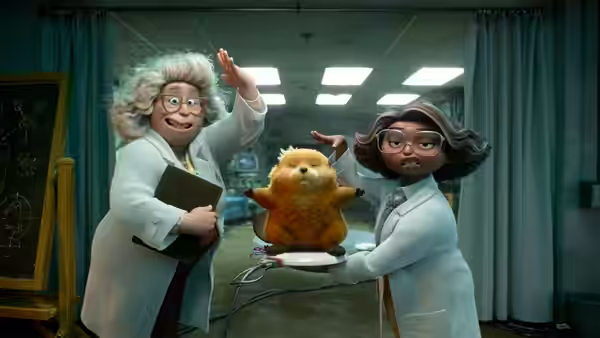
Curda gives Mabel a stubbornness that is not always likeable, which is right; the film is about a girl who thinks she knows best and is only partly correct. Jon Hamm voices Mayor Jerry Generazzo, the politician on the human side, in the smooth, well-fed tone Hamm does better than anyone. Kathy Najimy’s Dr Sam is warm and quick. Around them Aparna Nancherla, Sam Richardson and Eduardo Franco fill out a supporting cast who get a good share of the sharpest lines between them.
The trouble is quantity. Jesse Andrews’s screenplay, from a story by Andrews and Daniel Chong, has to explain the technology, introduce four kingdoms and their politics, keep the town in view and deliver a lesson about living alongside things you do not control. For an hour the jokes carry all of that. In the last half hour the jokes thin out and the lesson steps forward, and the emotional turns are announced rather than earned; we could feel the film asking us to be moved before it had done the work. It also loses its nerve about its villain, in a way we will not describe, except to say that a film this cheerfully rude about the natural order goes soft at the one moment it should not.
Set against the studio’s own record, this belongs with Turning Red: small, strange and personal, and not much interested in being important. After Elio it is a relief. It does not have the ache of Coco, and the message about coexistence is spoken aloud when it should have been left in the pictures. But it is sure of its jokes, and it lets its animals be greedy, vain and frightened rather than merely sweet, which is rarer than it should be.
Take children if you have them, and treat the slapstick as the main event. The lesson at the end is a good one and you will have heard it before. The beaver you will not have seen before.