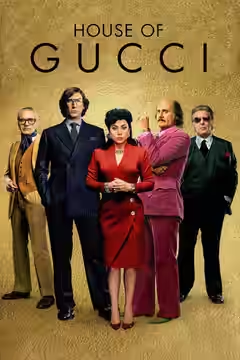
Lady Gaga is compelling in Ridley Scott’s uneven family drama. Extravagant clothes and occasional laughs cannot disguise thin motives, competing acting styles and a middle stretch that takes too long to get anywhere.
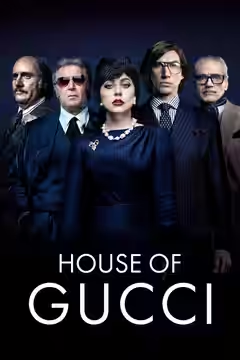
Ridley Scott’s House of Gucci is intermittently entertaining and much too slow. It treats the Gucci family as tragic figures, then invites us to laugh at them without doing enough to explain their behaviour. Lady Gaga gives Patrizia Reggiani enough conviction to suggest that the combination could work. At 158 minutes, however, it gives us too much time to wonder why the actors seem to be following different instructions.
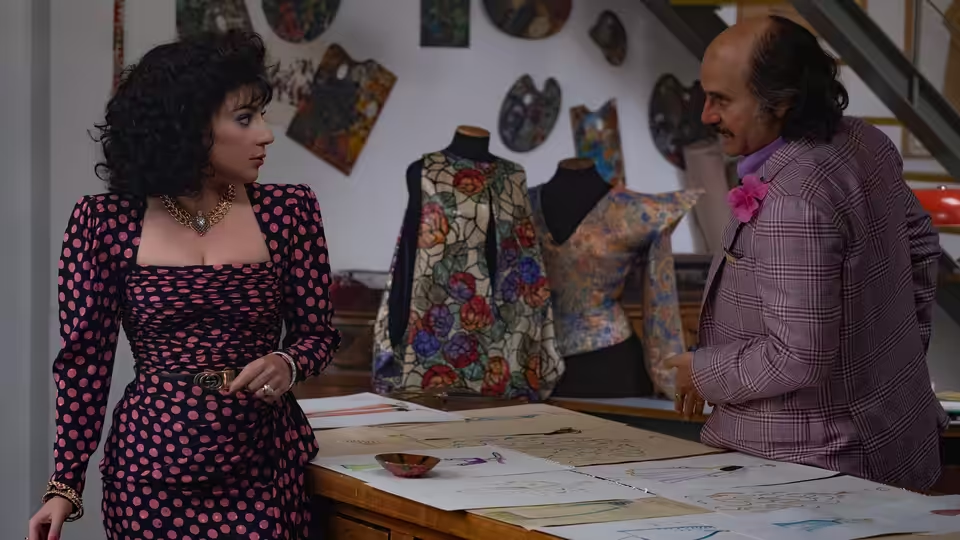
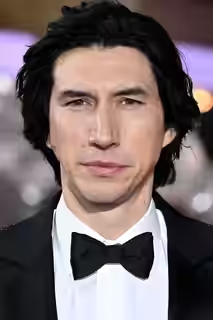
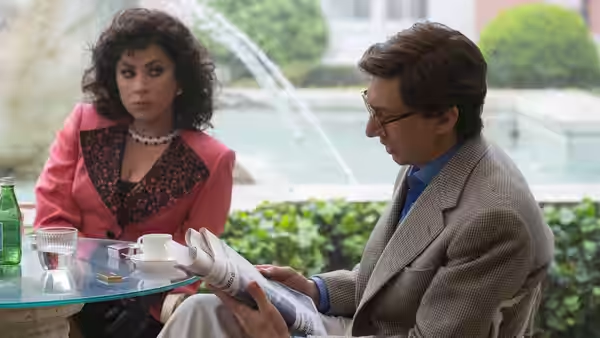
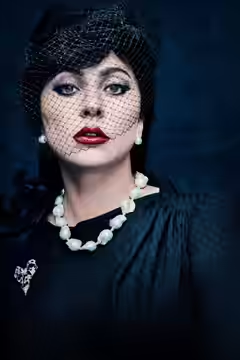
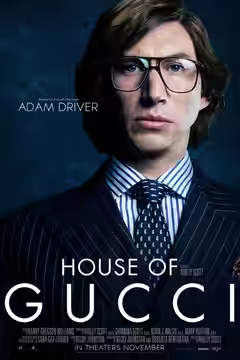
Lady Gaga is persuasive because her character’s calculation does not make every emotion look false. She conveys ambition with an openness that allows us to take her seriously, even when the surrounding film seems ready to snigger. We can believe that she means what she says and still recognise how carefully she chooses to say it. Adam Driver keeps Maurizio Gucci comparatively restrained, providing useful resistance to her force. Neither actor, though, can supply all the reasons for the characters’ behaviour that the writing leaves out.
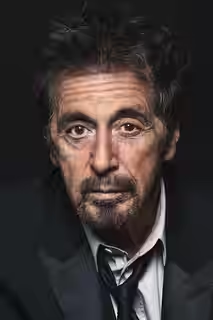
Jared Leto’s Paolo Gucci makes that unevenness hard to ignore. His exaggerated delivery asks for a laugh so insistently that it interrupts our interest in the person speaking. Al Pacino, as Aldo Gucci, and Jeremy Irons, as Rodolfo Gucci, offer different degrees of theatrical authority, but the director does too little to make these contrasting approaches work together. The accents need not be accurate to be amusing. The problem is how often we find ourselves listening to the performance of a word rather than what the character is trying to say.
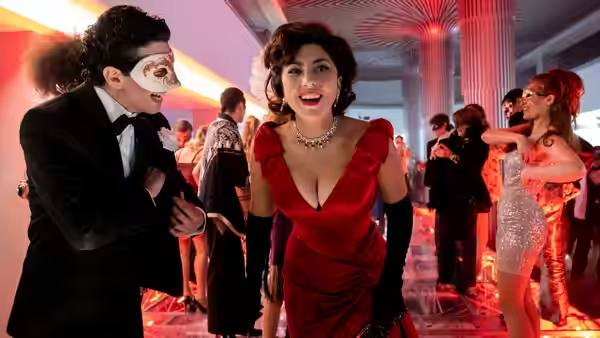
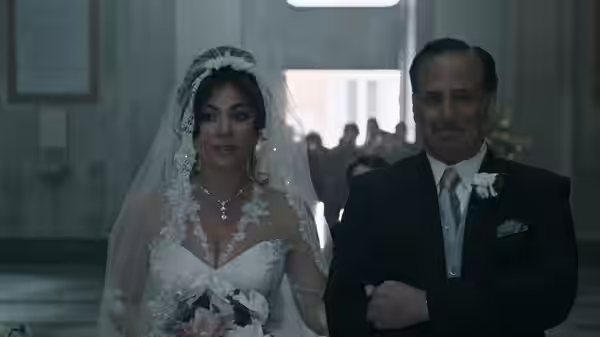
Dariusz Wolski photographs the luxury with enough care that we understand its attraction even when the people become tiresome. Arthur Max’s production design makes the family’s wealth clear, though it tells us less about the people who possess it. Janty Yates’s extravagant costumes are more useful: they make vanity visible without requiring another conversation about status. The clothes remain enjoyable when the drama stalls, and their excess suits the exaggerated performances better than the solemn writing does.
Roberto Bentivegna and Becky Johnston’s screenplay is less effective at making the business disputes matter. We were bored by those discussions, because all that talking leaves the motives so thin. Claire Simpson’s editing allows the middle stretch to drag, dwelling on the company’s affairs without making us more curious about the people conducting them. Harry Gregson-Williams’s music supplies some of the dramatic pressure missing from the exchanges, but the effect is temporary: the conversations still tell us too little about the characters.
A family melodrama can survive outrageous acting if the resentments are clear. Here, Ridley Scott has the cast and the scale, but too much behaviour goes unexplained for the serious passages to hurt. The comedy suffers too, because the film keeps restraining itself just when a little more extravagance might be welcome. Its flashes of amusement and Lady Gaga’s commitment are worth acknowledging, but they do not justify every detour through the family business. Give it an evening only if a strong central performance and an extravagant wardrobe are enough.