Woody Allen’s abrasive marriage comedy is funny, perceptive and sometimes painful, with Judy Davis giving its anger a human cost. The restless camera occasionally becomes a nuisance, but the performances justify the discomfort.
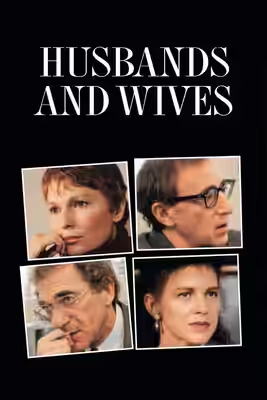
Husbands and Wives is a sharp, funny marriage comedy whose people can discuss their unhappiness at length without becoming much wiser about it. Writer-director Woody Allen takes the disturbance caused by a marriage breaking apart and watches it spread through other relationships. The fear is recognisable: somebody else’s separation makes staying together begin to look like a decision that might need defending. We recommend it, with a warning that its fidgeting camera can occasionally be as trying as its characters.
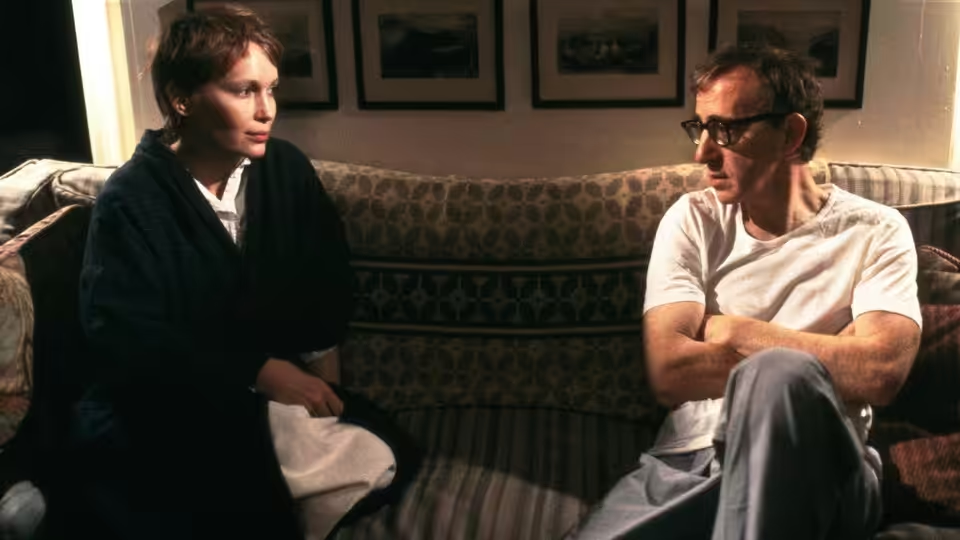
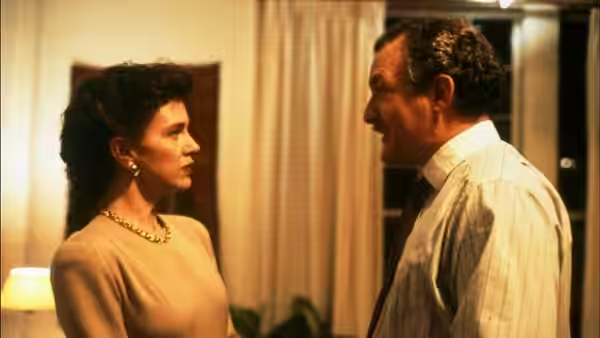
Allen plays Gabe Roth and Mia Farrow plays Judy Roth, with Judy Davis as Sally and Sydney Pollack as Jack. The pleasure of the ensemble is that intelligence provides so little protection against jealousy, vanity or panic. Allen’s writing keeps returning to the explanations people offer for wanting what they want, and to how poorly those explanations survive contact with another person’s wishes. He is hard on their self-deception without making their desire for companionship look foolish.
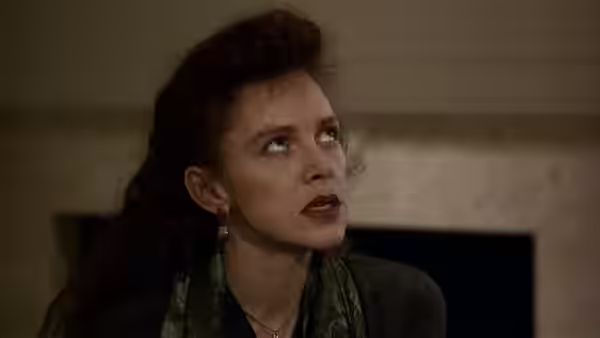
Davis gives the film its most uncomfortable mixture of humour and hurt. Sally’s anger is funny because Davis makes it so exact; it is difficult to dismiss because the distress remains visible underneath. We laughed, then felt mean for laughing. Pollack is equally valuable as Jack, making relationship trouble feel like something happening to an adult who ought to know better. Farrow’s Judy gives the film room for feelings that do not arrive at full volume.
Carlo Di Palma’s handheld cinematography makes these encounters feel difficult to watch from a safe distance. The camera’s restlessness suits people who cannot settle into their own decisions, and the pseudo-documentary approach makes their unhappiness feel uncomfortably exposed. Susan E. Morse’s editing contributes to that abrasive rhythm. It works for much of the film, although there are moments when we would rather be allowed to study a face than keep noticing how insistently the scene is being presented.
Santo Loquasto’s production design keeps the New York setting secondary to the people, a sensible choice when the performances need so little help. The city never becomes a reason to admire their unhappiness as a sophisticated way of living. These people have a considerable appetite for examining relationships, and the film keeps showing how that habit can become another way of avoiding an unwelcome answer. At 108 minutes, it gives their evasions enough time to become exasperating without wearing out our interest.
The larger reservation is that Allen sometimes seems too certain that everyone is deceiving themselves. After a while, we begin waiting for the selfish motive behind every reasonable explanation, and that makes the writing feel less curious about its people. The actors resist that narrowing view by making the need for companionship worth taking seriously. A marriage comedy can be harsh without assuming that anybody who hopes to be happy is an idiot, and this one usually remembers that.
It belongs at the uncomfortable end of marriage comedy, and anyone expecting a soothing evening should take that seriously. Davis and Pollack provide plenty of reason to stay, even when the people they play are difficult company. Watch it with someone who will not treat the conversation afterwards as a cross-examination.