Danny Boyle and James Graham turn the 1969 rebirth of the Sun into a loud, fast, often funny film with a fine Jack O’Connell at its centre. It has enormous energy and, on the question of what it thinks about any of this, it goes quiet.
In 1969 an Australian nobody in London took much notice of bought a dying broadsheet and, with a Yorkshire editor the Mirror had turned down, made it the Sun. Danny Boyle’s film of James Graham’s stage play tells that story at the pace of a print run, and for a long stretch it is the most fun we have had in a newsroom drama in years. It is also, when the noise drops, hard to say what it makes of any of it. That is the verdict: a good night out that does not know its own mind.
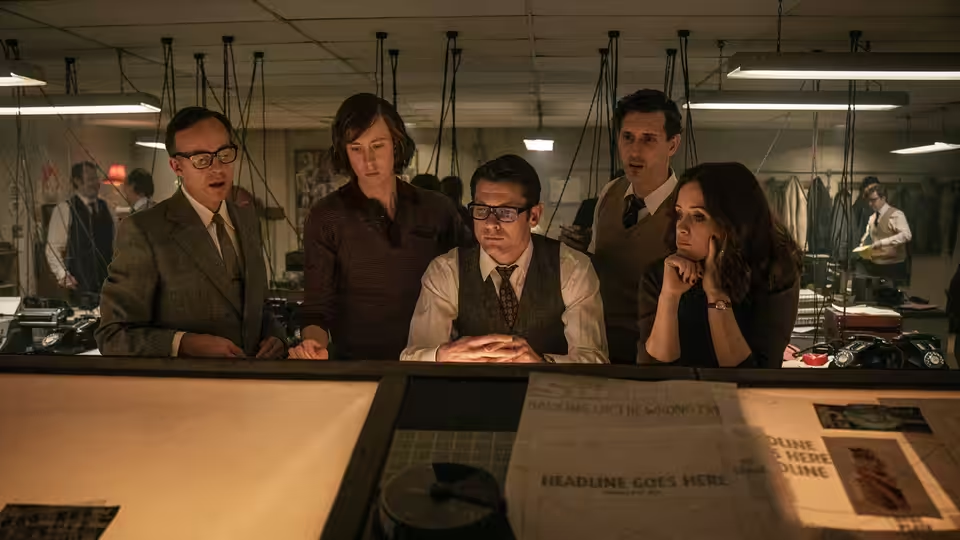
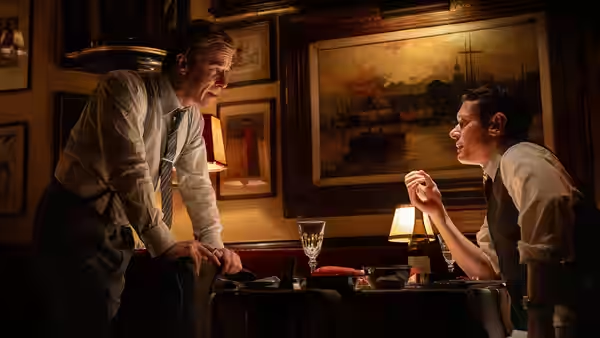
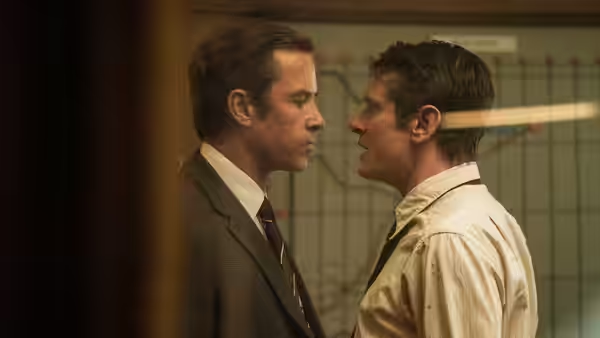
Jack O’Connell plays Larry Lamb with a grudge he can burn as fuel. He is a provincial who has been patronised by the men on the Mirror and intends to make them read him, and O’Connell is quick, funny and slightly frightening, holding the centre of a film that is otherwise always on the move. Guy Pearce’s Murdoch is the quietest thing in it. He watches, nods, rarely lifts his voice, and the faster Boyle spins the room around him, the more that stillness reads as where the power actually sits. Bertie Carvel, who played Murdoch on stage, is here the Mirror’s Hugh Cudlipp, and he gives the old guard’s contempt a weary intelligence the script does not always honour.
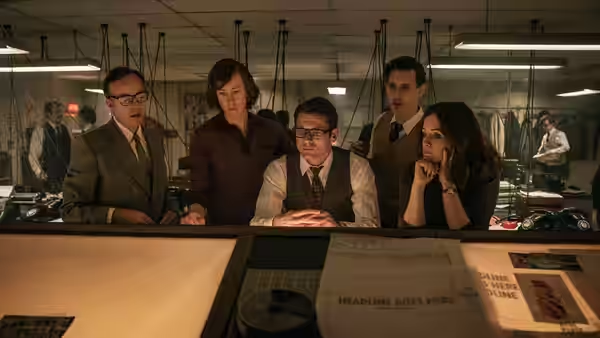
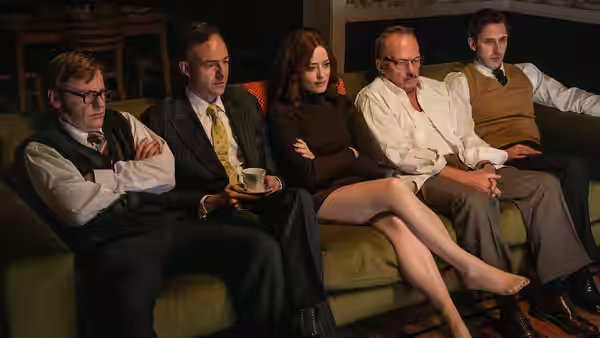
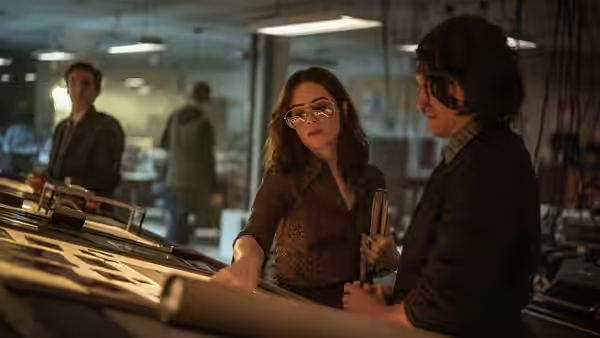
Alwin H. Küchler’s camera is hardly ever allowed to rest. It pushes down corridors, swings across the composing room and crowds in on faces, and Fin Oates cuts to match, so that the first hour moves like a montage that has decided to be a whole film. Daniel Pemberton’s score is loud and pulsing and treats every front page as a goal scored. Gareth Pugh and Carson McColl, credited for both production design and costume, build a Fleet Street of presses, partitions and ashtrays and dress Lamb’s recruits so that you can read each man’s opinion of himself from his collar. For an hour this is exhilarating, and we enjoyed it more than we expected to.
Somewhere in the second hour we noticed we were waiting for the film to disapprove of something, and it kept declining. Graham gives Cudlipp the case against Lamb and gives Lamb the better lines, and Boyle films Lamb’s victories as victories. When the film wants us to feel a cost, it stops and has someone say so, at length. The speeches are the weakest writing in it. It keeps announcing an argument and then going back to the presses, and the presses are more persuasive.
The second half turns on a real crime from December 1969 that involves the McKay family, and we will not describe it. What we can say is that the speed which serves the newsroom serves this part badly. Boyle does not slow down enough for it, and Lucy Russell and Jonathan Hyde are given less room than what happens to them deserves. Meanwhile the paper’s front pages keep escalating, each louder than the last, and the escalation starts to repeat. By the final stretch we were tired, and a little uneasy about how much we had been enjoying ourselves before that.
Against Boyle’s own record this sits in an odd place. Trainspotting (1996) had this fizz and knew exactly what it thought of the people it was fizzing about. Steve Jobs (2015) took another talky script about a difficult man building something and let the words lead. Here Boyle seems to be fighting Graham’s words, drowning the debate the play was built on under the kind of spectacle the play was about. Claire Foy’s Jules Davies is the one performance that survives both approaches, dry and watchful, and the film is calmer whenever she is in shot.
Go for O’Connell and Pearce, for the first hour, and for the pleasure of watching a newspaper being made by people who love making it. Do not expect it to tell you whether that love did any harm. It runs 116 minutes and most of them are loud.