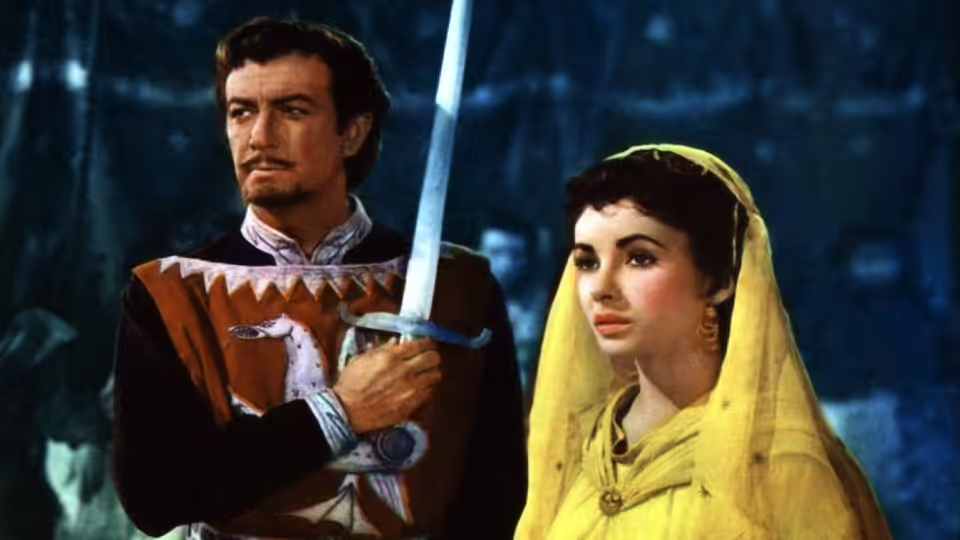
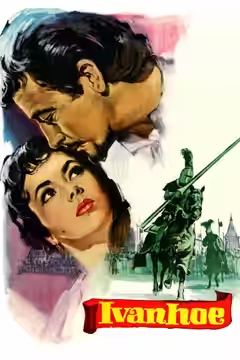
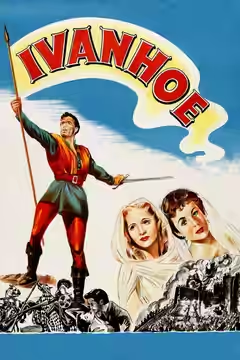
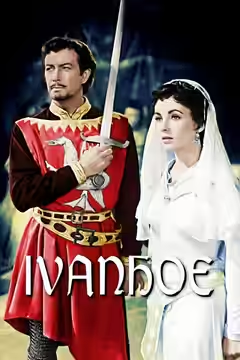
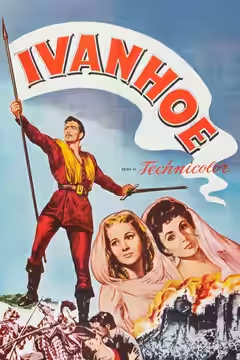
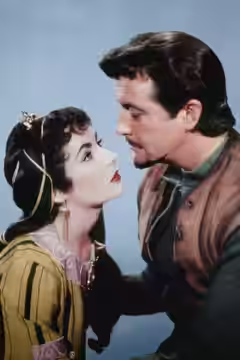
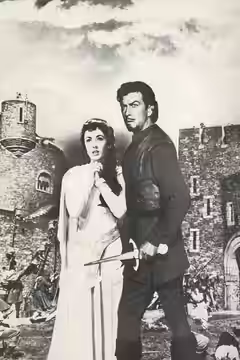
Richard Thorpe’s colour Ivanhoe moves fast, looks handsome and leaves the acting to George Sanders and Elizabeth Taylor while Robert Taylor wears the armour. It flattens Walter Scott into a Saturday adventure, and the siege of Torquilstone alone earns the evening.
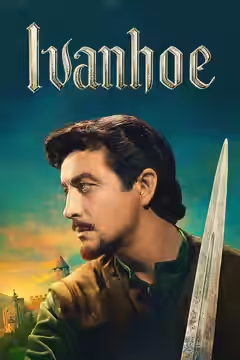
Richard Thorpe’s Ivanhoe takes Walter Scott’s long novel about Normans and Saxons and boils it down to 106 minutes of colour, lances and castle walls. Marguerite Roberts and Noel Langley keep the bones, the tournament at Ashby, the siege of Torquilstone, Rebecca’s trial, and throw away nearly everything Scott put around them. What is left is a good Saturday adventure, well made and quickly told, with one fine villain, one performance that gives it a heart, and a hero who is mostly a suit of armour. It is worth an evening if knights are your thing. It is not much more than that.
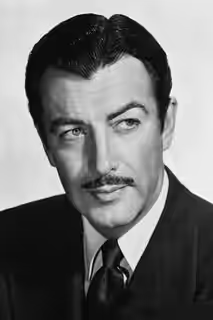
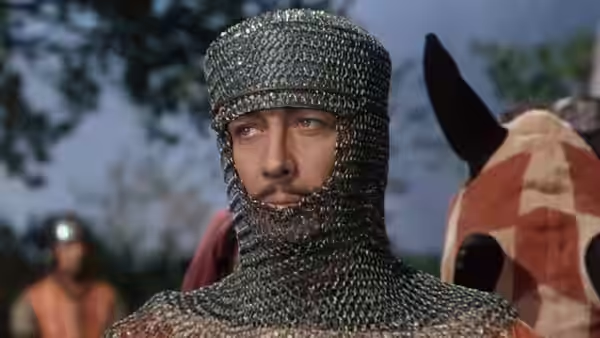
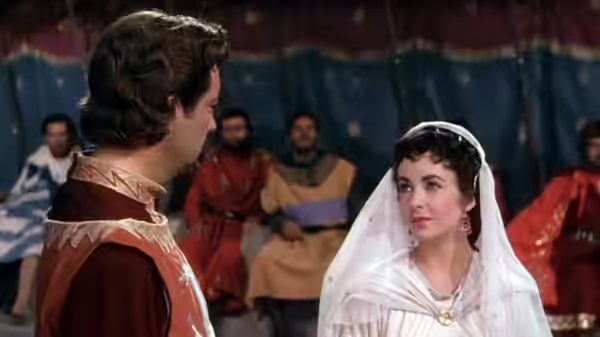
George Sanders is the reason to watch. His Bois-Guilbert is a Norman knight who wants a woman he is not permitted to want, and Sanders plays him with the tired, amused contempt he brought to everything, then lets something rawer through whenever Rebecca is near. He is the only person on screen who seems to want anything badly. Robert Taylor, opposite him, is upright, handsome and inert; he says the lines and sits the horse and gives us no idea who Ivanhoe is when the helmet comes off. When the two meet with lances, the film has a villain we can see and a hero we have to be told about.
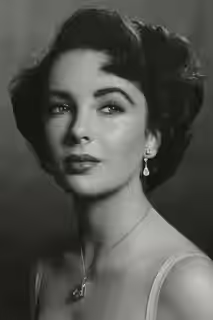
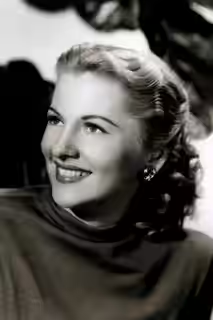
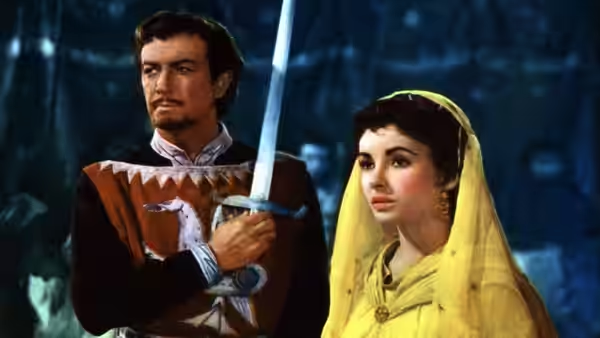
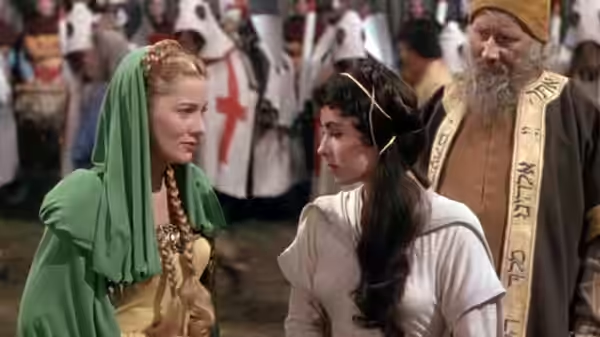
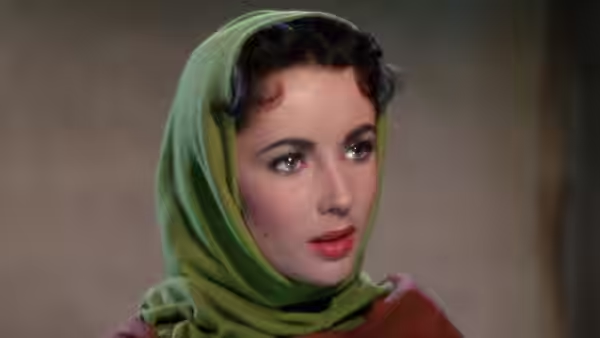
Elizabeth Taylor plays Rebecca, the moneylender’s daughter who loves Ivanhoe and knows the country will not allow her to have him. She has few lines and a great many close-ups, and Freddie Young lights them so that the dark hair and the coloured silks fill the frame and she scarcely needs to move. Joan Fontaine’s Rowena, the woman Ivanhoe is promised to, gets the poorer bargain, standing at windows and being noble about it. Finlay Currie bellows agreeably as Cedric, Felix Aylmer gives Isaac a stooped, careful dignity, and Emlyn Williams’s Wamba chatters his jester’s lines like a music-hall turn and makes more of them land than they deserve.
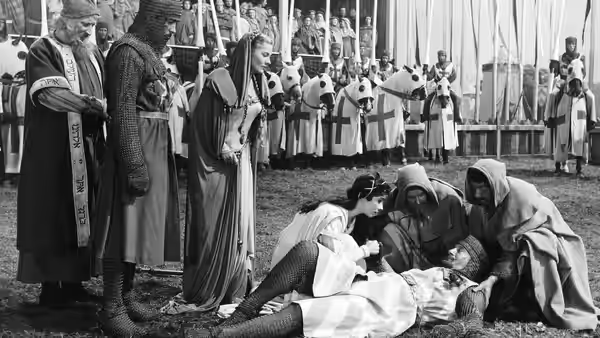
The tournament at Ashby is what the film was made for. Young shoots it in Technicolor under flat bright daylight, striped pavilions and heralds in red and yellow, so that every lance and every fall is in full view. Roger Furse dresses the Normans in mail and bright surcoats and the Saxons in wool and fur, which is roughly the depth at which the film understands the two nations. Frank Clarke cuts the jousts in short pieces, a lance, a horse, a man on the ground, and the whole picture moves like that; nothing stays longer than it needs to and a few things stay less. Miklós Rózsa’s score gives the Normans brass fanfares, Ivanhoe a broad singing theme and Rebecca something quieter, and it does a good deal of the work the leading man does not.
The siege of Torquilstone is the best stretch. Robin of Locksley (Harold Warrender) has his archers in the trees, ladders go up against the walls, Front De Boeuf (Francis de Wolff) roars from the battlements, and we sat forward and stayed forward, surprised at how much we cared whether one particular ladder would hold. Then the film moves to Rebecca’s trial, and we felt something different. Roberts and Langley have made the persecution of Isaac and his daughter the real subject, and though the script says so in speeches, Aylmer’s face when his daughter is taken from him says it better. We were moved, which we had not expected from a film with this many trumpets.
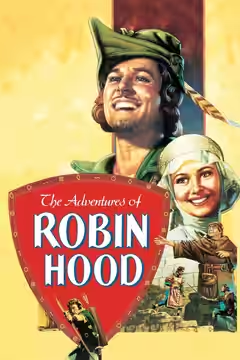
What is gone is Scott. His Normans and Saxons were both a little absurd, and his Ivanhoe was a slightly dull man other people arranged their lives around; the film keeps him dull and forgets that Scott was joking. Everyone speaks a smooth mid-Atlantic English that makes twelfth-century England sound like a hotel lobby. Thorpe keeps the camera still, the actors in the middle of the frame and the plot moving, and never does anything with a scene beyond photographing it. The Adventures of Robin Hood (1938) covered similar ground with Errol Flynn grinning through every sword fight. Thorpe’s castles are bigger. Nobody in them looks as if they are enjoying themselves, except Sanders, who is enjoying being unpleasant.
See it with children old enough for a man to be run through and young enough not to mind that the hero is a plank. Watch for Sanders, stay for the siege, and accept that the love story is not about the woman he is promised to.