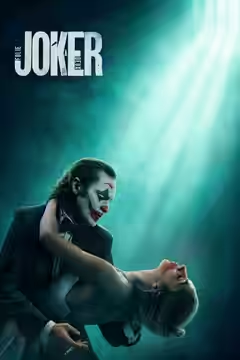
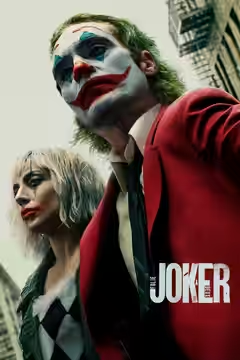
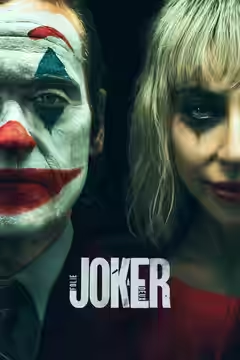
Todd Phillips’s sequel has one honest idea, that Arthur Fleck was never the man his fans wanted him to be, and spends 138 minutes and a dozen borrowed songs saying it. Phoenix and Gaga are worth watching; the courtroom is not.
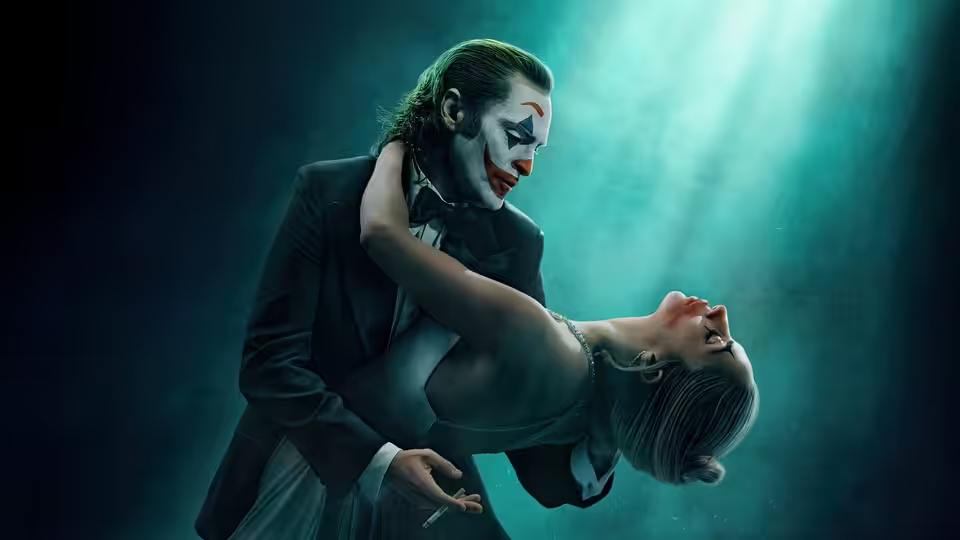
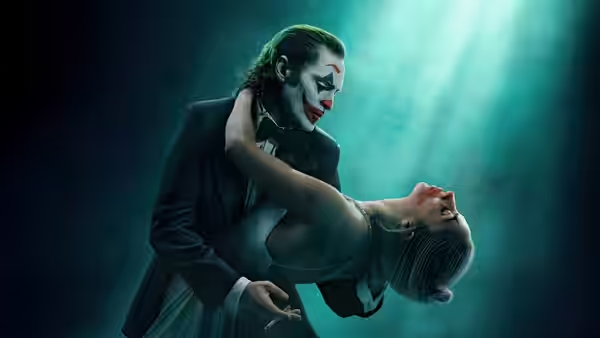
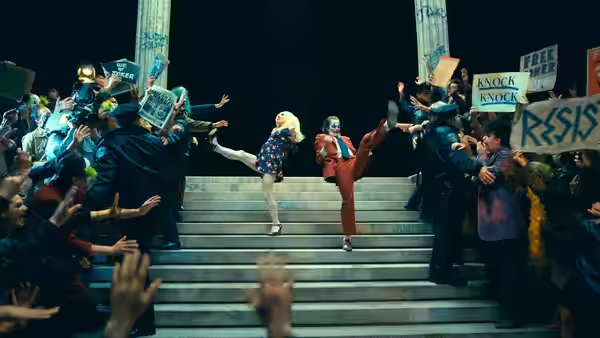
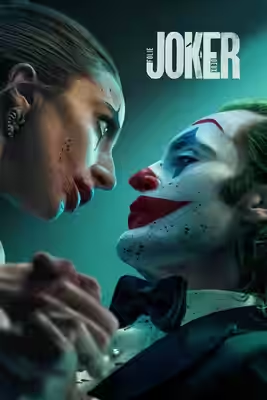
Todd Phillips has made a sequel designed to disappoint the people who liked the first film, and he has done it on purpose. Joker (2019) left Joaquin Phoenix’s Arthur Fleck dancing down a flight of steps in a red suit while a city rioted in his name. Joker: Folie à Deux finds him some time later in Arkham, thin, drugged and queueing for his pills, waiting for the trial that will decide whether the state can kill him. It is a prison film, then a courtroom drama, and throughout it is a musical made from old standards. We have some respect for that. We spent a good deal of the 138 minutes wishing the film would do something with it.
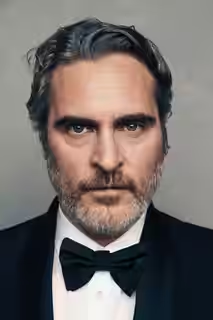
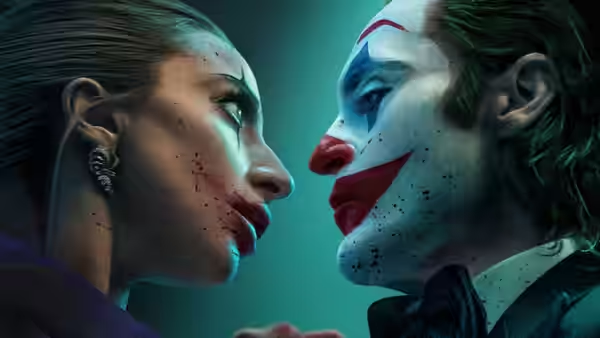
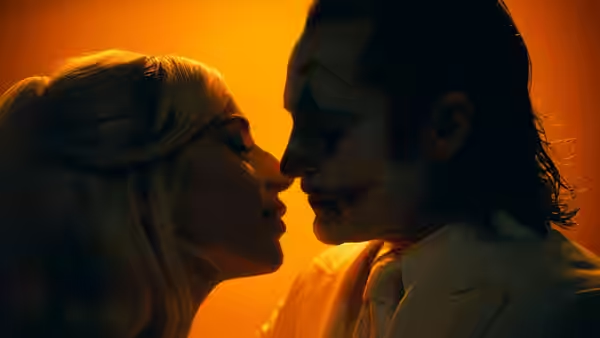
Phoenix is as committed as before and plays Arthur here as a man who has been switched off. The laugh is mostly gone; what is left is a wet-eyed stillness that comes alive only when Lee Quinzel (Lady Gaga) looks at him. He sings the way Arthur would sing, cracked, slightly under the note, out of breath, and the film never lets him get better at it. That is the idea, and it is a good one. Gaga plays Lee small and watchful, a patient who knows exactly who Arthur is and likes him for it, and she sings under her ability almost throughout.
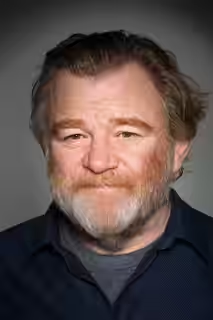
The music therapy scenes moved us more than we expected. A dozen patients, an upright piano, Arthur mumbling a lyric and Lee singing back at him from the other side of the circle, and Phoenix lets a little of the old wish, to be looked at kindly, back into his face. Brendan Gleeson runs the wing as Jackie Sullivan, all jokes and shoulder-claps, and we can see how quickly the jokes could turn. It is the only stretch of the film in which the singing means something to the people doing it.
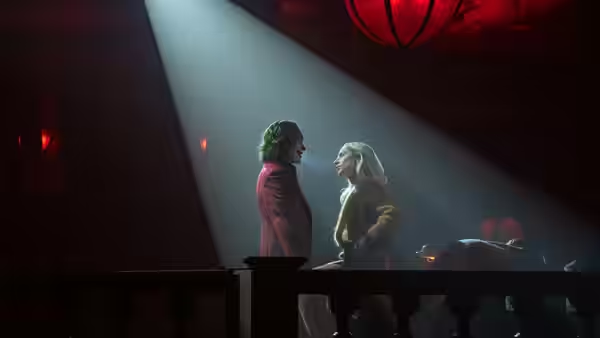
Lawrence Sher lights Arkham in green fluorescent and sodium orange, wire cages and wet tile, and shoots the fantasy numbers in the saturated red and gold of a variety programme, a curtain and one spotlight, so the switch between the two is never in doubt. Mark Friedberg’s hospital is a long grey box with the paint coming away; his courtroom is dark panelled wood with a public gallery built like a theatre balcony, in case anyone missed the tagline. Arianne Phillips keeps the red suit for the daydreams and dresses the real Arthur in institutional grey that hangs off him. Hildur Guðnadóttir’s cello returns, low and mournful, and now has to share the film with a dozen show tunes. The two never agree, and we decided that was deliberate and still did not enjoy it.
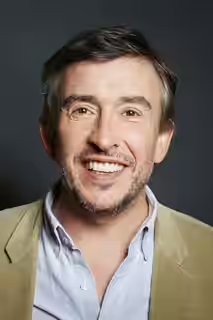
The trial takes up most of the second half and it is where the film goes flat. Catherine Keener’s Maryanne Stewart argues that the Joker is a second personality and Arthur his victim; Harry Lawtey’s Harvey Dent argues that he is not. Witnesses from the first film, Zazie Beetz’s Sophie Dumond and Leigh Gill’s Gary Puddles, come back to tell us things we watched happen. Jeff Groth cuts these scenes at the pace of an actual trial, long two-shots, nobody hurrying, and they sit there. Steve Coogan turns up as Paddy Meyers and gets the one funny scene. By the middle of the trial we had stopped following the argument and started checking the time, and the film, which is about people wanting the wrong things from Arthur, would presumably say that was our fault. We do not accept that.
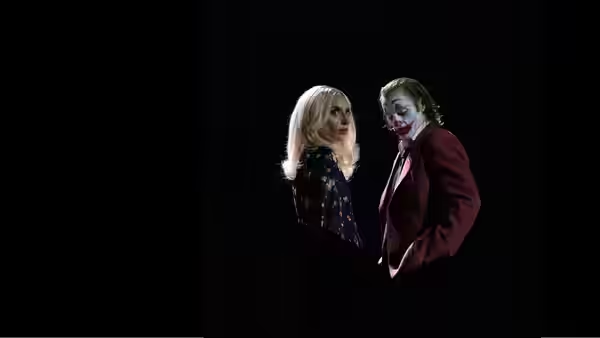
The songs stop the story rather than carry it. Two or three of them, staged as a television special with the pair in matching suits, come alive; the rest arrive, make the same point about fantasy and retreat, and fade back into the grey. Lee is the larger loss. The script by Phillips and Scott Silver gives her wants but almost no history, and Gaga, who could fill the courtroom on her own, is kept in the gallery.
The first Joker borrowed its lonely man and his talk show from Scorsese and was accused of glamorising him. This one looks to have been made partly to answer that charge, which is an unusual and not dishonourable reason to make a sequel. It is not, by itself, a story. Watch it for Phoenix and Gaga in the music room and for the numbers that catch fire, and be ready to wait between them. It runs 138 minutes and carries a 15. Nobody sings during the trial; we rather wished they had.