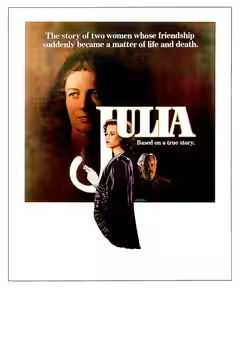
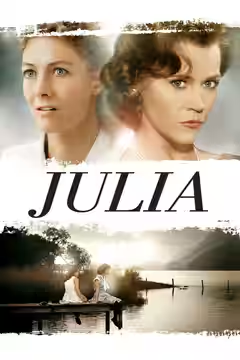
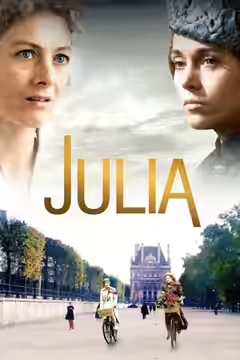
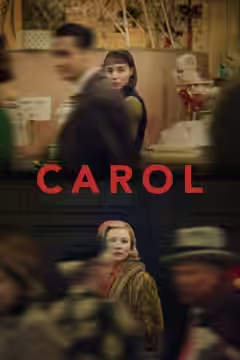
Fred Zinnemann’s film of Lillian Hellman’s memoir is beautifully lit, carefully dressed and full of good actors, and it keeps its central friendship at arm’s length. One train journey and one scene across a table are worth the wait; the rest is respectful.
Fred Zinnemann takes one chapter of Lillian Hellman’s memoir Pentimento and gives it 117 minutes, a first-rate cast and the most careful period dressing 1977 could provide. Alvin Sargent’s screenplay treats the friendship between Hellman and Julia as something close to sacred, and that is the trouble. Julia is admired, missed, worried about and remembered, and she is hardly ever simply there. The film is handsome and honourable, and for long stretches it is oddly hard to care about.
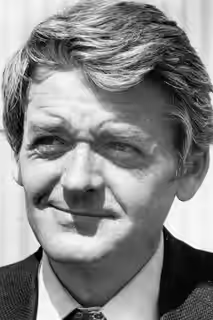
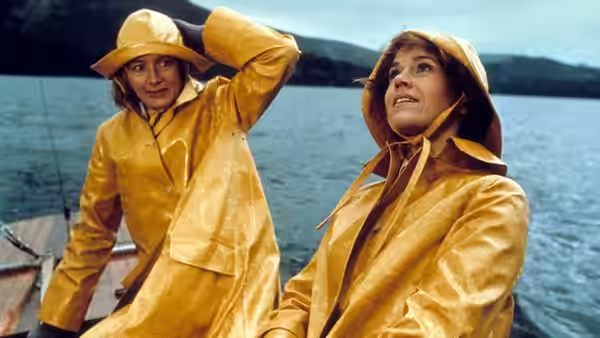
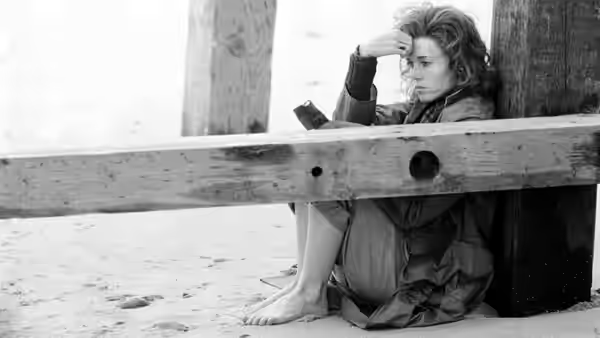
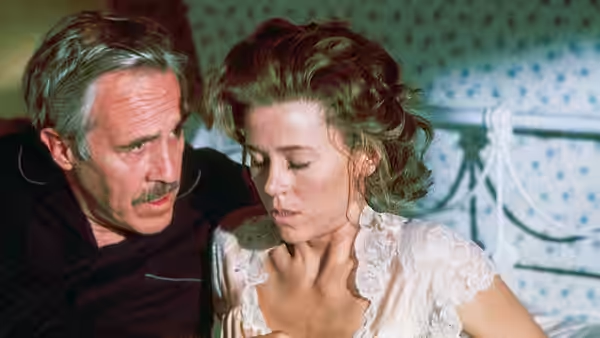
Jane Fonda is better than the part. She plays Hellman as a woman who is nervous about her own talent and rude to cover it, and her scenes with Jason Robards are the liveliest in the film. Robards gives Dashiell Hammett a slow, gravelled patience, reading her pages by the fire and telling her to throw them away, and the two of them behave like a couple who have argued before and will again. Rosemary Murphy’s Dorothy Parker arrives at a party with a drink and a cruelty, Hal Holbrook’s Alan hovers beside her, and for a few minutes the film has the sharpness of the people it is about.
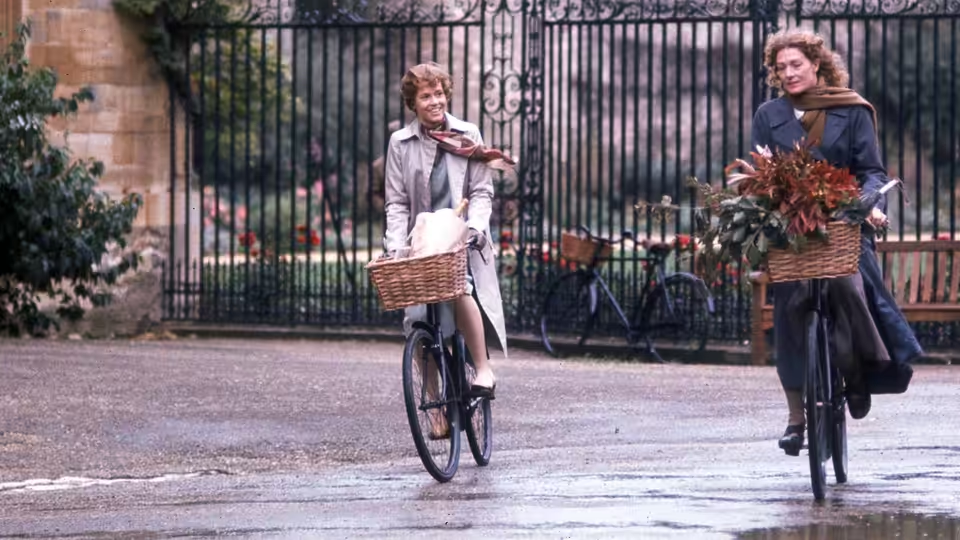
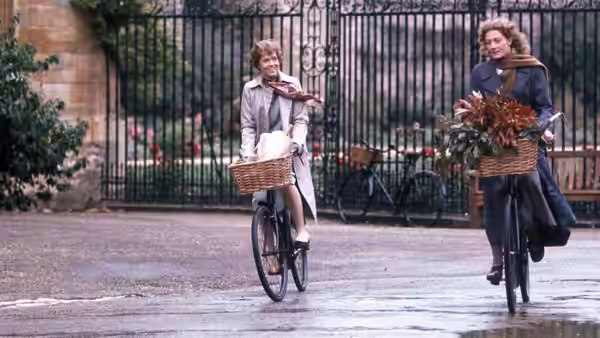
Then it remembers Julia, and softens. Vanessa Redgrave has the rare gift of appearing to believe every word she says, and she gives Julia a lit-up seriousness that explains why a girl like Lillian would follow her anywhere. Zinnemann, though, photographs her like a monument. The childhood scenes, with Lisa Pelikan as the young Julia striding through the grounds of her grandparents’ house while Cathleen Nesbitt’s grandmother disapproves from a distance, are pretty and tell us very little about what these two saw in each other. We are told the friendship was the great fact of Hellman’s life. We are seldom shown it.
The craft is of a high, hushed standard. Douglas Slocombe lights the beach house and the childhood in a soft honey colour, lamps and low sun through windows, and saves his cold whites for the Vienna hospital and his greys for the railway stations. Anthea Sylbert puts Fonda in the tailored, slightly mannish jackets of a woman who works and Redgrave in plain, dark coats that cost nothing to look at. Willy Holt, Gene Callahan and Carmen Dillon rebuild the 1930s without a wrong ashtray. Georges Delerue’s score is piano and strings, mournful from the first bar, and it tells us the story is sad well before anything sad has happened. Marcel Durham and Walter Murch move between decades slowly, so the film drifts where it might have pushed.
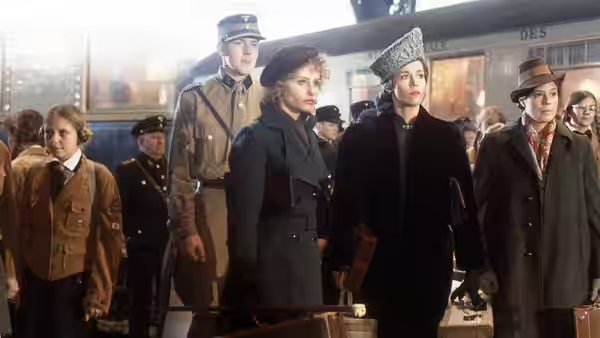
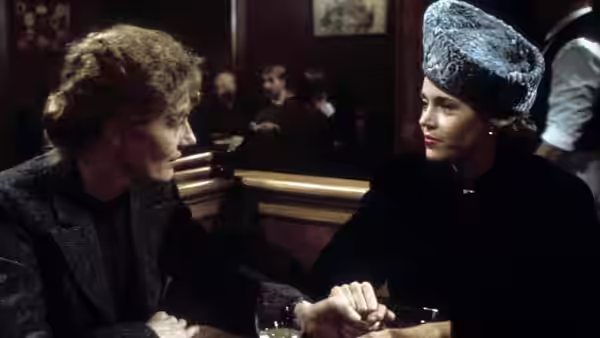
And then, for twenty minutes or so, it does push. Lillian boards a train for Berlin with a hatbox and a fur hat, sharing a compartment with two strangers, Dora Doll and Elisabeth Mortensen, who may be helping her or watching her, and border officials who take their time with her passport. We were properly tense, hands tight in our laps, in a way nothing before it had prepared us for. This is the Zinnemann of High Noon (1952): a clock, one frightened person, a small object that must not be opened. The scene that follows, across a table with Redgrave, quick and careful and over too soon, moved us more than the preceding ninety minutes had earned, and it moved us largely because Redgrave was at last allowed to be a person rather than a memory.
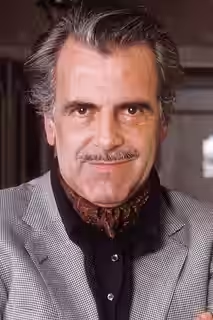
Maximilian Schell has one good scene as Johann, the messenger who asks Lillian a question she would rather not have been asked. Meryl Streep, in what the reviews of the time noted as her first film, gets a single party scene as Anne Marie, a gossip with a bright, hard smile, and she is memorable in about three minutes. John Glover’s Sammy is the sort of drunk who says the thing nobody else will.
Against Zinnemann’s own best work this is the quiet one. From Here to Eternity (1953) and A Man for All Seasons (1966) are films in which people argue for their lives in front of us. Julia is a film in which one woman remembers another, tenderly and at a distance, and the tenderness gets in the way of the drama. Watch it for Fonda and Robards at the beach house, for the train, and for the few minutes Redgrave is given. It runs 117 minutes and carries a PG, and it is the most respectable film about danger we can think of.