Joe Johnston’s third Jurassic Park film is fast, short and frightening in short bursts, and it has been made from a script with two good ideas and no third act. Worth a wet afternoon with children who can take a fright; not worth much more.
Eight years after Steven Spielberg’s Jurassic Park (1993) and four after The Lost World: Jurassic Park (1997), Joe Johnston takes the director’s chair and the series changes shape. Gone is the awe and the long approach to the first brachiosaur. What is left is a 92-minute rescue picture in which a small party is dropped onto an island and chased off it. That is a respectable thing for a monster film to be, and for an hour Jurassic Park III is a good one. Then the script runs out, and the film stops rather than ends.
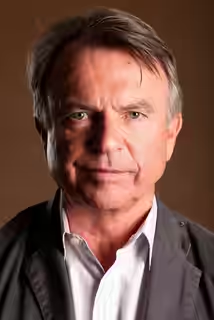
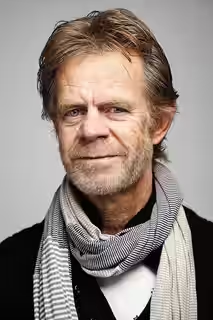
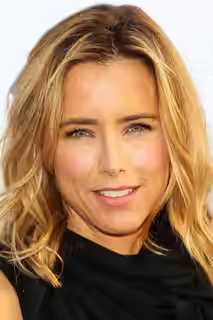
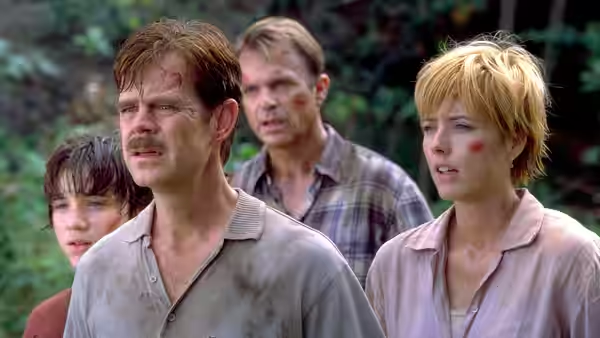
The setup is brisk and the writers, Peter Buchman, Alexander Payne and Jim Taylor, have one clever notion: Dr. Alan Grant (Sam Neill) does not want to go. He is tired of being asked about the park, and he lets the Kirbys (William H. Macy and Téa Leoni) buy him for a flyover. Neill plays this with a weariness that feels earned and slightly personal, as though the actor and the palaeontologist had both been dragged back against their better judgement. It is the best performance in the film and the only one with any weight.
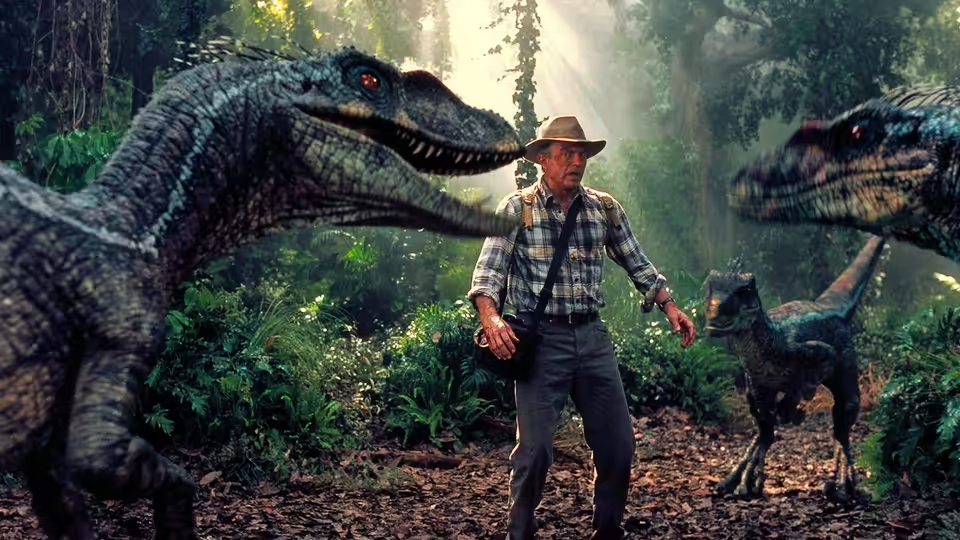
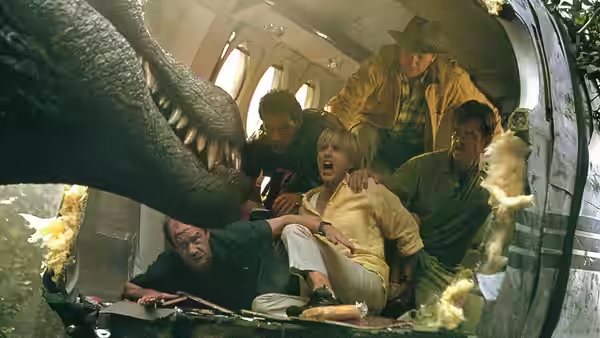
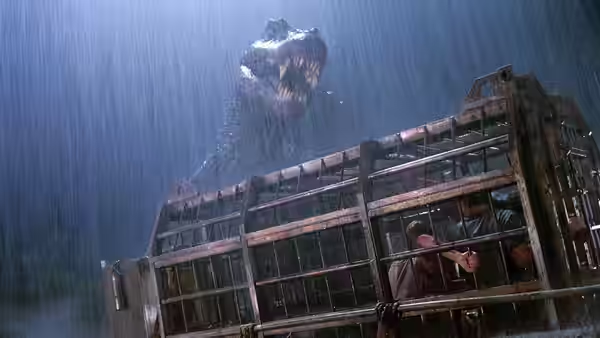
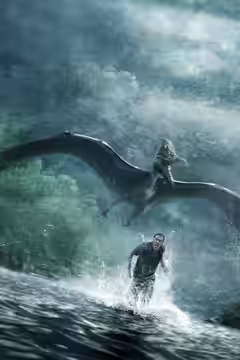
The creatures are the reason to watch. Shelly Johnson shoots the island in a grey-green murk, so that the animals come out of the picture rather than posing in it. The first attack, in a clearing at dusk, with a spinosaurus walking up to the stranded aircraft as if it were a tin it meant to open, had us properly frightened; it is staged with the camera inside the fuselage and the animal outside. A later scene in an abandoned InGen laboratory, Ed Verreaux’s set of dust sheets, broken glass and rows of hatching tanks, puts one raptor in a room full of hiding places and lets us wait. Robert Dalva cuts both sequences tight and lets us follow.
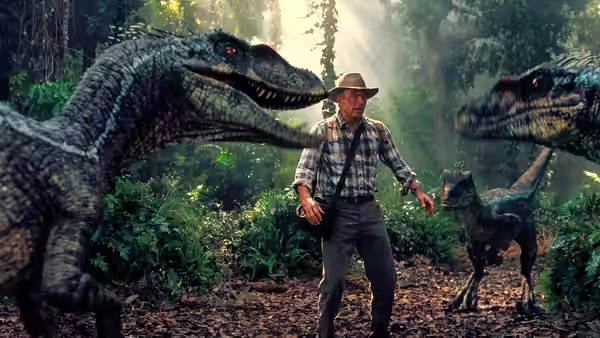
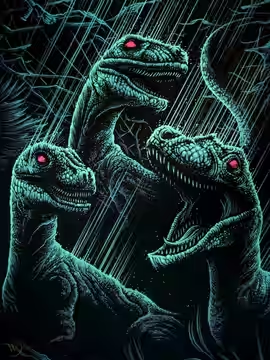
The second good idea is that the raptors talk. Grant has spent the years since the park working out that the animals communicated, and the film pays this off by letting them hunt with intent rather than appetite: they call, they wait, they send one round the back. It is the one place where the film adds to the series, and it produces the film’s most unsettling image, a raptor’s head tilting to listen.
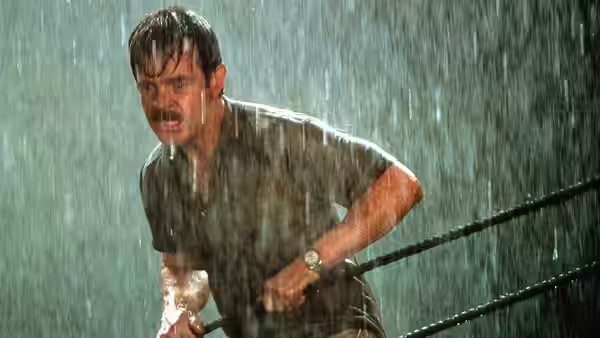
Everything human is thinner. Macy and Leoni are two capable actors and they have been given a squabbling couple whose every line is either a shout or an apology for shouting. Leoni is written as a woman who screams at the wrong moments and is then told off for it. Alessandro Nivola’s Billy makes one decision that drives the plot and is otherwise a haircut. Michael Jeter’s Udesky, John Diehl’s Cooper and Bruce A. Young’s Nash are the mercenaries, and you can put money on the order they will leave in. Laura Dern turns up as Ellie for two short scenes and a telephone call and is missed the moment she goes.
Don Davis’s score leans on John Williams’s original theme, and the borrowing is a confession: the new material is competent and the old material is what we remember. Betsy Cox dresses everyone sensibly and mud does the rest. None of the craft is bad. It is the shape that fails. Around the seventy-minute mark the film has spent its monsters, its laboratory and its one idea, and the last quarter of an hour is people running towards the sea while the film looks around for a climax it has not built. We will not describe how it resolves, but we were startled when the credits came up, and not in a good way.
This has the opposite fault to its predecessor. The Lost World was long and had too much in it; this is short and has too little. Johnston made The Rocketeer (1991) and Jumanji (1995), and he knows how to keep a family film moving, but moving is all this one does. It carries a PG, runs 92 minutes, and is a fair bet for a rainy afternoon with children who enjoy being scared and have not yet started asking why.