Spielberg’s sequel has better dinosaurs, a meaner streak and one sequence, in a trailer on a cliff, as good as anything he has made. It also has a script that treats its people as bait and a last half hour that goes somewhere silly.
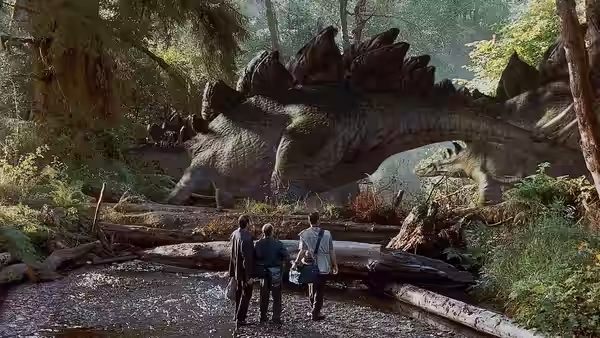
Steven Spielberg goes back to Michael Crichton’s dinosaurs four years after Jurassic Park (1993), and this time he has left the wonder at home. John Hammond (Richard Attenborough) has lost his company to Peter Ludlow (Arliss Howard), and wants a record of the animals on the second island before Ludlow’s men crate them up. Ian Malcolm (Jeff Goldblum) goes because Sarah Harding (Julianne Moore) is already there. That is David Koepp’s setup, and it is a good one. What follows is a monster film with better monsters than its predecessor and much less idea of what to do with them, and we came out admiring the animals and shrugging at the people.
The opening sets the tone. A little girl wanders off from a picnic on the beach and finds a small dinosaur, about the size of a chicken, and then its friends, and then the film cuts to her mother’s scream. Spielberg did something like it on a beach in Jaws (1975), with the same relish. It is a nastier film than the first one. The PG is earned by cutting away, not holding back.
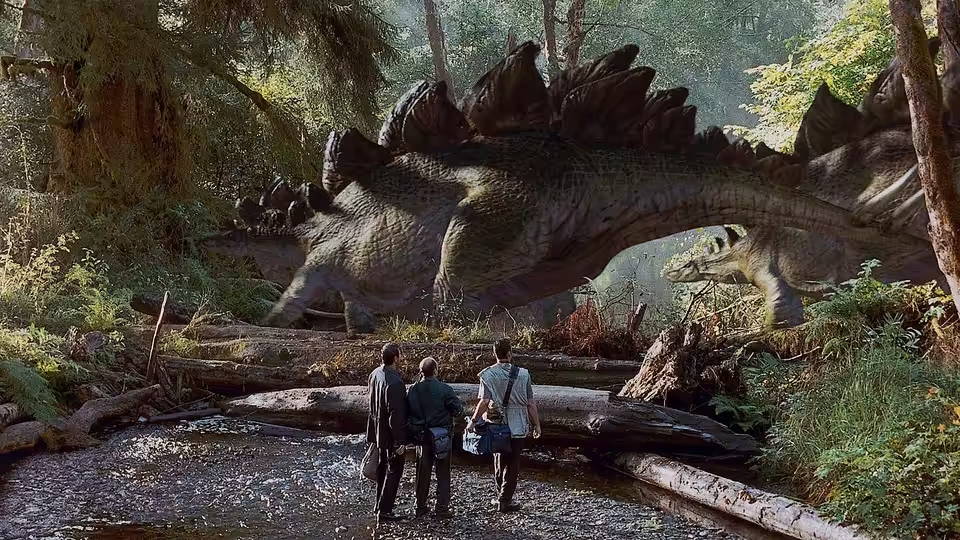
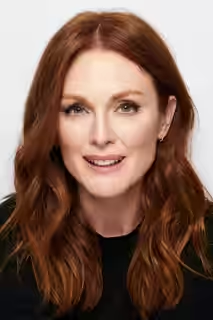
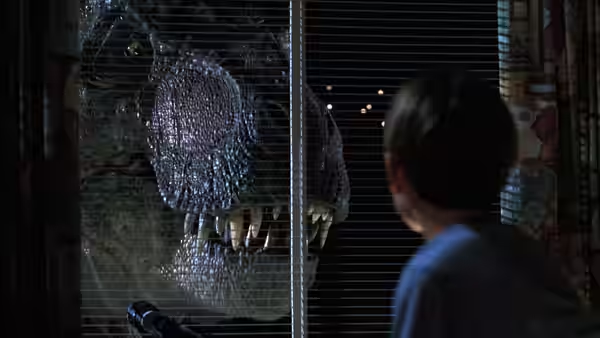
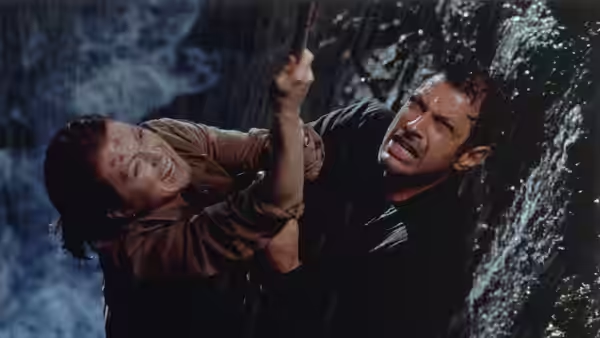
The middle hour is where the money went. Janusz Kamiński shoots nearly all of it at night and in rain, the jungle lit by headlamps and lightning, so the animals arrive out of black. Rick Carter’s research vehicle, two trailers joined by a concertina passage, is the film’s best prop, and Spielberg spends a quarter of an hour taking it apart. Two tyrannosaurs shove it towards the edge of a cliff, and Moore ends up lying on a pane of glass above the drop, watching it crack beneath her. We gripped the armrest and did not let go. Michael Kahn gives every fracture in the glass its own shot, and the sound of it is worse than anything the dinosaurs do.
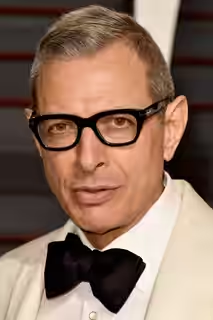
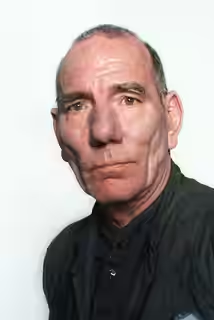
Goldblum, promoted to lead, does the whole thing in a sardonic mutter, and does it well. Pete Postlethwaite is the best thing here: a hunter who has come for one animal and cares nothing for the money, played with a stillness the others lack. Vince Vaughn’s Nick Van Owen is a saboteur written as a hero, and the film never notices that nearly every disaster follows from something he did. Vanessa Lee Chester’s Kelly is on the island because the script needs a child there.
Koepp’s screenplay is a chain of reasons for people to be in the wrong place, thinning as it goes. The sequence in the long grass, where a line of hunters is taken from below one at a time, is beautifully staged and means little, because we have not met most of the men being eaten. The film’s case for leaving the animals alone is made by Hammond in a speech and never shown. John Williams writes a darker, more percussive score than before, drums and low brass, and uses the old theme sparingly. It never stops in daylight to simply look at the animals, and we missed that.
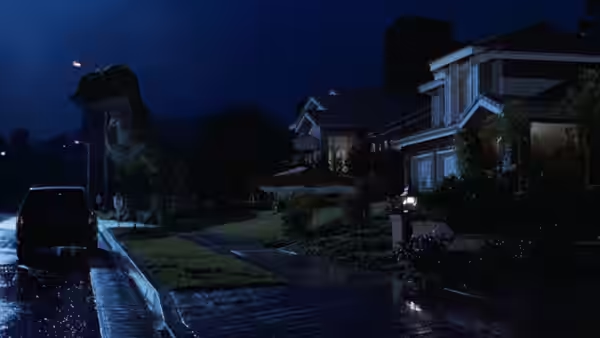
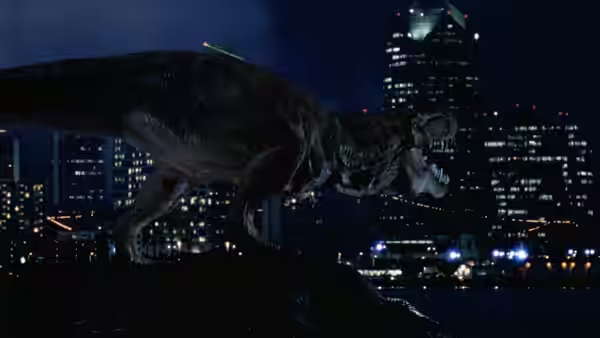
The last half hour takes the film somewhere we will not describe. It is bold and silly, and we watched it with weary disbelief: not frightened, not thrilled, just aware that an expensive machine had run out of road and kept driving.
Against Spielberg’s own record this is a professional’s sequel, the work of a man who could do this in his sleep and, for stretches, did. See it for the trailer, for Postlethwaite, and for the little dinosaurs on the beach. Watch it at home, where the night scenes are easier to read and the ending can be switched off. It runs 129 minutes and reached UK cinemas on 18 July 1997.