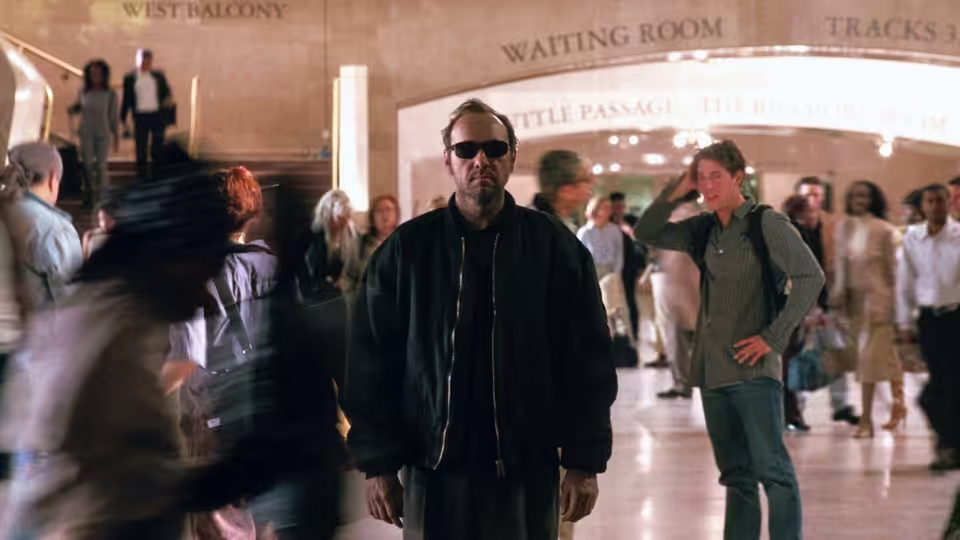
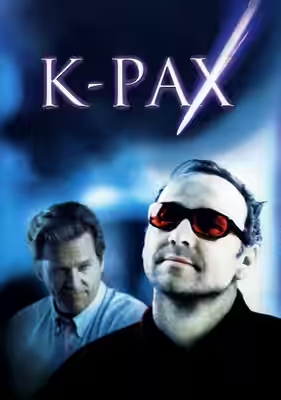
K-PAX has a persuasive listener in Jeff Bridges and an intriguing problem in Prot. The performances and careful direction hold our attention longer than a thin, sentimental mystery deserves.
K-PAX is an engaging idea given a patient hearing and a disappointing script. Director Iain Softley wants to make a science-fiction mystery in which taking another person seriously matters as much as establishing what is true. That is a worthwhile aim, and the film has enough curiosity and kindness to get us interested. The problem is that it grows sentimental just when its questions need to become more difficult.
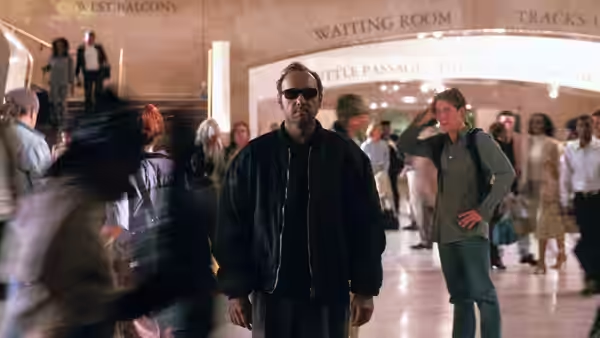
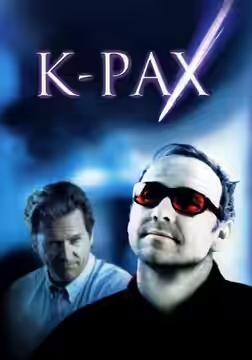
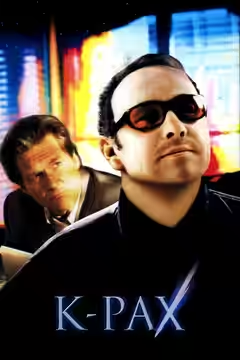
Dr. Mark Powell (Jeff Bridges) is the reason to stay with it. Faced with Prot (Kevin Spacey) and the uncertainty surrounding his origins, he makes professional attention interesting: we can see the effort involved in hearing someone out without accepting everything they say. We were moved by his willingness to keep listening, because the performance makes that patience feel like something the doctor has to work at. His responses give their conversations an interest that survives some fairly unconvincing writing.
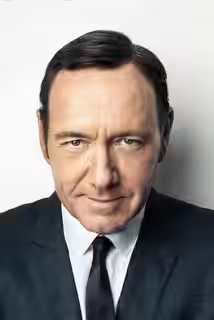
Kevin Spacey is less consistently persuasive. His controlled manner supplies the strangeness the part needs, but it can also make Prot seem pleased with his ability to unsettle everybody else. The performance keeps inviting us to inspect it for clues, which becomes distracting when the film asks for sympathy. There is pleasure in watching the two actors together, though the doctor is often more interesting than the man he is trying to understand.
John Mathieson’s cinematography gives the mystery useful assistance through his handling of light, making us receptive to possibilities that the dialogue struggles to sell. Iain Softley’s compositions encourage us to look closely, and his restraint suits the encounters between the two men. John Beard’s production design supports that approach without competing with the actors for attention. There is care in the surroundings, although the people outside the central pairing could have used more of it.
Charles Leavitt’s screenplay, adapted from Gene Brewer’s novel, is particularly weak on the doctor’s life away from Prot. Rachel Powell (Mary McCormack) belongs to a home-life subplot that ought to deepen our understanding of him but feels underdeveloped. It gives us another reason to consider his humanity without doing enough to make her interesting in her own right. More troublesome is the treatment of mental illness, which too often seems to exist to help other people arrive at reassuring thoughts.
Craig McKay’s editing preserves the unhurried pace, but at 120 minutes the repeated uncertainty begins to feel like delay. Edward Shearmur’s music adds to the film’s gentleness; we would have welcomed less encouragement to find the material touching. A mystery can leave questions open and still satisfy us, provided the people asking them become more interesting as it proceeds. Here the competing possibilities keep receiving attention while the drama runs short of fresh reasons for us to care.
There is enough in the two leading performances to explain why this will work for some viewers, and the direction rarely bullies us. As reflective science fiction, though, it asks for more credit for raising questions than its thin supporting drama has earned. Approach it for the actors, with a tolerance for sentiment and a mystery that becomes less compelling as it goes.