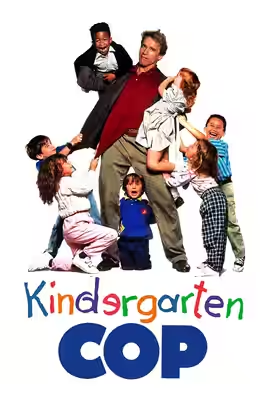
Arnold Schwarzenegger’s exchanges with the children make Kindergarten Cop an amiable, uneven comedy. Pamela Reed is good company, but a slack middle and an unconvincing romance keep it from being more than a modest diversion.
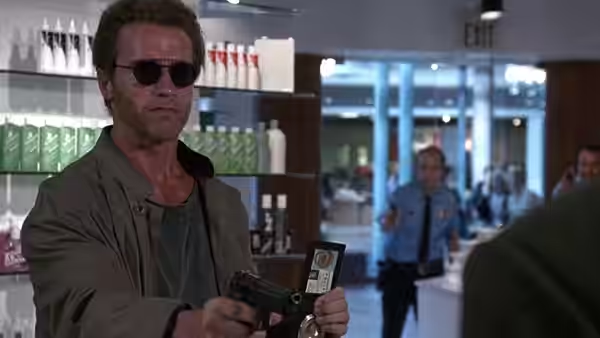
Kindergarten Cop is a decent comedy whenever it lets Arnold Schwarzenegger contend with the children, and a less convincing film when it asks him to carry the romance. Ivan Reitman gets a fair amount of enjoyment from that first proposition. The difficulty is keeping it going while a police thriller demands attention of its own. There is enough here for an undemanding evening, though the middle could have used firmer treatment.
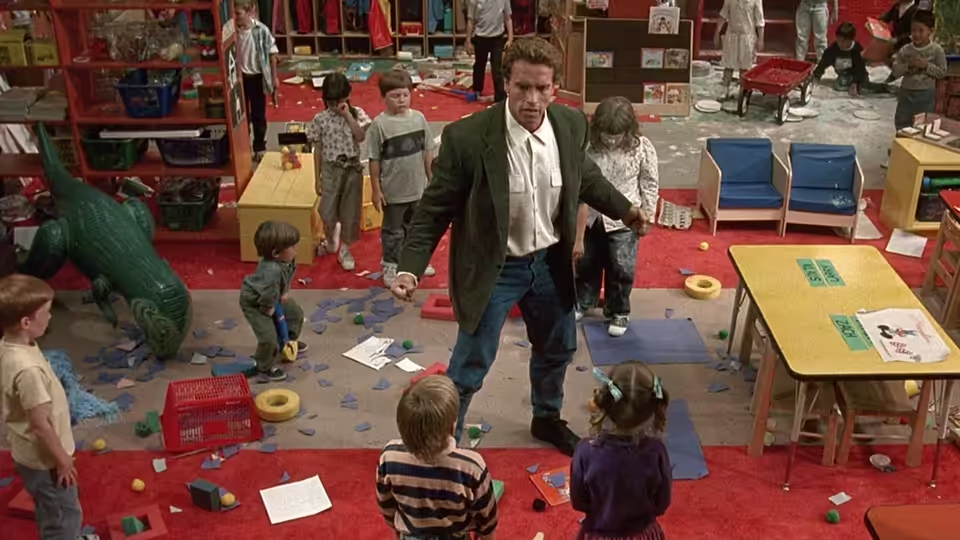
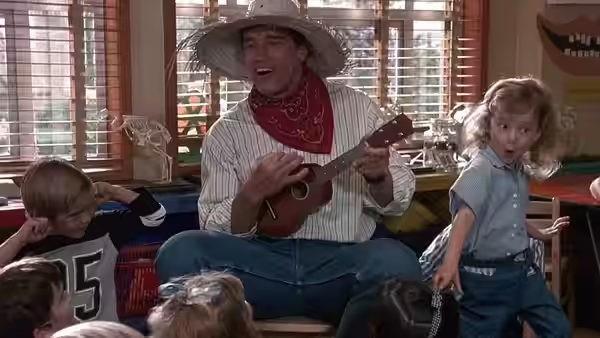
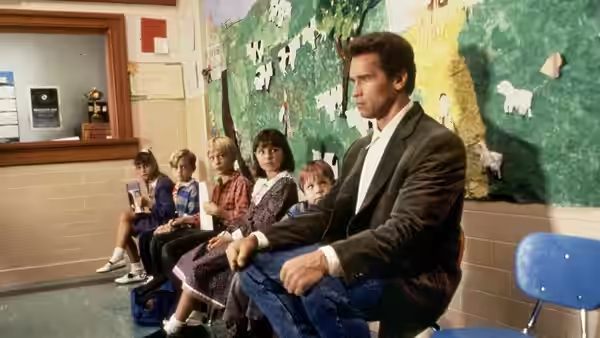
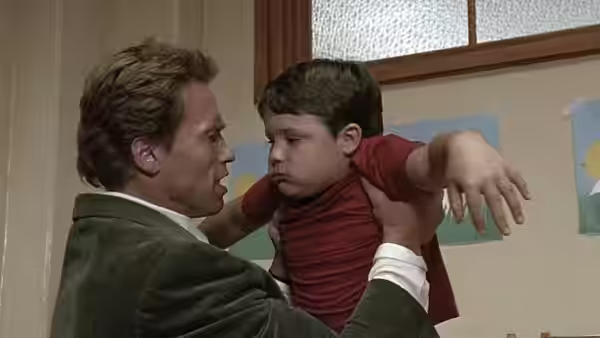
We laughed at Arnold Schwarzenegger sparring with the children, because his authority seems so much less useful to him in their company. He is funny when the effort to remain in charge becomes visible. The joke is simple and does not offer unlimited variations, but the children give him something immediate to respond to. Comedies about adults out of their depth depend on watching them adjust, and Ivan Reitman gives his star time to make that adjustment.
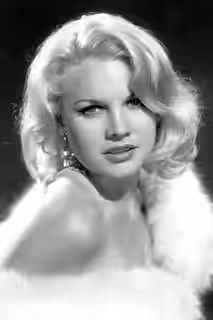
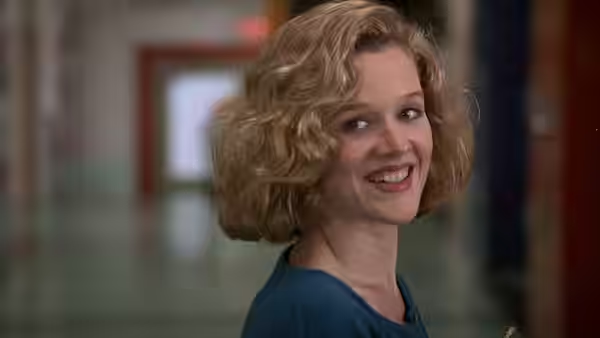
Pamela Reed gives Phoebe the briskness the film needs whenever its leading man threatens to become the entire show. Her sidekick performance has enough personality to hold our attention without turning each exchange into a competition. Richard Tyson as Crisp and Carroll Baker as Eleanor Crisp give the criminal side more presence than this sort of comedy always bothers to provide. That helps the thriller passages, even if having forceful villains also makes the changes in tone more pronounced.
Michael Chapman’s cinematography is at its most useful when it keeps the physical mismatch clear. Bruno Rubeo’s production design has the same job, and neither contribution needs to advertise itself for the classroom joke to work. Randy Edelman’s music has to accommodate comedy, threat and tenderness, though the romantic material remains unconvincing. The plain comic business is the more dependable pleasure.
The screenplay by Timothy Harris, Murray Salem and Herschel Weingrod has trouble making the romance worth the time it takes. It asks for affection without making the relationship particularly persuasive. This is not disastrous, and it does not take over the film, but the classroom exchanges are more engaging and we spend too long waiting to return to them. We need not be laughing constantly; we do need a stronger reason for spending time away from the children.
Wendy Greene Bricmont and Sheldon Kahn’s editing cannot quite disguise how thin the central situation becomes across 111 minutes. The middle loses momentum, and the switches between comedy, violence and romance start to feel like an attempt to keep several audiences occupied. There are enjoyable scenes on either side of that lull. Cutting the quieter stretches more tightly might have helped, though the writing would still leave the romance short of conviction.
The mixture also matters when choosing who to watch it with. The violence is part of the offer, not an incidental rough edge that the presence of children makes harmless. Keep the 15 certificate in mind before allowing the word kindergarten to settle the question.