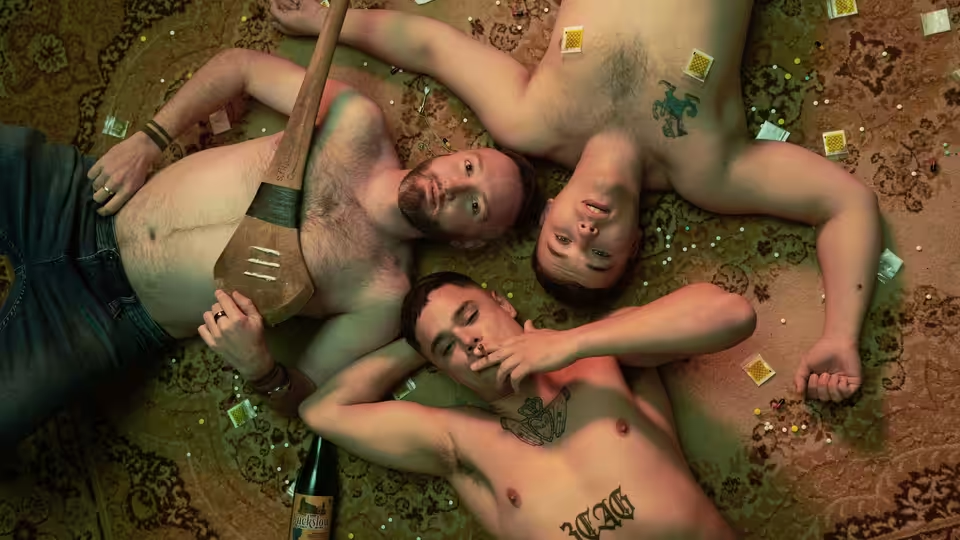
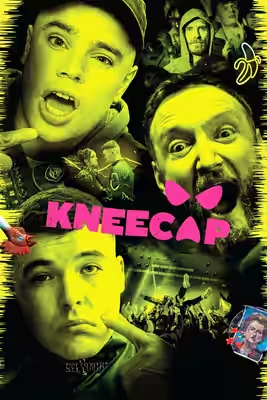
Rich Peppiatt’s account of how a Belfast rap trio came to be is fast, rude and funnier than anything we have seen in a while, and the band play themselves better than actors would have. The father and the paramilitaries are the price of admission.
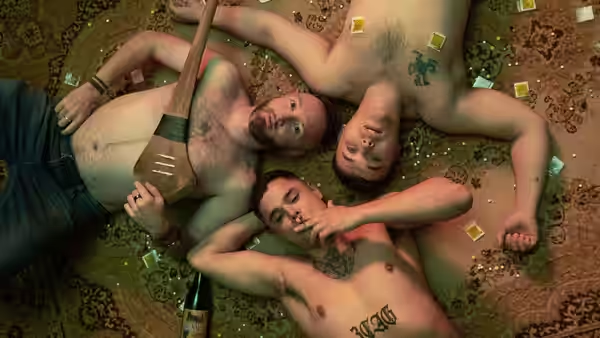
Naoise (Móglaí Bap) and Liam Óg (Mo Chara) sell drugs in West Belfast, take rather more than they sell, and speak Irish, because they were raised in it and because the police cannot follow. When Liam Óg is lifted and refuses to answer in English, the station sends for JJ (DJ Próvaí), a music teacher at an Irish-language school, to translate. He finds a notebook of lyrics and takes it home. Rich Peppiatt, writing and directing, has the three members of Kneecap play versions of themselves in the story of how the band began, and it is the funniest film we have seen in a good while. It is also carrying two subplots it could have lost.
The interview room is where we knew it had us. Josie Walker’s Detective Ellis sits across from Liam Óg trying every tone she has, patient, then bored, then furious, and he answers each one in Irish with a face of perfect helpfulness. We laughed until the person beside us complained, and the laugh is the film’s point: a language the police regard as a museum piece is being used, right now, against them, and it is working. Peppiatt does not put a speech on top of this. He does not need to.
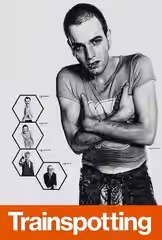
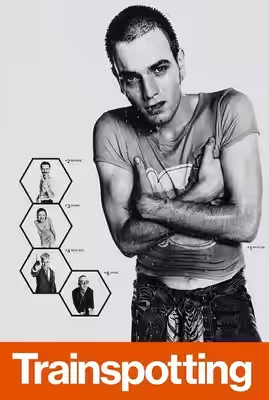
Ryan Kernaghan shoots Belfast handheld and close, the lens bending at the edges whenever the pills come out, and Julian Ulrichs and Chris Gill cut fast enough that a night out is over before you have placed the pub. Drawings crawl across the frame and the subtitles arrive in bold colour, more like tags on a wall than captions. Most critics have compared this to Trainspotting; Peppiatt is not hiding it. What he adds is that the songs are real, and on stage Michael Asante’s score steps back and lets the tracks do the work. The first gig, in front of a crowd that had come for something else, is where we felt the thing turn from a prank into a band.
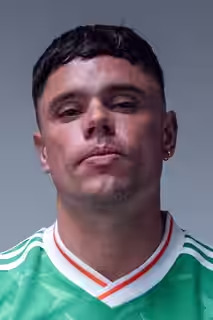
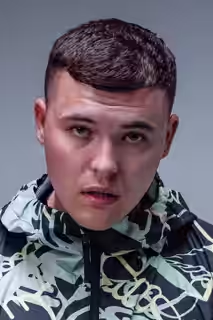
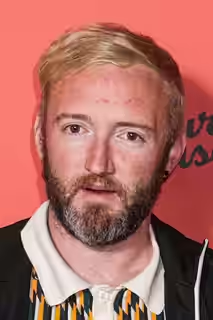
The three leads are not actors, and it shows in the right ways. Mo Chara delivers the voiceover with the flat confidence of a man who has told this story in pubs, and Móglaí Bap does most of the film’s feeling with his shoulders. DJ Próvaí has the hardest job, a middle-aged teacher who has to be talked into a tricolour balaclava, and his slow surrender is the closest the film gets to a conventional arc. Fionnuala Flaherty plays Caitlin, his partner, who is campaigning for the language through the proper channels and is not delighted to find it being defended with a good deal more swearing.
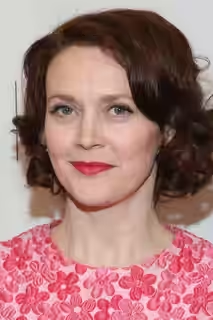
What the film wants to say about Irish it says plainly: the language that lives is the one people are rude in. Jessica Reynolds’s Georgia, a Protestant girl Liam Óg is seeing, gets the joke faster than anyone else, and the scenes between them are the sharpest writing Peppiatt does. Simone Kirby, as Naoise’s mother Dolores, who has not left the house in years, is quiet and exact and gives the film its one still point.
Michael Fassbender plays Arló, the father, a republican who is officially dead and unofficially about the place, and the film goes solemn each time he appears; the solemnity does not fit. Adam Best’s Doyle leads a gang of dissidents who object to the drugs, and their scenes are staged like a thriller nobody wanted to make. Both strands exist to give the second half a plot, and the second half could have managed with less of one.
Peppiatt announces early that he has no time for the music biopic and then keeps most of its furniture: the meeting, the first gig, the falling out, the big night. He arranges the furniture with more wit than the genre gets, Nicola Moroney’s bedroom studio and school corridors look like places rather than sets, and at 105 minutes nothing is allowed to sit for long.
It is an 18, for the drugs and the language, and the language in question is the one the film is defending. We left wanting the records rather than a sequel, which we mean as a compliment.