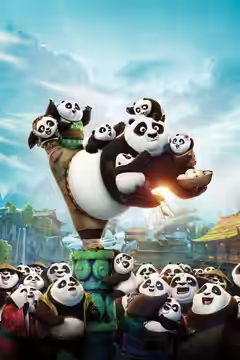
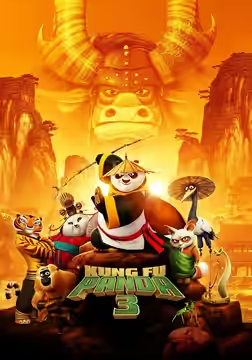
A cheerful, handsomely animated family film whose fights are more inventive than its story. Jack Black keeps Po good company, though the crowded supporting cast and an unthreatening villain leave this third outing feeling familiar.
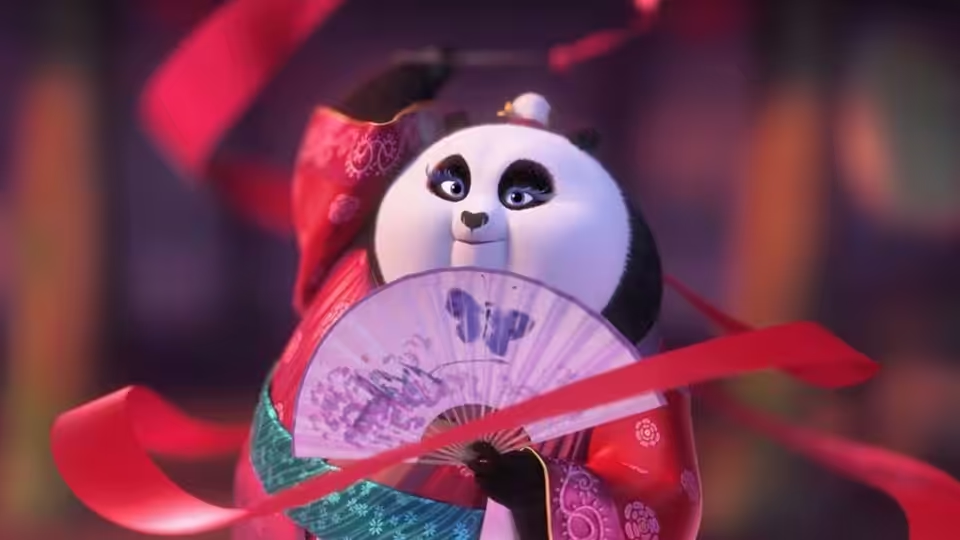
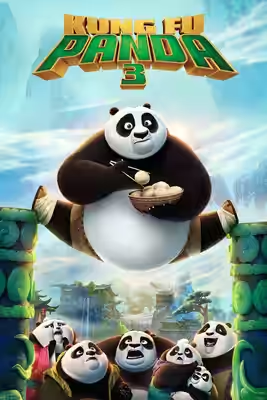
Kung Fu Panda 3 is good family entertainment, with more imagination in its action than in its plot. Directors Alessandro Carloni and Jennifer Yuh Nelson keep the tone cheerful, allowing Po to remain an eager, slightly overwhelmed presence rather than treating his importance as a reason to become solemn. There is pleasure in watching a hero who still seems pleased to be taking part. The familiar story is a limitation, but it does not spoil the evening.
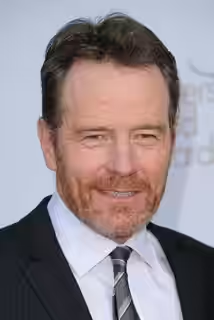
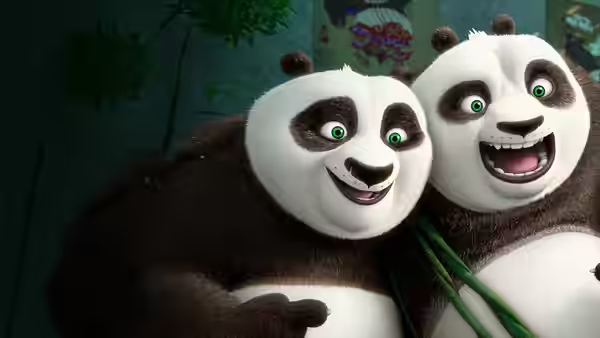
Jack Black is crucial to that. His vocal performance makes Po’s enthusiasm infectious without making the character exhausting, and the humour works because he sounds involved rather than stationed outside the story commenting on it. Bryan Cranston gives Li enough warmth to make the arrival of Po’s father matter. We were unexpectedly touched by the scenes between Po and his fathers; Jack Black lets the uncertainty show through the eagerness, giving the family exchanges room for something beyond another joke.
That domestic material also helps the screenplay by Jonathan Aibel and Glenn Berger avoid becoming a string of fights with instructions between them. The laughs are reliable, and the film makes room for affection without demanding that every tender moment become a lesson. It is less persuasive whenever familiar story business takes over. We can enjoy Po’s company and still wish that his next difficulty were harder to anticipate.
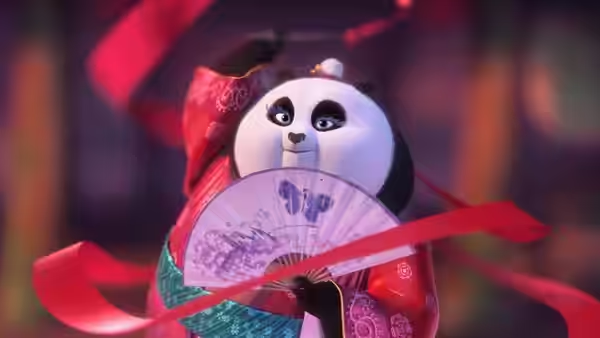
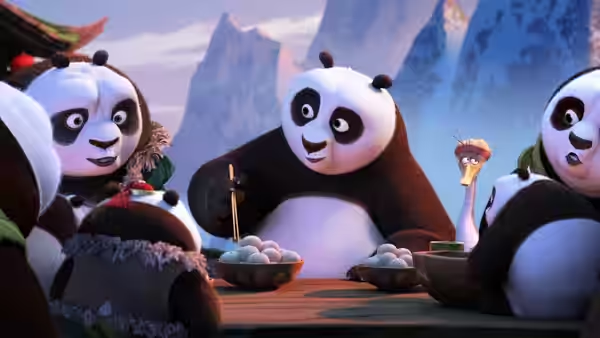
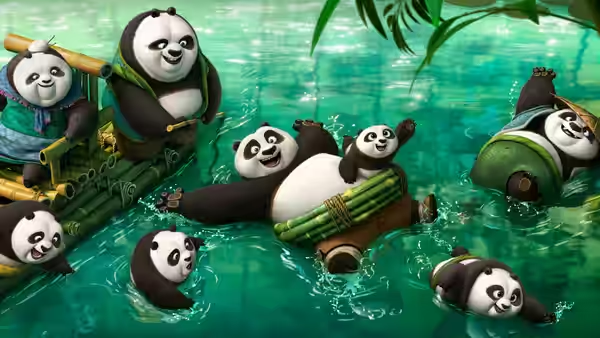
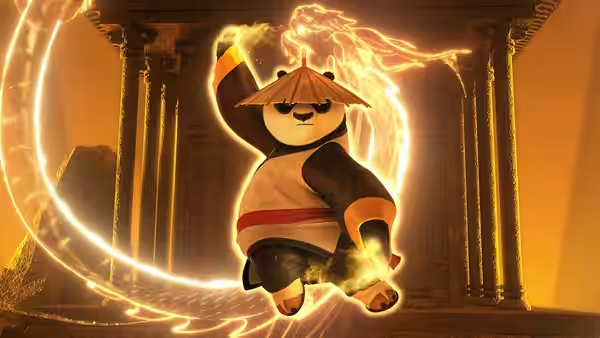
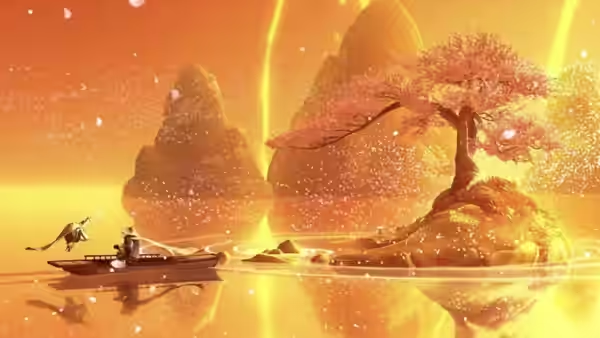
Raymond Zibach’s production design supplies some welcome invention. The backgrounds draw on Chinese painting, and their colour and sense of space make the setting worth noticing even when the plot is doing something routine. Damon O’Beirne’s cinematography serves the fight choreography well, keeping our attention on movement rather than merely on the amount happening in the image. We can follow the physical jokes, which is essential when so much of the comedy depends on them.
Clare Knight’s editing is strongest during those action passages, where the movement feels graceful and the energy does not turn into confusion. The middle is less brisk, and the film takes longer than it needs to before finding its way back to the next useful scene. At 95 minutes, this is hardly an ordeal, but the slackness is noticeable. Hans Zimmer’s music gives the action weight, though it cannot supply the danger missing from the villain.
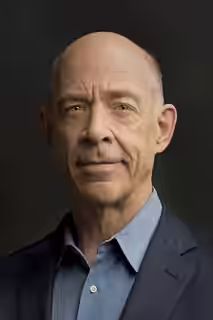
Kai, voiced by J.K. Simmons, is the clearest weakness. He fulfils the requirement for opposition without making us particularly anxious about what might happen, so the fights have to keep finding interesting movement when their outcome scarcely worries us. The crowded supporting cast suffers too, and we would have welcomed more time with Angelina Jolie’s Tigress. There are enough appealing performers here to make the thin portions handed to some of them frustrating.
By the standards of family adventure animation, this is an agreeable sequel with unusually attentive work in its backgrounds and movement. It does not find much new to do with the familiar hero-and-villain business, and anyone hoping for that should lower their expectations. The family scenes and Jack Black’s unforced charm are enough to keep us on its side. Choose it for a cheerful evening, with a little patience for the middle.