Jean Renoir makes a romantic triangle funny and uncomfortable, with Michel Simon giving the cruelty a recognisable human face. The crime story is less gripping than the people, but we recommend its patient, unsentimental company.
La Chienne is a good crime drama with an unusually patient interest in people behaving badly. Jean Renoir lets the romantic triangle generate farce without treating the people inside it as disposable fools. We recommend it with a reservation about its suspense, which sometimes struggles to compete with the pleasure of watching the actors. The film gives us time to consider these people, including time when we might prefer to dismiss them and move on.
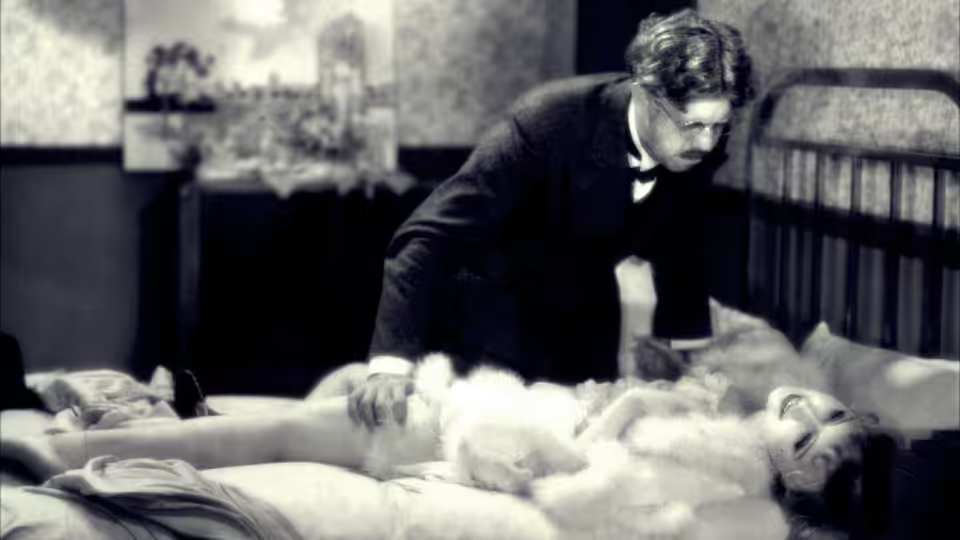
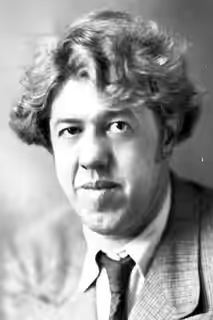
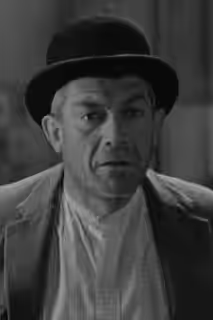
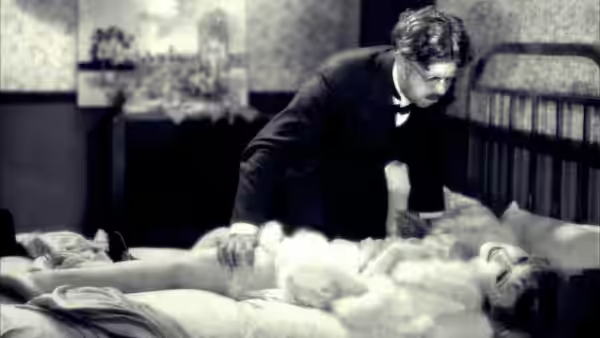
Michel Simon’s performance as Maurice Legrand is the main reason to stay. There is so little theatrical emphasis in his playing that it becomes difficult to keep the character safely at a distance, even when the farce offers an excuse. We laughed, then felt uncomfortable about how readily we had laughed. Michel Simon makes the man seem too recognisable for us to enjoy his difficulties quite as freely as the comedy invites.
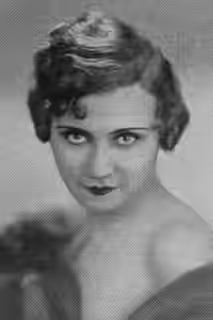
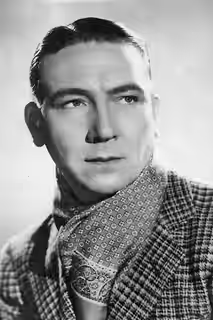
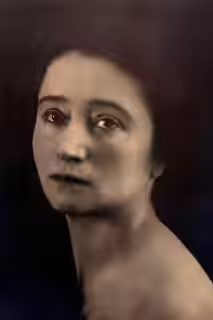
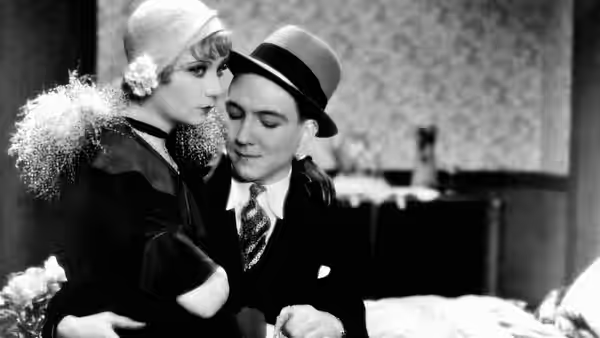
Georges Flamant contributes a similarly unforced performance as Andre ‘Dédé’ Govain. His naturalness keeps the crime material from becoming an exhibition of conspicuously disreputable behaviour, with every actor signalling what we should think. Janie Marèse completes the triangle as Lucienne ‘Lulu’ Pelletier, though we wanted a stronger sense of her apart from the two men. That imbalance limits how much the relationships can move us, and gives the central performance more work to do.
Theodor Sparkuhl’s cinematography keeps more than the central figures available to the eye. Deep focus and camera movement let us look into the surrounding space, giving the actors a world that remains interesting when they are not commanding our attention. Gabriel Scognamillo’s production design benefits from that freedom to look: the surroundings feel inhabited, worth attending to beyond their immediate usefulness to the story. This helps prevent a drama concentrated on three people from becoming airless.
The natural sound matters just as much. It helps the places on screen feel occupied, and gives the performances an everyday setting in which their restraint makes sense. Jean Renoir uses that ordinary quality to make the unpleasantness harder to shrug off; there is no reassuring distance between these people and the world we recognise. There is pleasure in attending to their surroundings, although it sometimes competes with the pressure a crime story needs.
Editors Paul Fejos, Denise Batcheff and Marguerite Renoir handle the changes between farce and social observation without much strain. The film can alter its tone without making the performances seem to belong to different works. The weakness is urgency: we can remain interested in the people while feeling little need for the next development to arrive. At 96 minutes, it still has stretches where patience becomes part of the bargain, and the humour occasionally makes the hurt easier to evade.
Within crime drama, this is a worthwhile alternative to the familiar demand that every scene tighten the plot. Jean Renoir allows sympathy to persist when the characters have done little to encourage it, and the actors justify that attention. We would have welcomed more emotional depth around the central triangle, but the film’s curiosity about people is persuasive enough to carry it. Choose it for the performances and allow the suspense to take its time.