Angelopoulos follows two children across a wet, grey Greece towards a father who may not exist, in long takes that ask for patience and repay it. It is slow, bleak and hard on its young leads, and one scene in the snow has stayed with us for years.
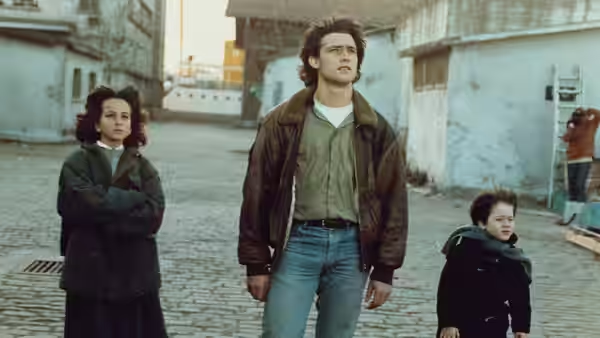
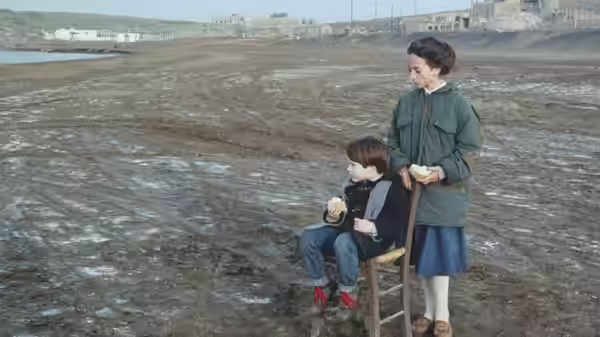
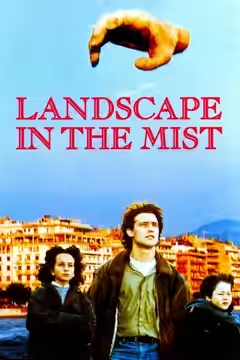
Thodoros Angelopoulos sends two children, Voula (Tania Paleologou) and her small brother Alexandros (Michalis Zeke), out of a Greek city and north towards a border, looking for a father they have been told lives in Germany. That is nearly the whole plot. The script, by Angelopoulos with Thanasis Valtinos and Tonino Guerra, has little interest in whether they get there. It wants to know what Greece looks like to two children with no money, in winter, and what the adults they meet do about them. Mostly the adults do nothing. It is a good film and a hard one to sit through.
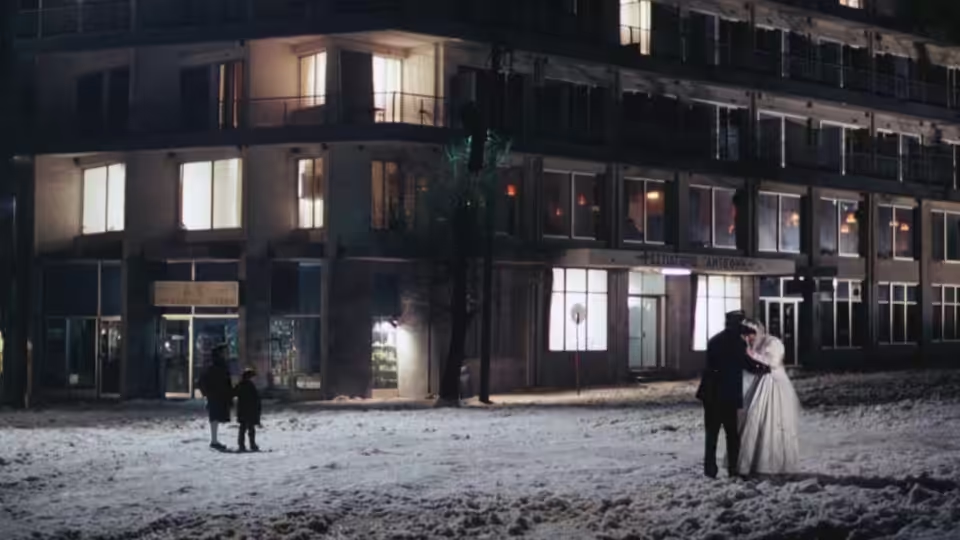
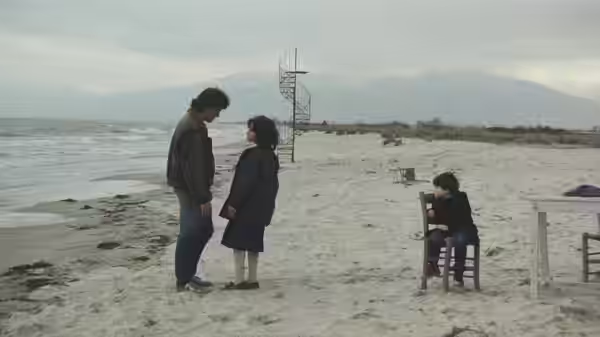
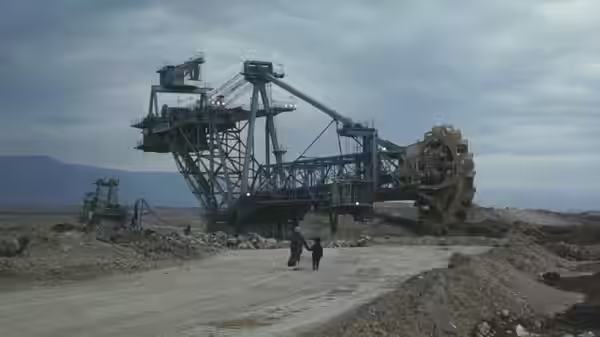
Giorgos Arvanitis shoots almost everything in one take, from a distance, in a blue-grey light that looks like the last hour before dark even at midday. Roads, railway sidings, petrol stations, a beach with nobody on it. When something happens, the camera does not go to it; it waits and lets the thing come into the frame, or not. In one town snow begins to fall and every person in the street simply stops and looks up, and Arvanitis holds on the whole street until the children are the only things moving. Yannis Tsitsopoulos cuts so rarely that when he does it registers as an event. Eleni Karaindrou’s score is a slow theme for strings and a single wind instrument, used sparingly and never to tell us what to feel; it arrives after the feeling has already happened.
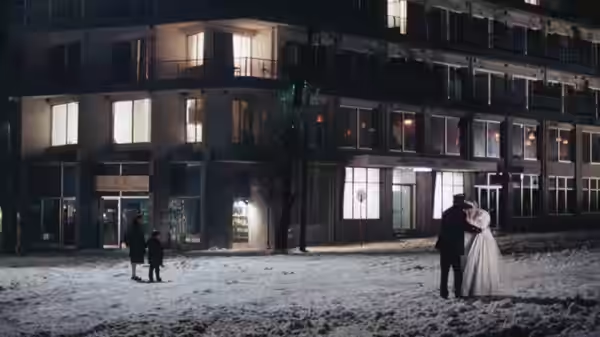
Here is what it did to us. Early on, a horse is dragged behind a tractor and left in the snow to die, and Alexandros finds it. Behind him a wedding party spills out of a hall, singing, and dances off across the frame without a glance. He kneels by the horse and cries, and Zeke, who cannot be more than five or six, cries the way children actually cry, in confusion more than grief, while Paleologou stands behind him not knowing whether to comfort him or hurry him on. We were undone by it. Nothing in the film is louder than that scene and nothing needs to be.
Stratos Tzortzoglou plays Orestis, the young man who gives them a lift, as the one adult who speaks to the children as if they were people, and the one with troubles of his own that he does not hand to them. Voula, on the edge of adolescence, watches him. The film lets us see it and says nothing, which is right. His troupe are the same travelling actors from Angelopoulos’s The Travelling Players (1975), older now, standing on a beach reciting lines from a play nobody will pay to see, trying to sell their costumes. This is the director quoting himself, and it is where the film starts to take itself too seriously. An actor in a seagull costume (Ilias Logothetis) crosses the sand for no reason the film cares to give.
It is gruelling, and not only by design. At 125 minutes and this pace, some stretches of waiting in stations and walking along verges go on past the point where the waiting means anything, and we found ourselves simply waiting too. The adults are so uniformly indifferent that after an hour we stopped expecting anything of them, which may be Angelopoulos’s point and is also a limit on his drama. The second half contains one act of cruelty towards a child, kept off screen, that we will not describe. The film cuts away and then moves on as the children do, and we still cannot decide whether that is wisdom or a flinch.
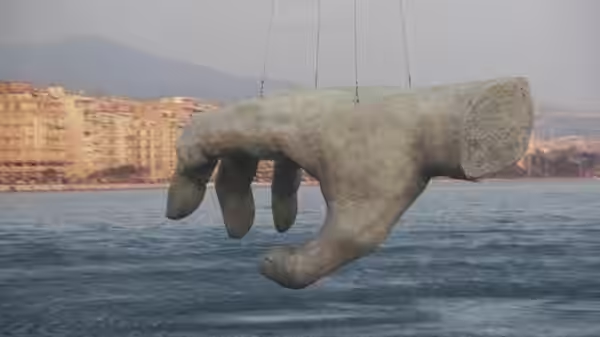
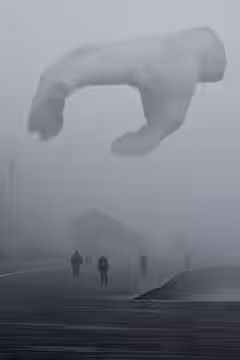
Against the director’s own work this is his most approachable film. The Travelling Players ran close to four hours and was about the history of a nation; this has two children, a road and a goal, and you can follow it without notes. There is an image in the middle, of an enormous stone hand with a finger missing being lifted out of the sea by a helicopter, that we could not explain and did not want explained. Anastasia Arseni keeps the children in the same coats from the first scene to the last, and lets them get grubbier.
It came to British cinemas on 16 June 1989. Watch it at home on a dark evening with nobody who talks, and give it all 125 minutes; it does not work in pieces. Do not put it on late. It will not let you nod off, and it will not forgive you for wanting to.