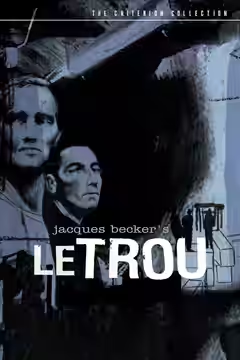
Jacques Becker makes the labour of a prison escape gripping enough to justify almost every minute. Le Trou asks for patience, occasionally too much, but its physical detail and convincing ensemble repay the effort.
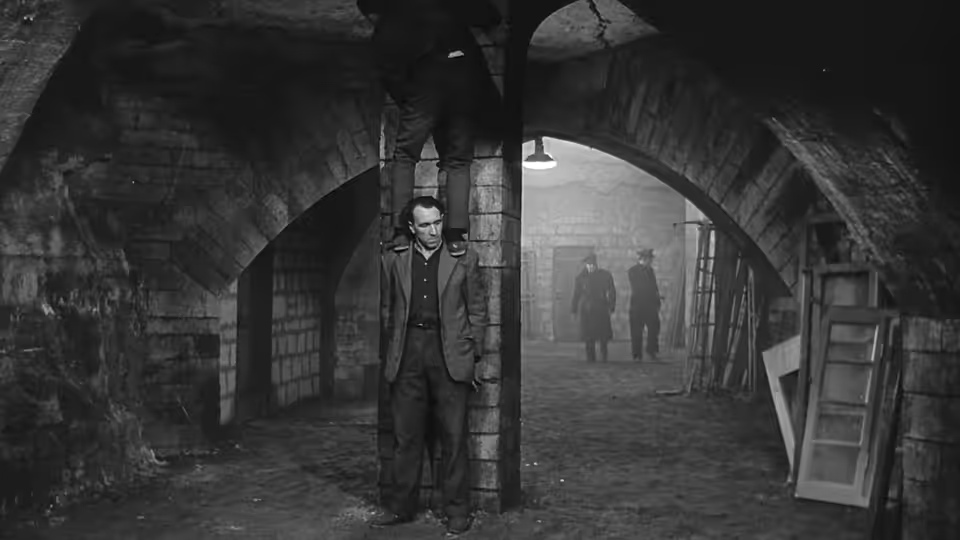
We recommend Le Trou warmly, with one reservation: its patience occasionally outlasts ours. Jacques Becker makes a prison escape depend on sustained physical work, and spends 132 minutes giving that work the attention a brisker thriller might deny it. The digging is allowed to be difficult, repetitive and tiring before it becomes exciting. That is a considerable risk for a thriller, but the men doing it give us good reason to stay.
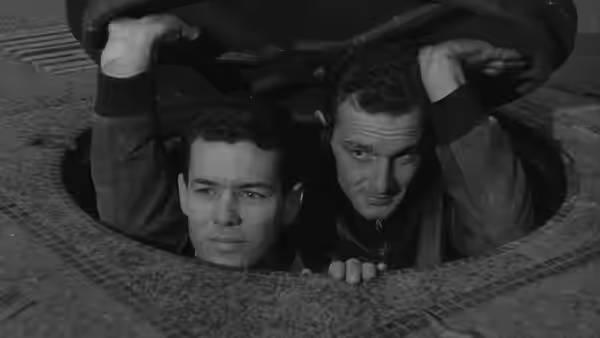
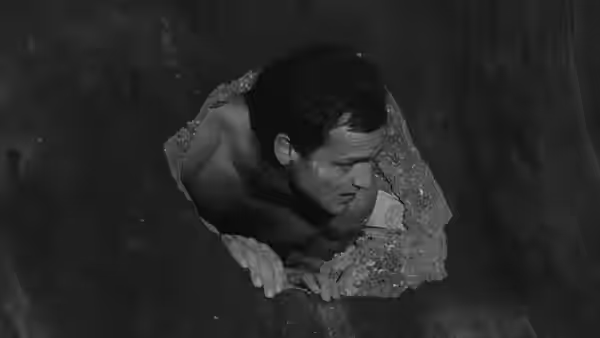
We grew tense watching the digging, because every small advance seemed to cost so much effort. The detail makes it difficult to take any progress for granted. We stopped waiting for the film to get past the practicalities and became absorbed in them. Once that happens, even a modest gain can provide more satisfaction than an elaborate escape stunt, because we understand what it has taken to achieve it.
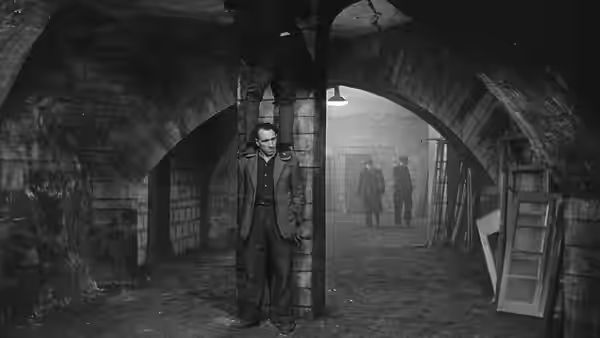
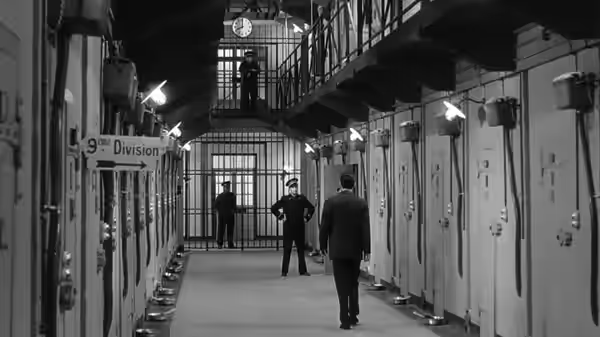
Ghislain Cloquet’s cinematography makes the physical process readable, an essential courtesy in a film so concerned with how things are done. The digging has weight because we can follow the work and appreciate its difficulty. Rino Mondellini’s production design likewise earns its place through the tangible resistance of the surroundings. The prison is convincing as a place that will be difficult to get out of, and the detailed attention to the escape keeps us conscious of that difficulty.
Editors Marguerite Renoir and Geneviève Vaury allow the labour to occupy stretches that another film might shorten considerably. This gives small advances a value they would lose in a brisk sequence of highlights. Philippe Arthuys is credited for music, but natural sound does the important work here. Listening to the digging makes the effort harder to dismiss and the confinement more oppressive. A more insistent musical accompaniment would tell us something the physical action has already made clear.
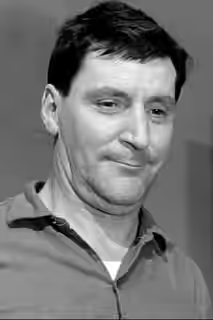
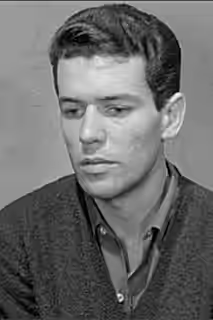
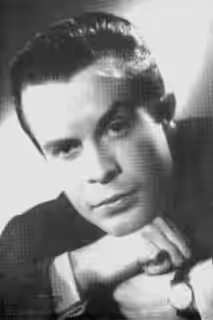
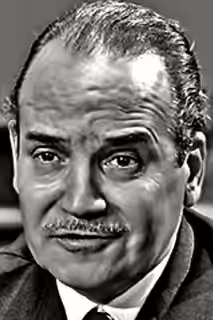
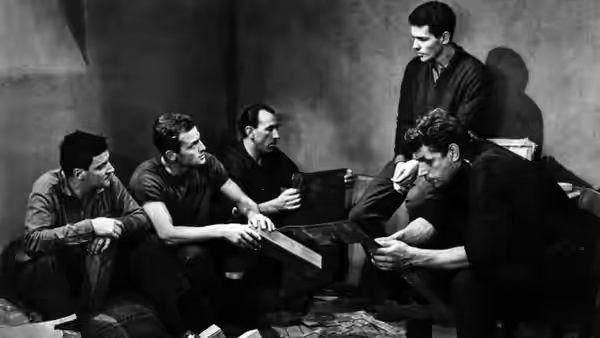
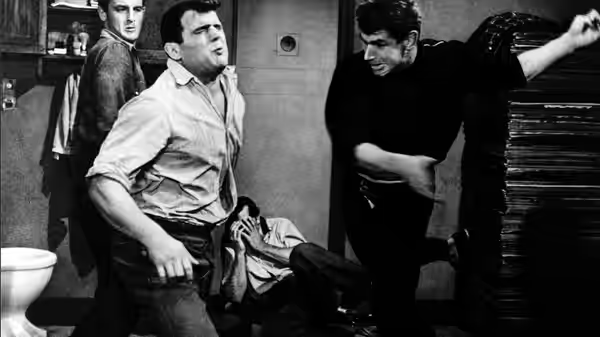
Jean Keraudy, playing Roland Darban, has the convincing presence this approach needs: we watch someone engaged in a difficult job without being distracted by the performance. Michel Constantin’s Geo Cassine and Philippe Leroy’s Manu Borelli help establish the same collective seriousness. The ensemble never feels like a collection of actors waiting for their next substantial speech. That restraint gives the labour more force, while allowing the men to hold our interest as people rather than simply as participants in an escape.
The cost is some repetition, and we would not pretend every stretch has an equal grip. Once the film has taught us to appreciate the labour, it occasionally continues the lesson longer than necessary. A little compression would preserve the sense of exhaustion without making us quite so conscious of the running time. This is a limited complaint, but it matters in a film whose success depends so heavily on keeping us attentive to small developments.
Within the prison-break thriller, this is a persuasive case for slowing down and letting a group of people work. Its patient observation gives the escape a physical credibility that remains exciting without needing constant new complications. There is enough empathy in the performances to keep the practical detail from becoming merely instructional. Set aside an uninterrupted evening, and do not mistake the quiet for an invitation to talk.