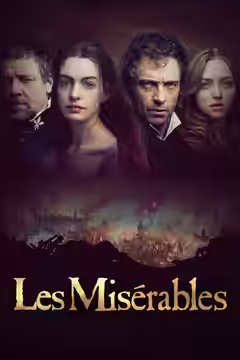
Tom Hooper films the stage musical with the cast singing live and the camera a few inches from their faces. When the face is Anne Hathaway’s the effect is overwhelming. Over 158 minutes it is also wearing, and the camera never learns to step back.
Tom Hooper’s follow-up to The King’s Speech (2010) is the stage musical filmed whole: Claude-Michel Schönberg’s score, Alain Boublil and Herbert Kretzmer’s words, William Nicholson’s screenplay joining the numbers, Victor Hugo’s novel underneath. Hooper’s one large decision was to have the cast sing live on set. It gives the film its best five minutes and most of its problems. It is sincere, enormous and, at 158 minutes, tiring, and we would still not have missed the good bits.
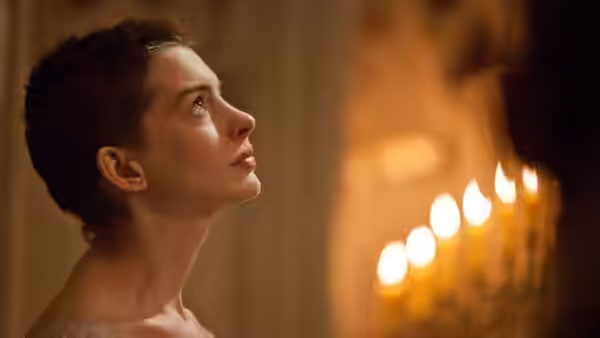
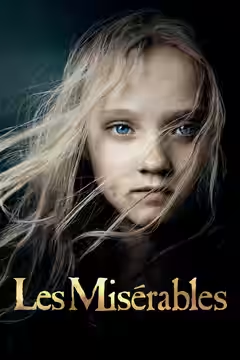
The good bits begin with Anne Hathaway. Fantine has sold her hair and her teeth and is singing ‘I Dreamed a Dream’ in a doorway by the docks, and Hooper puts Danny Cohen’s camera on her face and leaves it there for the whole song, in one take. She does not sing it well, on purpose. The voice cracks, the breaths come in the wrong places, she stops on a line to swallow. We cried, which we had not expected, because for once the method and the material want the same thing: nowhere for her to go, and nowhere for the camera to go either.
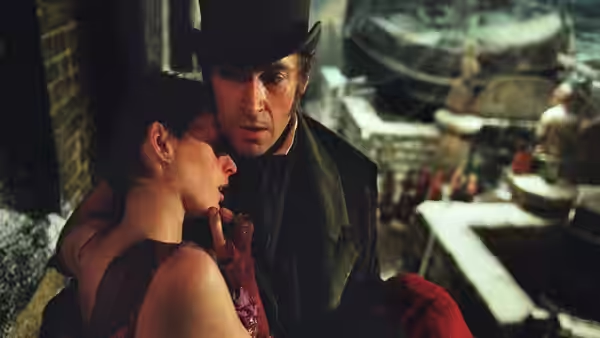
Hugh Jackman holds the rest of it up. His Valjean is a big man who keeps choosing to be decent and pays each time, and Jackman plays the cost in the body: the stoop of the convict, the straightened back of the mayor, the flinch when Javert walks into town. He sings ‘Bring Him Home’ high and quiet, and it is the second time the close camera earns its keep.
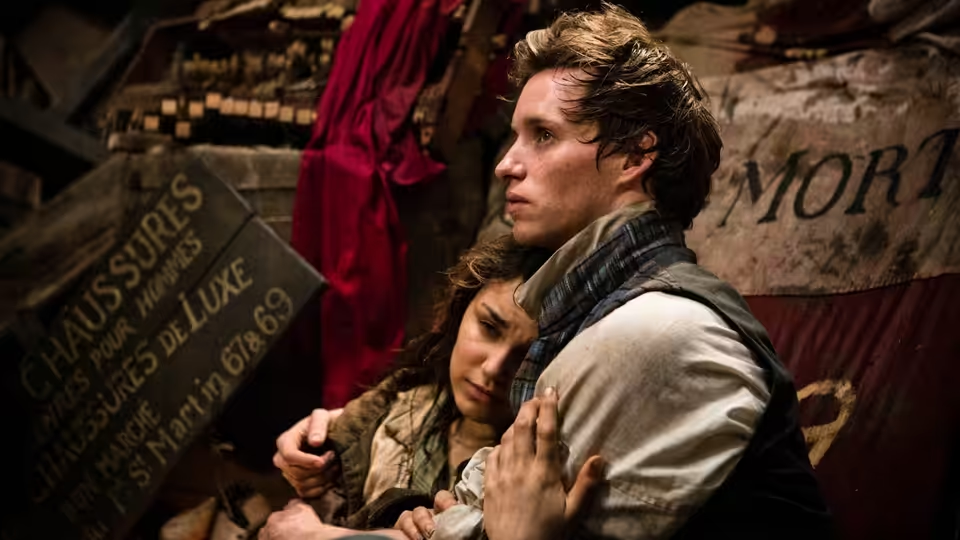
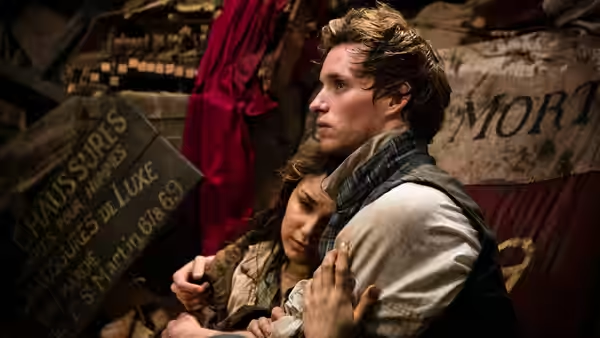
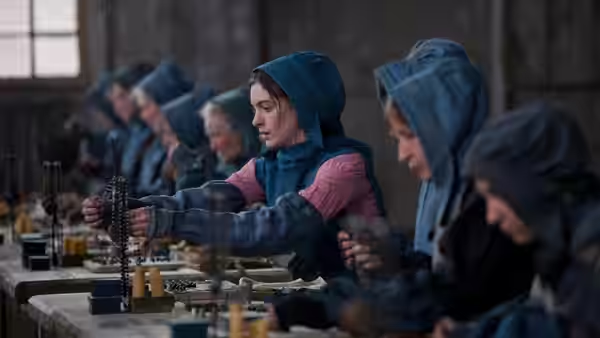
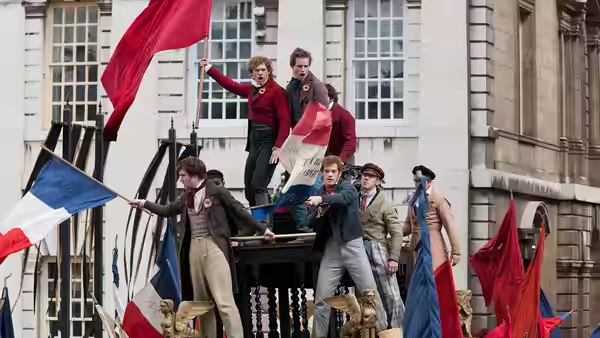
Eve Stewart has built a France of real weight: the Toulon dock, with a warship hauled in by hundreds of prisoners on ropes; a Paris of leaning tenements; the plaster elephant that Gavroche (Daniel Huttlestone) lives inside; a barricade of chairs, doors and coffins. Paco Delgado dresses the poor in cloth that looks wet even when it is dry. When Cohen pulls back far enough to show us these things, the film is handsome. The trouble is how rarely he does.
Hooper shoots nearly every number the way he shot Hathaway: wide lens, inches from the face, the frame tilted, the singer pushed into a corner so that half the screen is wall. Faces swell at the edges. It worked for Hathaway. It works for almost nobody else. Chris Dickens and Melanie Oliver cut the ensemble numbers into fragments of single faces, so that in ‘One Day More’ a dozen people sing to one another and we never see two of them in the same shot. Schönberg’s sung dialogue between the tunes thuds along in the same grip. Nobody in this film speaks.
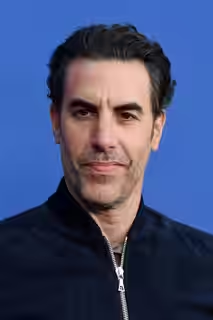
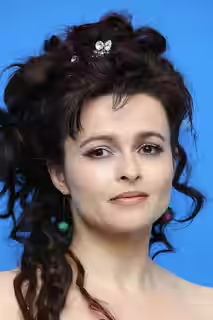
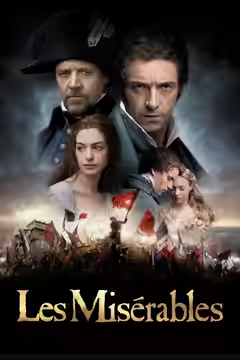
Russell Crowe is the casting everyone will argue about. He sings Javert plainly, a straight, careful tone with no thunder in it, and the part is written for thunder. It is a good actor doing something he can just about do, while the camera sits close enough to watch him concentrate. Eddie Redmayne, as Marius, is better than the part. Amanda Seyfried’s Cosette is sweet and thin, and so is Cosette. Samantha Barks, as Éponine, sings ‘On My Own’ in the rain and does it properly. Sacha Baron Cohen and Helena Bonham Carter, as the Thénardiers, play the comedy broad and with accents, and we were grateful for anyone allowed to be funny.
Here is the other thing we felt. Somewhere past the two-hour mark, with the barricade up and the students singing, we realised our eyes were tired, and that we had been looking at pores and fillings for most of an evening. The King’s Speech used the same wide lenses and off-centre frames, and it had two men in a room, so the manner read as intimacy. Here Hooper has Paris in revolt and films it as if it were a stammer.
The people who love the stage show will get everything they came for, louder and closer. Anyone else should know that it is sung from first frame to last, runs 158 minutes, and that the best of it is a woman in a doorway. Watch it at home, where the faces are roughly the size of faces.