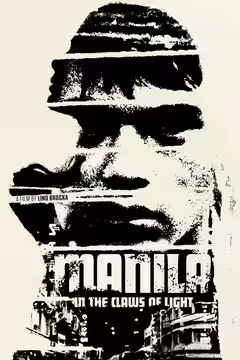
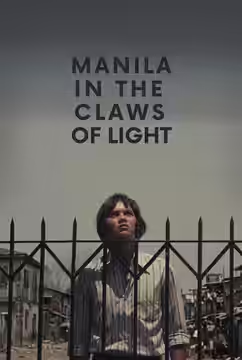
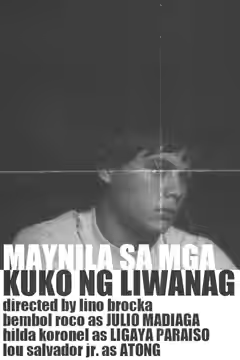
Lino Brocka’s film about a provincial boy searching Manila for a lost girl is angry, exact about wages and rent, and still sharp. The mystery plot dawdles and the villain is a broad type, but the city itself has rarely been filmed with this much bad temper.
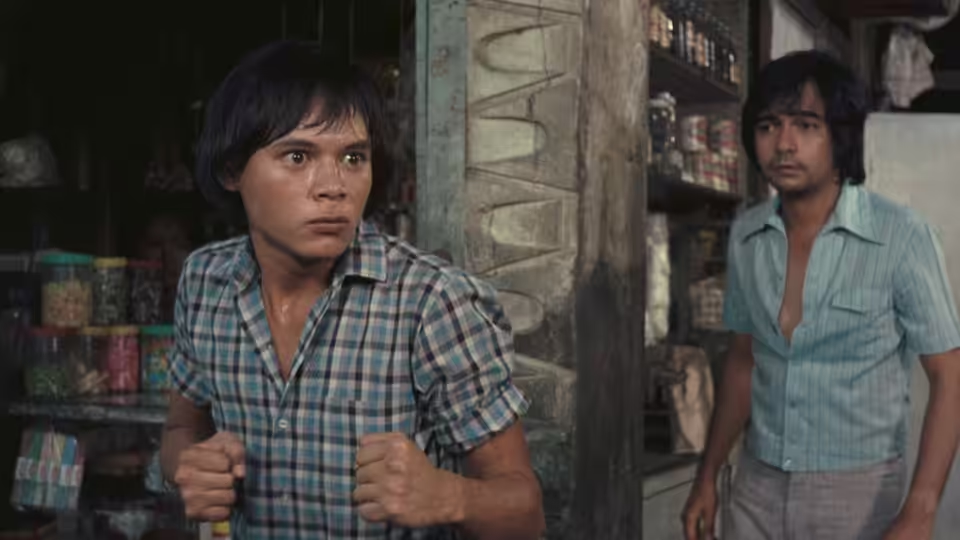
Julio Madiaga (Bembol Roco) has come from a fishing village to Manila to find Ligaya Paraiso (Hilda Koronel), who left with a woman promising work and schooling and then stopped writing. When we meet him he has been searching for months and has run out of money, so he takes a labouring job on a building site. Lino Brocka’s film, adapted by Clodualdo del Mundo Jr. from Edgardo Reyes’s novel, has the outline of a mystery: a missing girl, a man asking questions, a doorway he keeps returning to. It is not much interested in solving anything. It wants to show what the city does to people who arrive with nothing, and it does that with a ledger in its hand.
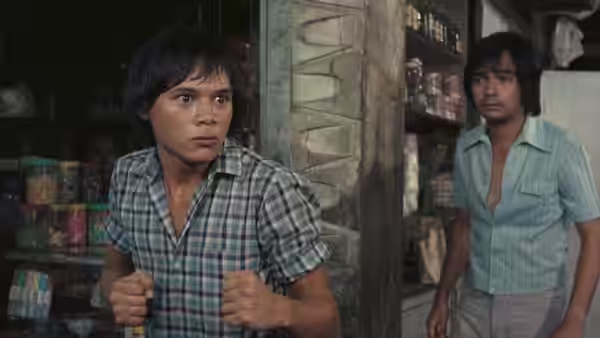
The site sequences are the best thing in it. The foreman, Mr. Balajadia (Pancho Pelagio), hires men at one rate and pays them another, and nobody argues because the men waiting at the gate will take less. Atong (Lou Salvador Jr.) takes Julio home to a shack built over a drain. Pol (Tommy Abuel) has been in the city longer and has worked out the rules, which is not the same as having beaten them. A man falls from the scaffolding and Brocka does not cut away; we flinched, and then noticed that within a few minutes the site is working again and the wage is still what it was. That is the film’s method throughout. Something terrible happens, and then somebody counts the money.
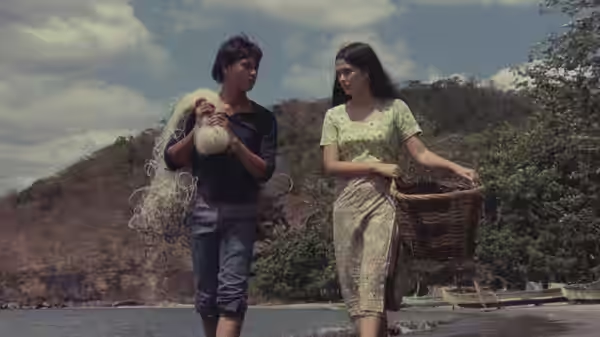
The camera is credited to Mike de Leon and Clodualdo del Mundo Jr., and most of the film is shot on the streets in daylight, following Julio as he walks. Jeepneys, hoardings, food stalls, the neon at night, faces that look at the lens because they are not extras. Julio is small in these frames and the city is not. The flashbacks to the province are done the other way, soft focus, sea, Koronel with her hair in the wind, and Max Jocson’s score turns sweet for them and hard and jangling for the city. The contrast is deliberate and a little crude; the beach looks like an advertisement for something. We found we wanted it back every time it went, which we suspect is the point. Julio does too.
Ike Jarlego Jr. and Edgardo Jarlego cut between the two worlds without warning, often off Roco’s face in the middle of a shot, so memory arrives the way it does when you are tired and hungry. The present tense is slow, and meant to be. Julio waits at the gate, waits for his pay, waits across the road from a door. Roco plays him as someone who does not understand the rules and is learning them at full price. He is passive for long stretches and the film does not apologise for that. A man with no money in a strange city is passive; he has to be.
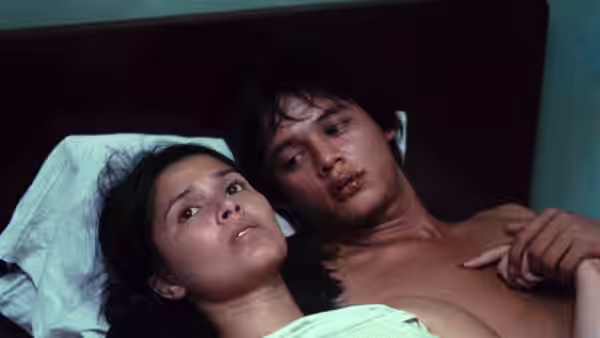
Koronel is mostly a memory until late on, when she gets one long scene we will not describe. What we can say is that the last twenty minutes left us shaken in a way the first two hours had not prepared us for, and that Brocka holds on a face for longer than is comfortable when most directors would have cut. We sat through the credits without speaking.
The flaws are real. The mystery dawdles in its middle third, and a detour into a different kind of work for Julio is filmed with less confidence than the building site. The man he eventually comes to suspect is a broad type, drawn with a thick pencil, and a film that is so precise about a foreman’s arithmetic goes vague when it needs a villain. Some of the supporting playing in the slum scenes is pitched for the back row.
City films about country boys go back a long way, and most of them soften somewhere before the end. This one does not, and at 127 minutes it has the time to make its case without hurrying. See it in a cinema if one near you is showing it; the streets need the size, and so does that last face.