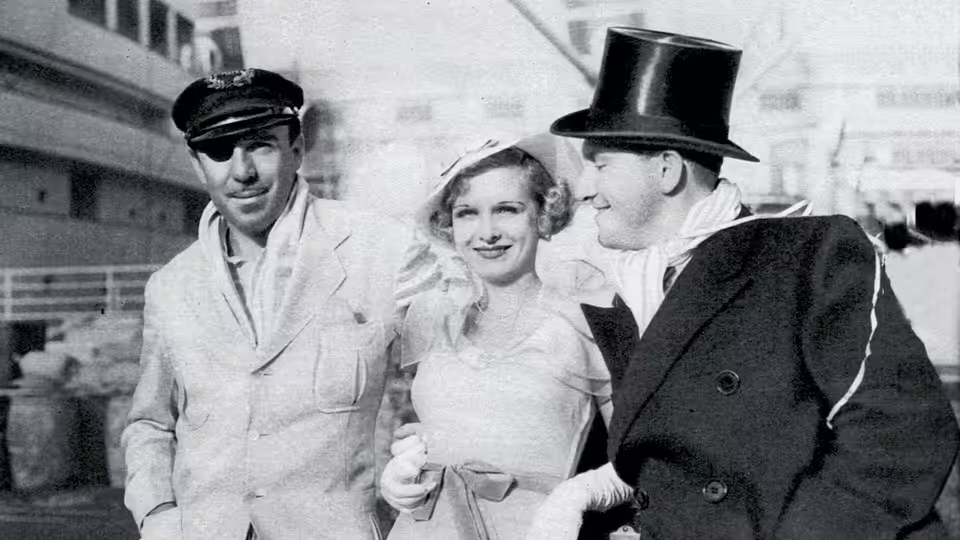
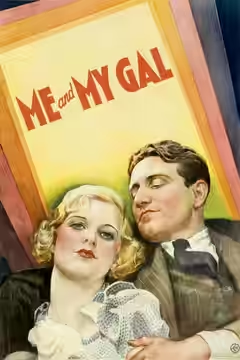
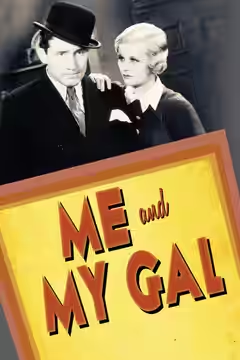
Raoul Walsh’s Me and My Gal has enough comic life to interest lovers of ensemble comedy, but tired wisecracks and an uneven pace matter. Its 79 minutes are less reliably entertaining than the cast deserves.
Raoul Walsh’s Me and My Gal has enough life in its cast to make its uneven comedy worth a look, provided ensemble films are already your sort of thing. We enjoyed the performances more consistently than the jokes. At 79 minutes, it ought to be an easy proposition, but several tired wisecracks make it feel longer. There is pleasure here, though the writing and pace make us work harder for it than we should.
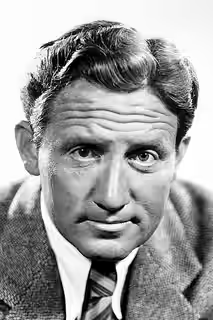
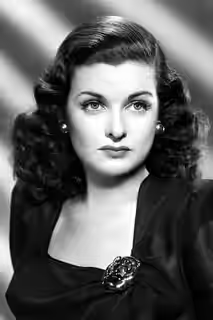
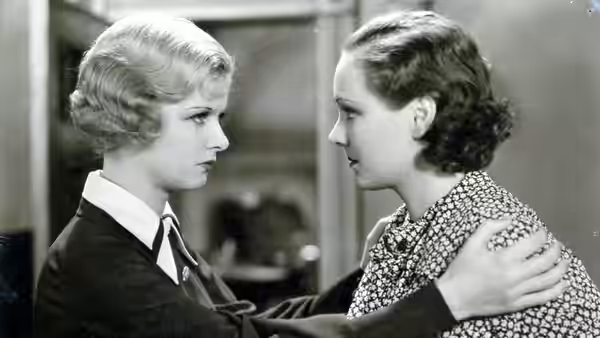
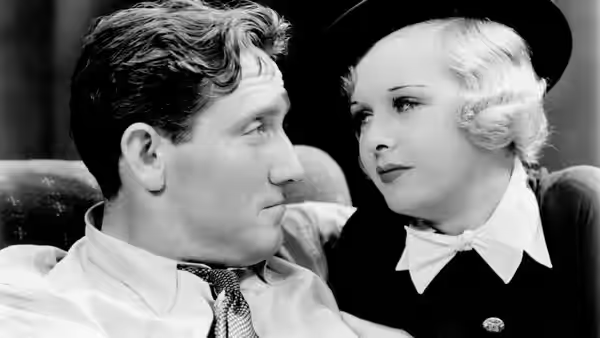
Spencer Tracy, as Danny Dolan, and Joan Bennett, as Helen Riley, give us the strongest reason to persist. They are appealing company even when we are not particularly amused, which matters in a film so dependent on its performers. Their appeal also makes the weak material more obvious: we keep wanting the screenplay to give them something better. Both have enough presence to hold our attention through passages where the comedy offers them little help.
Arthur Kober’s screenplay is more persuasive in its comic sketches than in its supply of wisecracks. We laughed at those sketches, then grew impatient when the verbal jokes kept failing to justify the time spent on them. The separate routines have a looseness we like, and there is something agreeable about a comedy willing to let its actors take their time. The difficulty comes when an unoriginal line gets the same indulgence as a good piece of comic business, which happens often enough to interrupt our enjoyment.
Arthur Charles Miller’s cinematography holds our interest chiefly through the performers rather than anything we would single out as a visual attraction. That is a reasonable emphasis for an ensemble comedy, although it gives the jokes little assistance when they falter. Jack Murray’s editing leaves the rhythm feeling slack in places, and the stronger comic passages never quite establish a dependable pace. We are happy to spend time with these actors, but we become conscious of how long we are spending between laughs.
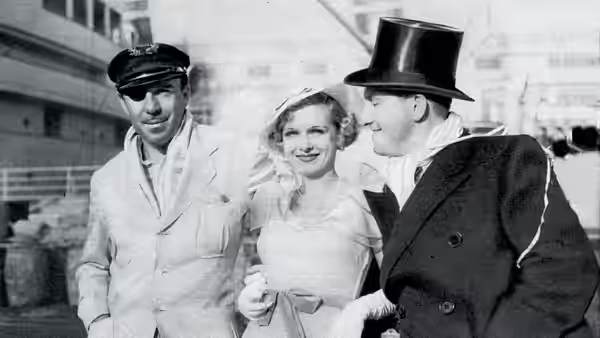
The supporting cast is where Walsh’s fondness for character actors pays off. Marion Burns plays Kate Riley, George Walsh plays Duke Castenega and J. Farrell MacDonald plays Pop Riley, contributing to an ensemble worth watching even when the script is unhelpful. Henry B. Walthall’s Sarge is a particular pleasure, and Walsh’s affectionate attention to the actor is one of the film’s more endearing qualities. That generosity towards the performers would be more rewarding with a firmer choice of which jokes to keep.
Small ensemble comedies do not need a tightly wound plot, and we would not ask this one to hurry merely for the sake of it. They do need enough good material to make lingering enjoyable, and Walsh has that only intermittently. The mixture of comedy, romance and drama troubles us less than the stretches where the humour simply wears thin. Admirers of Spencer Tracy, Joan Bennett and character actors will find enough here to make the evening worthwhile. Come for the cast, and allow for some waiting between laughs.