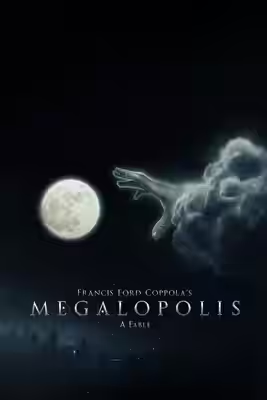
Francis Ford Coppola has paid for his own dream and put all of it on screen at once. Some of it is handsome, some of it is Aubrey Plaza, and none of it says more than the tagline does.
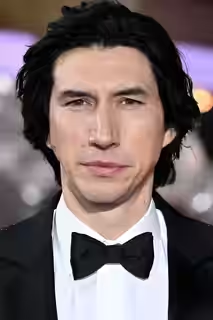
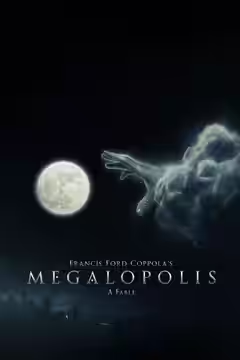
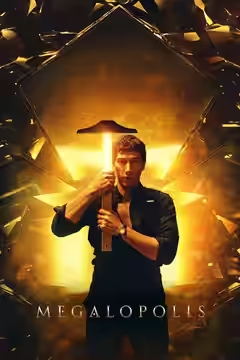
Francis Ford Coppola is 85, and he wrote, directed and paid for Megalopolis himself, so nobody could tell him no, and the film looks like that. An architect, Cesar Catilina (Adam Driver), wants to knock down a poor district and raise a city of the future on it. The mayor, Cicero (Giancarlo Esposito), runs the city he wants to rebuild and thinks people need somewhere to live in the meantime. It is a mess. It is a sincere mess, and we are glad he made it, but we cannot send you to it with a clear conscience.
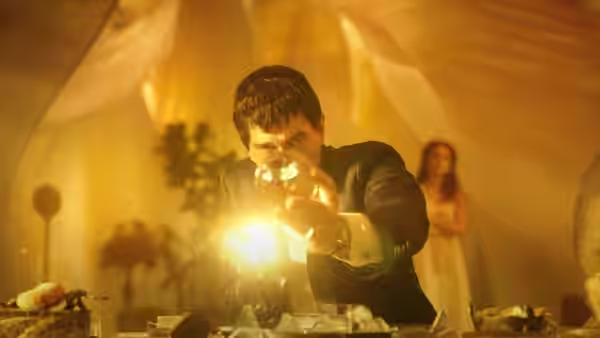
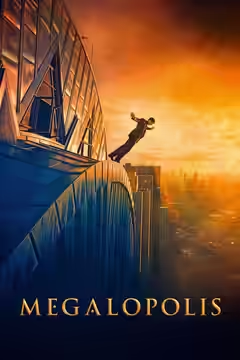
Some of it is handsome. Milena Canonero dresses the rich in gold lamé and laurel wreaths, and puts Aubrey Plaza in gowns cut to make an entrance from any door. Beth Mickle and Bradley Rubin have built a city out of several centuries at once, and none of it looks cheap in the foreground. Mihai Malaimare Jr. shoots it at the yellow end of the day, splits the screen into threes, and lets statues move in the corners of the frame. The opening minute is the best minute in the film, and we will leave it for you.
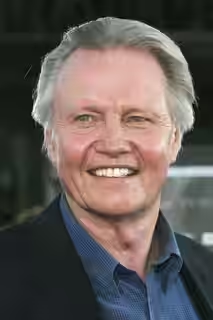
Plaza is the other thing worth the ticket. Wow Platinum wants a rich man’s money and is not fussy about which rich man, and Plaza plays every line as though she has read the script, worked out what it is, and decided to enjoy herself. Nobody else has. Shia LaBeouf commits to Clodio Pulcher with a good deal of eyeliner and no shame, and we admired the nerve while wondering what film he thought he was in. Jon Voight, as the banker Hamilton Crassus III, looks mildly puzzled throughout, and Esposito gives the mayor a dignity the script keeps taking back.
The script is the trouble. Coppola has written a film in which people philosophise over dinner and deliver speeches, whole ones, in rooms where nobody has asked. Characters do not talk to each other; they announce positions. Nathalie Emmanuel’s Julia, the mayor’s daughter who goes to work for Cesar Catilina, is given nothing to do but gaze at him and be right about him, and she does what she can with that. A pop star called Vesta Sweetwater (Grace VanderWaal) is introduced with some ceremony and then mislaid.
Three editors are credited, Robert Schafer, Cam McLauchlin and Glen Scantlebury, and the film moves as though they never met. Scenes end a line early or a scene late. A party goes on until we have forgotten why we are at it. Osvaldo Golijov’s score swells at every skyline, and VanderWaal sings over the stretches where the plot should be. Some of the backgrounds look unfinished.
Here is what we felt. We laughed, several times, at lines not meant to be funny, and then felt a bit ashamed of ourselves, because the man behind it plainly means every word. We were not bored, quite; there is always something moving in the frame, a statue, a split screen, Plaza. But we sat up properly only for that opening, and we spent the rest of the 138 minutes waiting to sit up again.
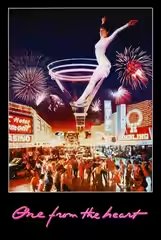
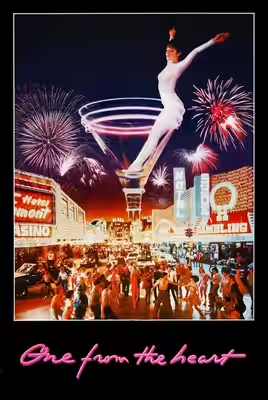
Coppola has made great films out of chaos before. Apocalypse Now (1979) came out of a shoot that nearly sank him, and it holds. One from the Heart (1982) built a city on a soundstage and went broke doing it, and it is lovely. This is closer to the second, without the songs that held it together. Both of those had a story he trusted more than the sets. This one does not.
See it in a cinema if you see it at all; at home it is smaller and sillier and the speeches take just as long. Bring patience and someone who will not mind you whispering. It carries a 15 and runs 138 minutes, and we felt every one of them.