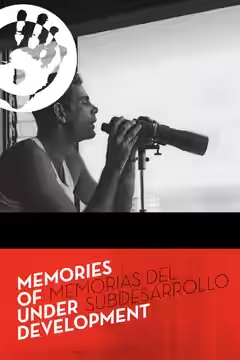
Tomás Gutiérrez Alea makes post-revolutionary Havana absorbing and its detached observer hard to forgive. Sergio Corrieri holds together a demanding, rewarding film whose fragments sometimes keep us further from the people than we would like.
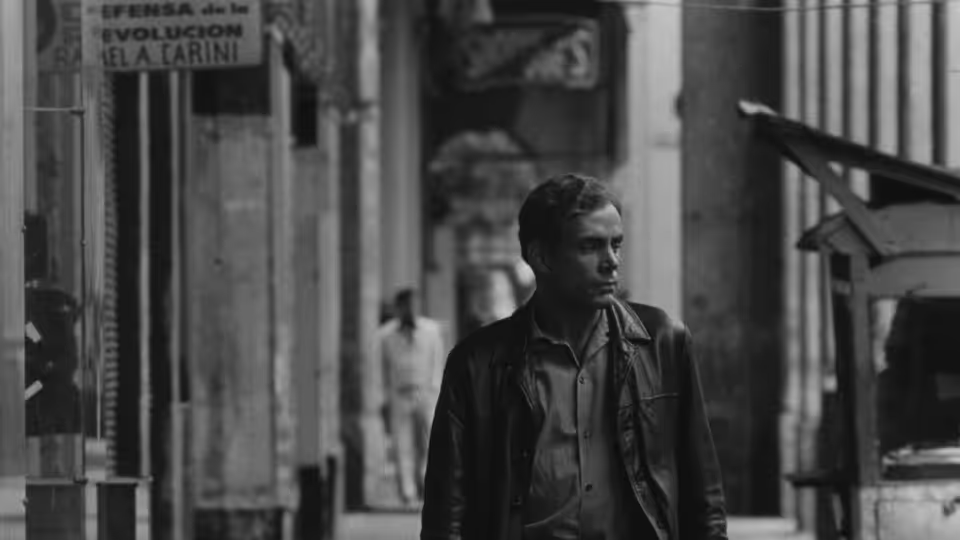
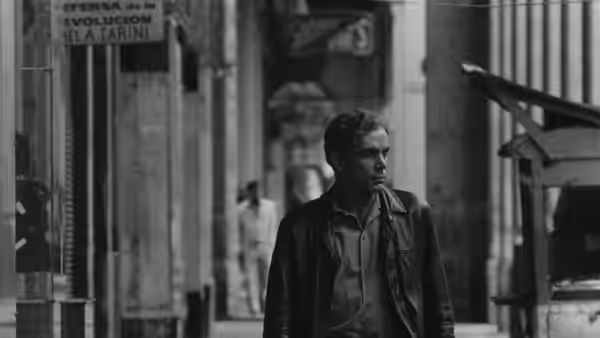
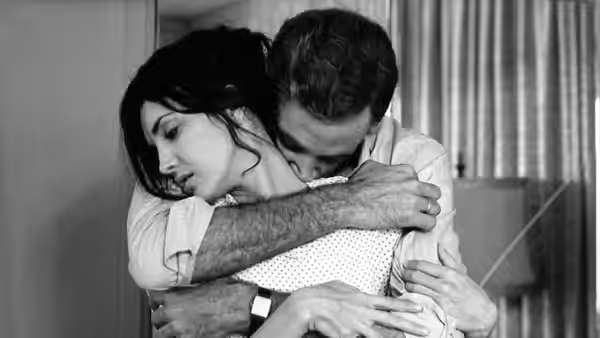
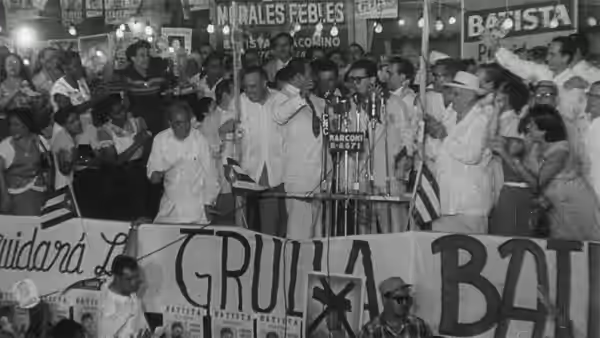
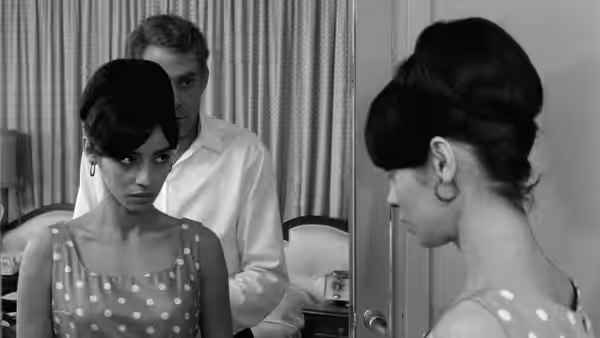
Memories of Underdevelopment is a sharp, demanding film about a man who can observe change without finding a way to take part in it. Tomás Gutiérrez Alea puts Sergio Carmona Mendoyo in post-revolutionary Havana and refuses to make his intelligence an excuse for his detachment. Its mixture of fiction, still photographs and documentary footage keeps asking us to look beyond him. We recommend it, though its people can feel kept at arm’s length.
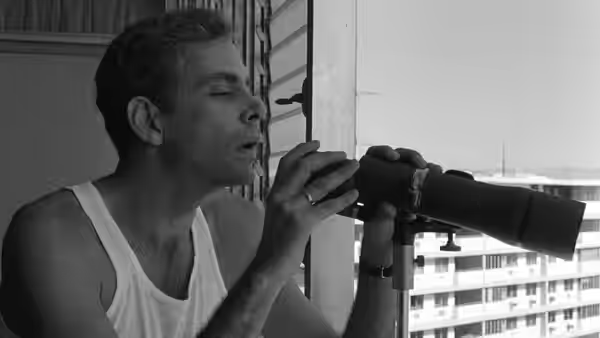
Sergio Corrieri makes that a difficult request, because he gives us a man whose company is easy to enjoy. The charm matters: without it, Sergio’s failure to commit himself would become tiresome much sooner. We smiled despite ourselves during the Hemingway Museum sequence, because Sergio Corrieri makes Sergio’s detachment so easy to enjoy. The performance allows us to recognise his shortcomings without losing interest in him, and the film makes good use of our willingness to keep watching.
Ramón F. Suárez’s cinematography gives Sergio enough presence to compete with the documentary material without making the surrounding city feel incidental. Nelson Rodríguez’s editing supplies much of the friction, moving between acted scenes, photographs and footage that will not stay politely in the background. Those changes require attention, but they also prevent Sergio’s thoughts from becoming our only way into Havana. We keep having to reconsider how much authority to grant him.
Julio Matilla’s production design has the awkward job of sitting alongside documentary images, where deliberately arranged surroundings can easily look false. It survives that comparison: the fictional scenes do not seem sealed off from the Havana in the footage. Leo Brouwer’s music helps sustain the unease, although the changes of image are what most strongly direct our attention. The score is effective without becoming our main reason to feel anything.
The larger achievement is that Tomás Gutiérrez Alea lets political change remain difficult without treating Sergio’s withdrawal as a satisfactory response to it. A political drama can grow dull when each character arrives carrying a position the audience must approve or reject. Here, it is harder to settle into that sort of certainty, because Sergio’s story repeatedly gives way to photographs and documentary footage. We are allowed to question the revolution without accepting this observer as a reliable guide.
The approach can also be wearing. Some of the returns to Sergio’s paralysis tell us little that the performance has not already made clear. The fragments can start to feel like further demonstrations of a point we have grasped, and the difficulty of caring about him occasionally becomes plain indifference. At 99 minutes the film is not long, but it still has passages where we want something to challenge Sergio rather than another opportunity to consider him. Watch it when there is time to argue about Sergio afterwards.