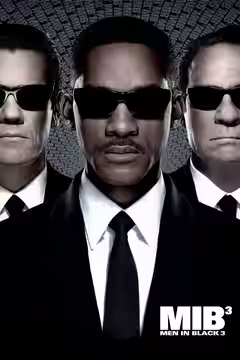
Ten years after a lazy second film, Barry Sonnenfeld sends Agent J back to 1969 and finds Josh Brolin waiting there, giving a better performance than the film. It is amiable, slack in the middle and sweeter at the end than it has earned.
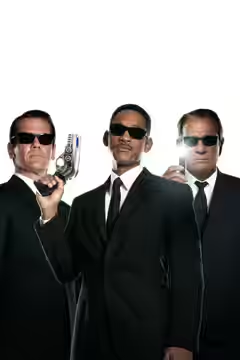
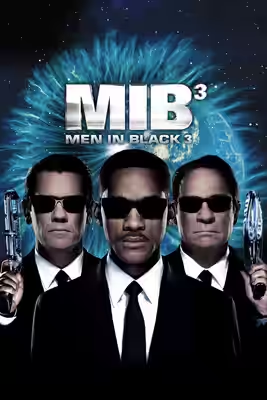
Fifteen years after the first Men in Black and ten after a second that few people loved, Barry Sonnenfeld brings Agent J and Agent K back for a third go and sends one of them to 1969. It is a better film than Men in Black II (2002) and a looser one than the original, and its best idea is a piece of casting. Josh Brolin plays the young Tommy Lee Jones, and he is better than the film. We enjoyed it mildly, and would have enjoyed it more had it started half an hour later.
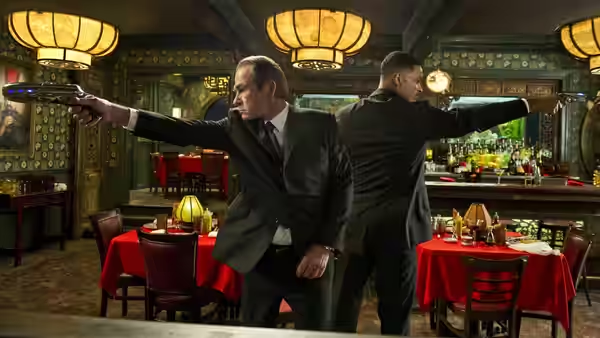
The first twenty minutes are a chore. Boris the Animal (Jemaine Clement), a one-armed alien with motorcycle goggles and something small and toothy living in his palm, is sprung from a prison on the Moon by a girlfriend (Nicole Scherzinger) carrying a cake. Clement growls every line through his teeth and gets a decent running joke out of hating the word ‘Animal’, but the script by Michael Arndt and Etan Cohen then puts him away for most of the running time and brings him out when the plot needs a shove. Will Smith does the patter he has done twice before, and Jones stands beside him looking as though he would rather be fishing.
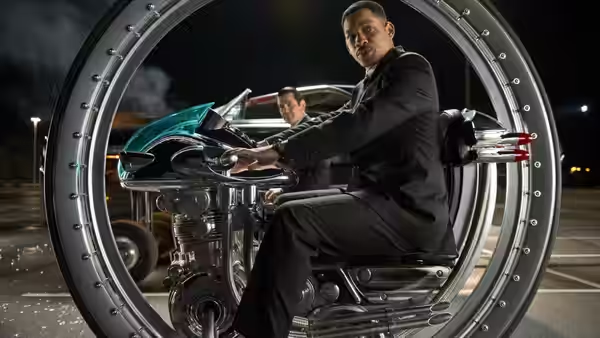
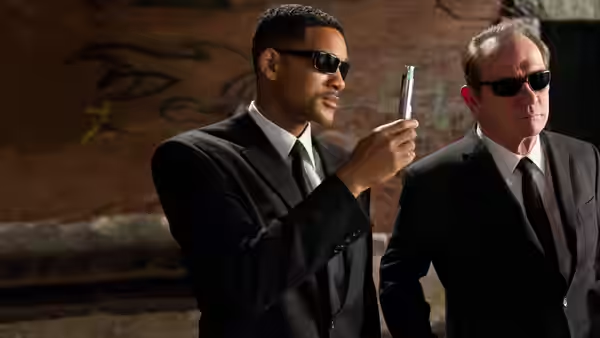
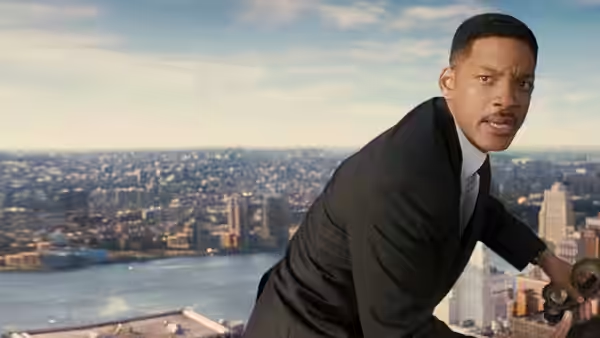
Then J jumps off the Chrysler Building, lands in July 1969 and the film gets up off the sofa. Brolin does not do an impression of Jones so much as a forecast of him: the flat Texan vowels, the slow blink, the pause before every answer, but this K has not yet decided to stop smiling. Smith, given somebody new to bounce off, wakes up too, and the pair of them driving through Manhattan and arguing about the future are the scenes we would watch again. Alice Eve’s young Agent O gets about four lines and uses them well; Emma Thompson, as the older O, gets a eulogy and not much else.
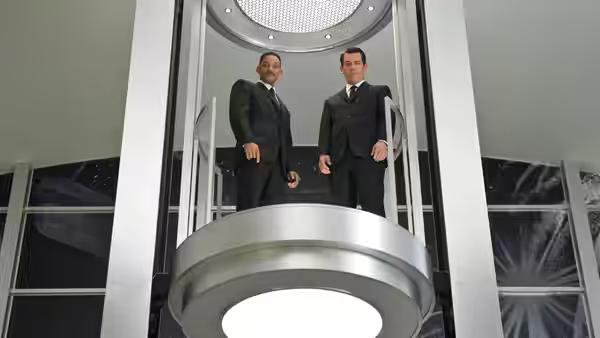
Bo Welch has the most fun. His 1969 headquarters is the present one’s grandparent, the same white curves and the same giant screen but furnished in chrome and moulded plastic, with a neuralyser the size of a small car. Bill Pope lights 1969 warmer and softer than the steel-and-glass present, so the past looks like somewhere you might want to live, which is roughly the film’s view of it. Mary E. Vogt narrows the lapels and the ties by an inch and the suits look like 1969 rather than a costume shop’s idea of it. The best set piece is a party at Andy Warhol’s Factory, where the artist turns out to be an agent (Bill Hader) sick of the job and the soup cans. Danny Elfman’s brass theme returns unchanged.
The surprise is Michael Stuhlbarg. He plays Griffin, a nervous alien in a knitted hat who can see every possible version of the next ten minutes and is never sure which one he is in, with a shy politeness that makes his babble sound like apology. There is a scene in an empty Shea Stadium where he describes the long chain of accidents it will take for the Mets to win that year’s World Series, and it moved us more than anything in a Men in Black film has a right to. It is Stuhlbarg’s soft voice, and the empty seats, and the thought that the miracle is only one of the versions. Then the film hurries on, as if embarrassed to have been quiet.
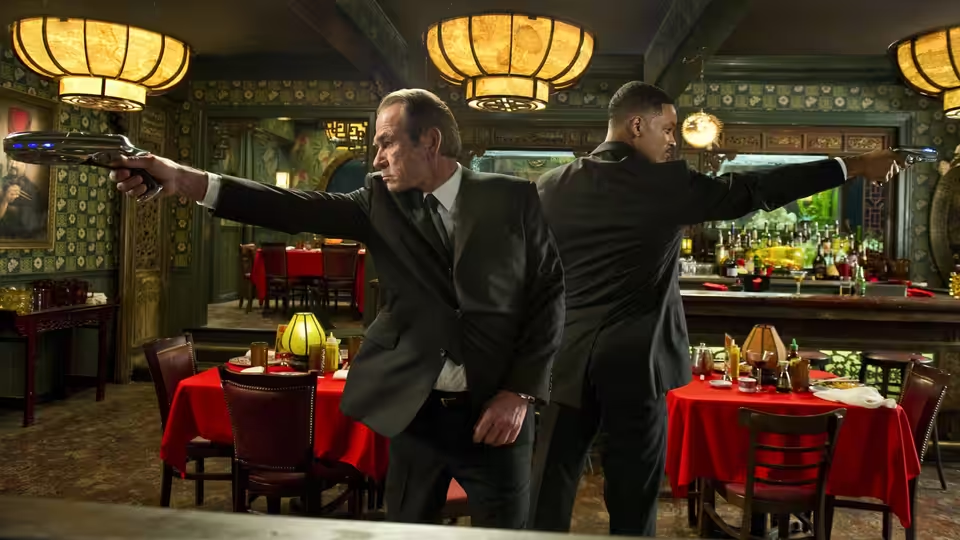
The mechanics are shakier than they look. The time-travel rules are stated once and bent whenever a scene needs them, and Don Zimmerman’s chases are over before they have built to anything. Mike Colter’s Colonel arrives late and matters a great deal without being given time to matter. The script wants a chase and a weepie and swaps between them at the end of scenes, so a gag in a Chinese restaurant sits beside a funeral and neither settles. The last ten minutes take a turn we will not describe, except to say that it is sweeter than the previous ninety-five have earned. Several critics found it touching. We found it a cheat.
The original’s trick was that nothing surprised anybody; the aliens were a nuisance, like traffic, and the comedy came from the straight faces. This one wants us to feel things and is not good at hiding the wanting. Still, it runs 106 minutes, it carries a PG, and for an evening with children who have never seen Brolin or Jones it will do nicely. See it for Brolin, for Stuhlbarg and for Warhol, and arrive twenty minutes late.