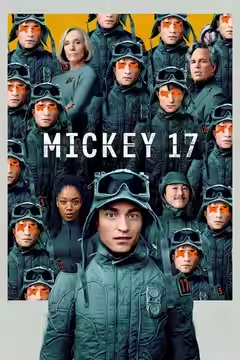
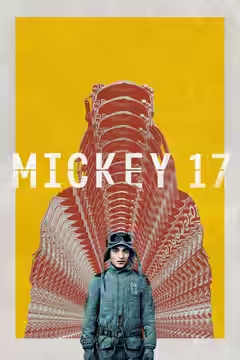
Bong Joon Ho’s clone comedy is funny, kind and overstuffed. Robert Pattinson, playing two versions of the same disposable man, is reason enough to see it; Mark Ruffalo’s shouting and a baggy middle hour are the reasons it is not more.
Bong Joon Ho’s first film since Parasite takes Edward Ashton’s novel about a man who is printed afresh every time he dies and turns it into a broad, warm, argumentative comedy about who gets used up so that everyone else can carry on. It is the kind of film he has made before in English, loud and shaggy and full of ideas that arrive faster than they can be put away. We laughed a great deal and we checked the time twice, and both are the film’s doing. It is funny for most of its length and about twenty minutes too long.
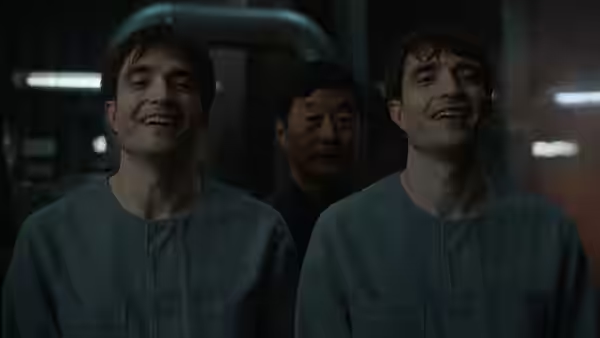
Robert Pattinson holds it together. Mickey 17 is a soft, apologetic man who speaks in a thin, high voice with his shoulders up round his ears, and Pattinson plays him as someone who has come to regard his own deaths as a mild inconvenience to other people. Mickey 18 comes out of the printer angry, stands up straight and looks people in the eye, and the two are so distinct that we stopped noticing the trick within a scene. There is a moment early on when the crew in the canteen ask him, again, what dying feels like, and he tries to answer politely, and it caught us off guard: we had been laughing at his deaths for twenty minutes and suddenly found them sad. That is Pattinson’s doing. Nobody else on board asks how he is.
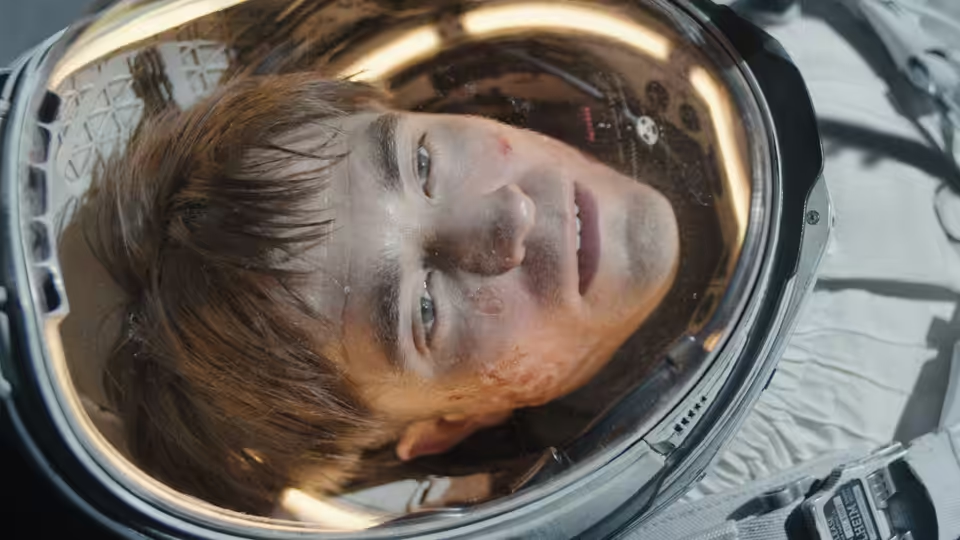
Fiona Crombie builds the ship as a workplace: narrow corridors of dull metal, a canteen where portions are measured and pudding is a reward, and the printer itself, which ejects a wet new Mickey with the indifference of an office machine producing a form. Darius Khondji lights the interiors a greenish grey and saves the white for the planet, where the snow goes on until it hurts to look at and the creepers, armoured things somewhere between a woodlouse and a pastry, come rolling out of it. Catherine George puts the crew in boiler suits and Marshall’s followers in red caps, which is not subtle and is not meant to be.
Mark Ruffalo plays Kenneth Marshall, the failed politician who has bought himself a planet, with a set of teeth, a strut and a preacher’s cadence, and he is funny for about three scenes. After that he has one setting, and the film keeps going back to it. Toni Collette has more range as Ylfa, his wife, who cares about sauces the way he cares about destiny, and their dinners have a nasty domestic comedy the rallies lack. Naomi Ackie’s Nasha is the heart of the thing, a security officer who loves Mickey without reservation and says so, and her one furious speech to power is the best written scene in the film. Steven Yeun’s Timo, the friend who got Mickey into this, is a sketch the film needs and never fills in.
The trouble is shape. The first forty minutes, narrated by Mickey and cut by Yang Jin-mo as a brisk history of his lives and deaths, are the film at its best: clear, fast and cruel. Then the film acquires more plots than it can hold and moves between them without deciding which one it is telling. Somewhere past the ninety-minute mark, during another of Marshall’s addresses, we found ourselves waiting for it to get on with it, which we did not expect from a film that feeds a man to the ice for laughs. Jung Jae-il’s score keeps a jaunty, slightly lopsided theme under the deaths so that each plays as a beat in a routine, and it works until the routine runs long.
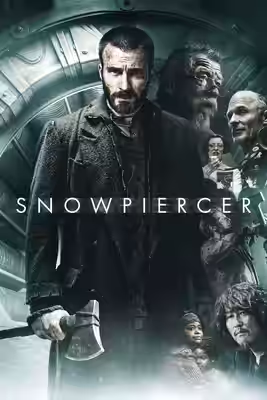
Against Bong’s own record this sits with Snowpiercer (2013) and Okja (2017) rather than Parasite (2019) or Memories of Murder (2003). His English-language films have always been broader than his Korean ones, the villains cartoons and the sympathies plain, and this is the broadest yet. What it has that Snowpiercer lacked is a kind centre: Mickey is a good man who has been told he is nothing, and the film never once agrees with the people who told him.
The ending ties things off more neatly than the two hours before it have earned, and we will not describe it beyond that. See it for Pattinson, twice, for Ackie, and for a printer that spits out a man like a bad photocopy. It runs 137 minutes and carries a 15.