Donald Petrie’s pageant comedy is worth an evening for Sandra Bullock and Michael Caine, even when the makeover jokes wear thin. The crime plot adds fuss, but the performances keep the familiar business funny.
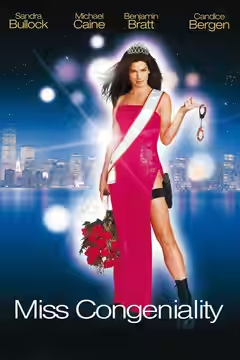
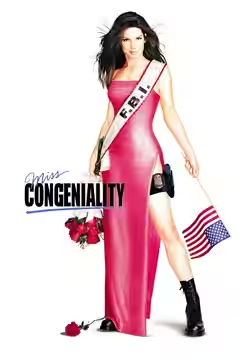
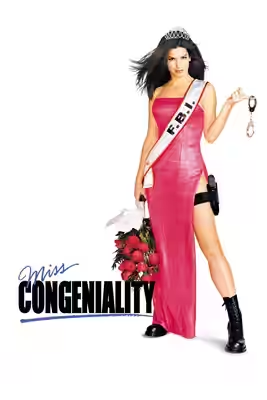
Miss Congeniality is a good star comedy with a rather less useful crime story attached. Donald Petrie puts considerable faith in Sandra Bullock, and she earns it by playing Gracie Hart’s discomfort with enough conviction to make familiar jokes work. The premise brings a policewoman into a beauty pageant and sets about correcting her appearance and manners. It is hardly a demanding comic proposition, but we do not need every comedy to discover something new about the human condition before allowing it to be funny.
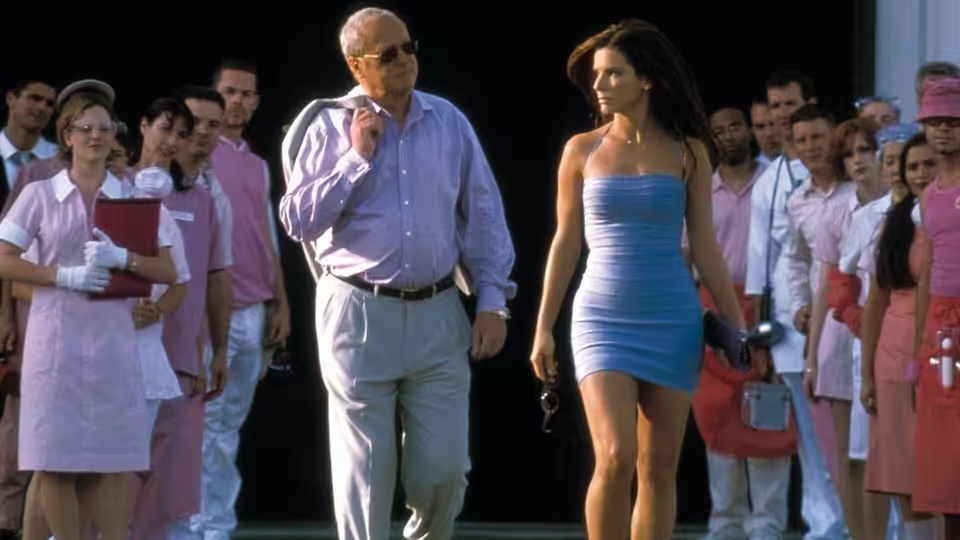
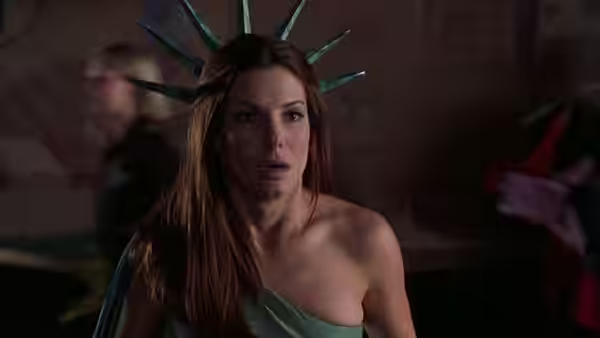
The important decision is to let Gracie take herself seriously. Sandra Bullock gives the physical comedy the commitment of someone who has no intention of being laughed at, which keeps the character from becoming a collection of awkward habits. We laughed at her answer about harsher sentences: police priorities are an excellent way to spoil a pageant response. The joke also allows Gracie to sound like a person with a job, rather than someone whose sole purpose is to need improvement.
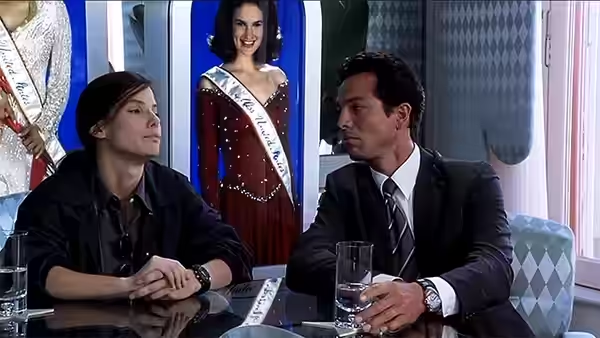
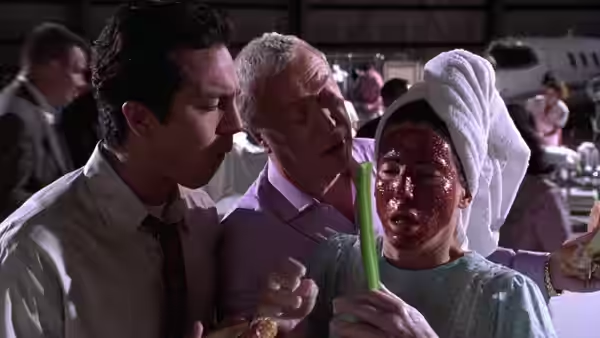
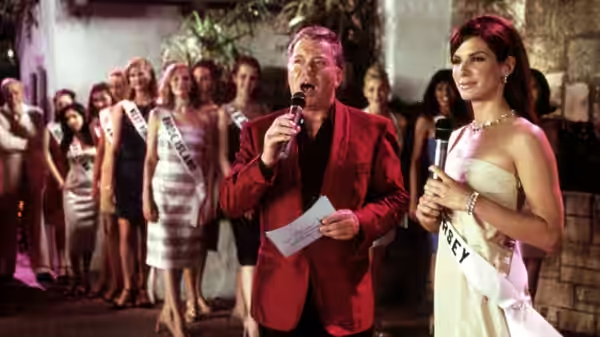
Michael Caine, as Victor Melling, is equally valuable because he does not advertise how amusing he is supposed to be. His dignity gives the makeover business a firmer comic footing, especially when the writing appears satisfied merely to have placed these people together. Candice Bergen’s Kathy Morningside and William Shatner’s Stan Fields are broader turns, sometimes pushed beyond what the joke can support. Their eagerness can be funny, though it also makes the quieter assurance of the two leads more welcome.
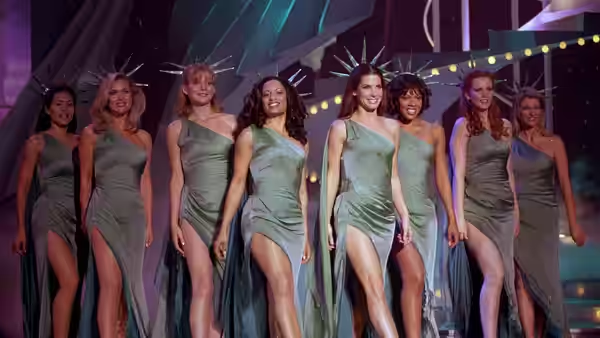
László Kovács’s cinematography makes the pageant easy on the eye without competing with the actors for attention. Peter S. Larkin’s production design helps it feel like a setting worth taking seriously, rather than a place built solely for Gracie to ridicule. Susie DeSanto’s costume design carries much of the makeover’s comic burden, but clothes cannot solve the central difficulty. Asking us to accept Sandra Bullock as someone whose attractiveness needs discovering is a considerable request.
The screenplay by Marc Lawrence, Caryn Lucas and Katie Ford is less dependable about what deserves our time. It takes too long to get the police and pageant worlds working together, then piles on complications and sentiment when the central mismatch is already sufficient. Billy Weber’s editing does not disguise how much preparation precedes the comedy we came for. At 110 minutes, the film has room for its jokes, but also for stretches in which we start waiting for the next one.
Edward Shearmur’s music provides little reason to become more invested in the crime story. The action-comedy machinery is serviceable, and the performances do more to hold our attention than the plotting. As a makeover comedy, the film is cautious about questioning the improvement everyone seems to think Gracie needs. Her stubbornness is appealing enough that the prospect of having it corrected does not always seem something to celebrate.
Still, the humour is warm enough to survive those reservations. We prefer the film when it leaves space for Sandra Bullock and Michael Caine, whose control makes the broad material seem less laborious than it is. Anyone looking for sharp pageant satire or an absorbing investigation will find better uses for an evening. Choose it for the comedy, and allow the makeover a little more patience than it earns.