Film review

Moneyball

2011 · Directed by Bennett Miller · 2h 14m · MPA PG-13

In a sentenceNobody needs to hit a ball when Brad Pitt and Jonah Hill have a meeting to finish

Drama

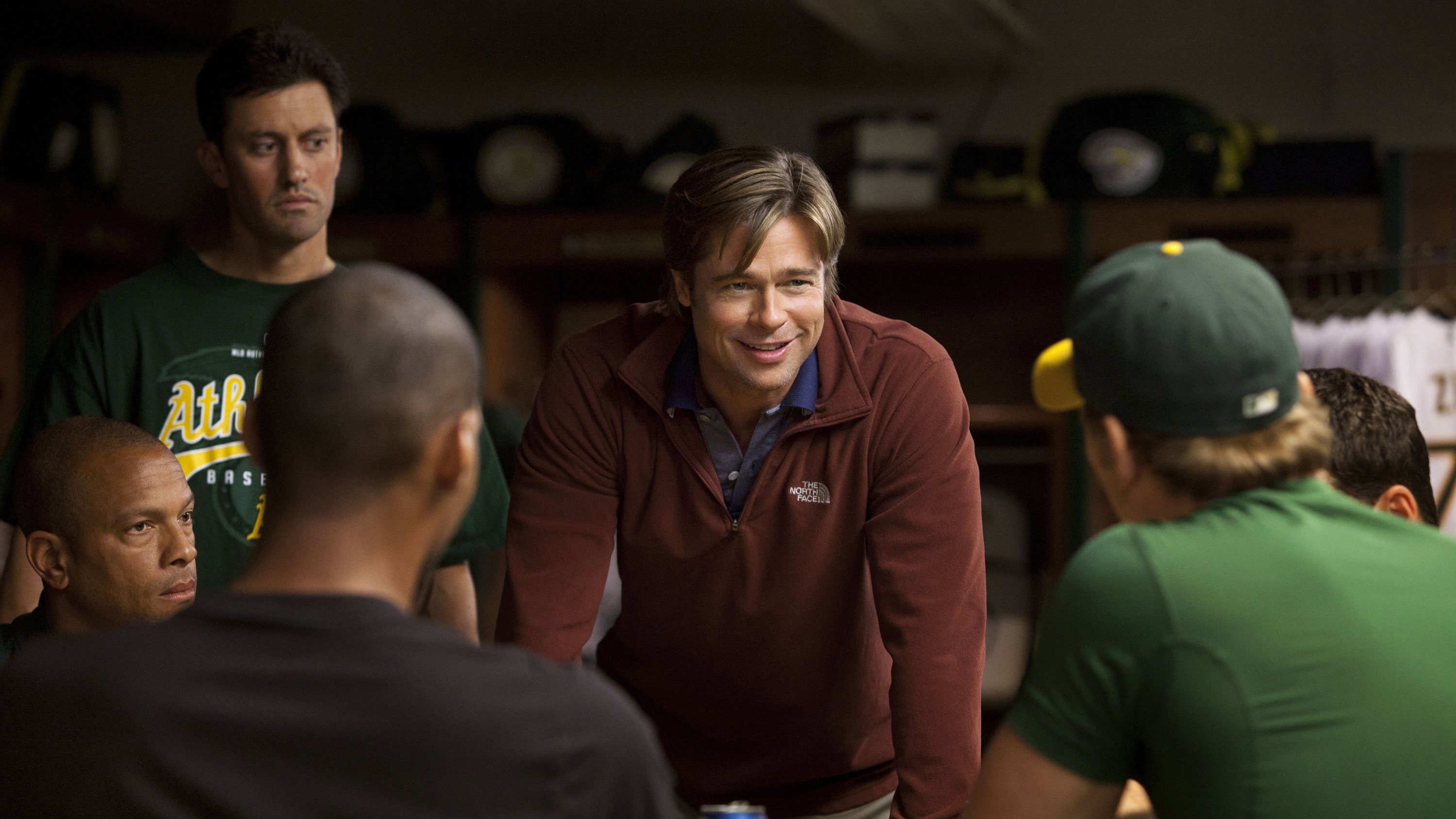
Billy Beane (Brad Pitt) runs a baseball team that cannot compete financially with its rivals. With statistical adviser Peter Brand (Jonah Hill), he looks for a different way to judge players, using numbers to challenge the game’s accepted wisdom. Their approach brings them into conflict with people who trust the established methods. Beane tries to make an unconventional idea work in a sport attached to tradition. Bennett Miller directs a drama centred on baseball management, with Philip Seymour Hoffman as Art Howe and Chris Pratt as Scott Hatteberg.

Plays from YouTube when you press play; nothing loads from them until then.

Fi1m review

Bennett Miller makes baseball management absorbing, with Brad Pitt and Jonah Hill giving the statistical debates wit and warmth. The resistance to their ideas is sometimes too neatly drawn, but the conversations are worth the evening.

Moneyball makes a persuasive case for spending a sports film in the office. Bennett Miller is interested in the people who decide what a player is worth, and how hard they find it to admit that their methods might be wrong. We recommend it warmly, with a reservation about how readily it favours its reformers. Billy Beane, played by Brad Pitt, wants a financially disadvantaged baseball team to compete by assessing players differently. Jonah Hill plays Peter Brand, the statistical adviser who offers a way to do it.

The pleasure is in watching those two work together. Pitt gives Beane enough charm to make his certainty attractive, while allowing us to see how wearing it could be for anyone employed by him. Hill’s quieter performance keeps their conversations from becoming a contest in clever lines. We laughed at their exchanges because Beane’s confidence and Brand’s caution make the practical business of changing minds so awkward. Neither actor needs to insist on the joke, and Miller gives them room to let it arrive.

Aaron Sorkin and Steven Zaillian’s screenplay makes the numbers comprehensible without requiring an interest in baseball. We can follow what Beane and Brand are proposing, what it threatens and why people resist it. That clarity lets the conversations acquire some of the suspense usually reserved for a match. Christopher Tellefsen’s editing is most effective here, giving the exchanges enough pace to keep their explanations from feeling like a lecture. At 134 minutes, though, the film leaves more time around its central dispute than all of its characters can use.

Wally Pfister’s cinematography makes the people in those management scenes worth studying even while they are listening. Jess Gonchor’s production design makes the front-office setting convincing as a place where people actually work. Neither contribution distracts us from the uncomfortable business being discussed. Mychael Danna’s music gives the drama warmth, although the film is moving enough when it simply attends to Pitt and Hill. Such restraint is welcome in a sports story already offering plenty of encouragement to back the outsiders.

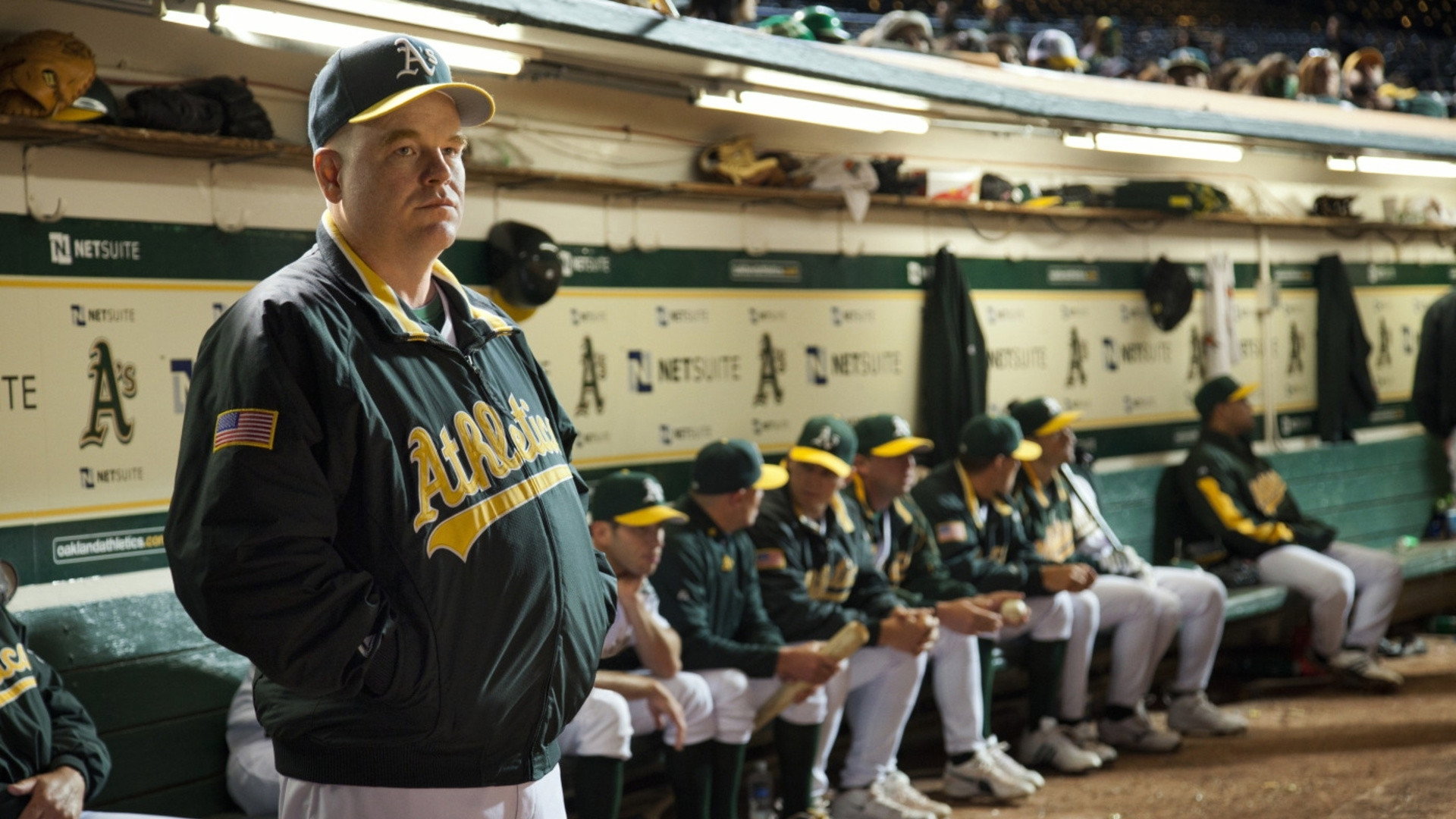
The trouble is that Sorkin and Zaillian make the established thinking too convenient a target. The resistance is broad enough that Beane and Brand do not always seem to be facing opponents capable of answering back. Philip Seymour Hoffman’s Art Howe and Chris Pratt’s Scott Hatteberg make welcome impressions, but their performances leave us wanting more room for the people around Beane. The film could afford to let someone else be persuasive for a little longer, without making its central idea difficult to understand.

As an underdog sports drama, it keeps enough familiar pleasures to make its talk-heavy approach welcoming. The affection for baseball remains clear, even while the characters argue for measuring it differently. Pitt makes Beane’s need to prove himself matter, which stops the film becoming smug about the people who have not caught up. We care about what this man has invested in being right, beyond the success of his method.

The film is most persuasive when it lets the conversations take their time. Beane and Brand have to persuade other people to take a professional risk, and Pitt and Hill make that sound difficult even when the screenplay has cleared their way. No prior interest in baseball is required, but a little patience with management will help.


Critical consensus AI synthesised

74
Positive
11
Mixed
3
Negative
1

Most critics find Moneyball an intelligent, engaging sports drama that makes baseball statistics compelling without relying on much on-field action. Praise centres on Brad Pitt’s restrained performance as Billy Beane, with several reviews also valuing his exchanges with Jonah Hill. The sharp script and Bennett Miller’s measured direction receive much of the credit for turning recruitment decisions and resistance to change into involving drama. For its admirers, the appeal extends beyond an interest in baseball.

The reservations concern familiar underdog plotting, thin characterisation and a tendency to overstate the wisdom of its statistical approach. The spread is fairly wide, though even less enthusiastic reviews generally find something to admire in Pitt. Screen Daily finds the staging elegant but the film monotonous and less thoughtful than it appears. Slant Magazine offers the strongest dissent, arguing that conventional storytelling and broad character strokes blunt its account of unconventional thinking.

Little White Lies
25 November 2011 · 2/5/4 · Dan Stewart
100

The critic finds it gripping drama despite the premise, praising the script and Pitt's subtle performance as key to its success as the best film about statistics.

Read the full review →
The New York Times
23 September 2011 · Manohla Dargis
90*

The critic calls it an exuberant fictionalized look at how Billy Beane transformed a poor team into serious competition by ignoring traditional baseball wisdom in favor of statistics. She highlights the sharp script and how director Bennett Miller turns dry material into a pleasurable Hollywood diversion, with strong praise for Brad Pitt's performance.

Read the full review →
The Guardian
27 November 2011 · Peter Bradshaw
85*

The critic praises Brad Pitt's fine performance as Billy Beane and the film's intelligent, exciting take on the story of data-driven baseball management. He singles out the superb scenes between the manager and his young statistical adviser, along with the strong script by Zaillian and Sorkin.

Read the full review →
The AV Club
22 September 2011 · B+ · Scott Tobias
83

Miller’s shrewd adaptation turns the stats-driven tale into an engaging sports movie for number-crunchers, with intelligent direction, crackling Sorkin dialogue, and performances full of revolutionary fervor. It persuades as a rousing egghead triumph despite some unacknowledged ironies in the on-field success.

Read the full review →
Los Angeles Times
23 September 2011 · Kenneth Turan
80*

The critic describes it as a thoughtful, entertaining, and surprising sports movie that prioritizes a man's quixotic quest to revolutionize baseball over conventional victory narratives. He singles out Brad Pitt's low-key star power in the lead role and Bennett Miller's restrained storytelling style that allows actors to flourish.

Read the full review →
The Hollywood Reporter
13 September 2011 · Kirk Honeycutt
75*

The film succeeds as a rewarding, workmanlike underdog drama focused on unconventional front-office tactics rather than on-field action, with strong chemistry between Pitt and Hill and effective supporting turns from Hoffman and Pratt. It lacks the knockout impact of The Social Network but pulls a timeless story from inside baseball.

Read the full review →

Cast

Stills

Awards

Academy Awards, 2012

Nominated
Best Actor
Nominated
Best Film Editing
Nominated
Best Picture
Nominated
Best Sound
Nominated
Best Supporting Actor
Nominated
Best Writing, Adapted Screenplay

If you liked this, try…

The Man in the White Suit poster

The Man in the White Suit

1951 · An ingenious employee discovers how quickly established interests can agree to dislike him.

High Flying Bird poster78

High Flying Bird

2019 · More sporting business behind closed doors, with sharp talk and contested loyalties.

Ikiru poster92

Ikiru

1952 · A man questions what his job is for, with quietly moving results.

The Social Network poster91

The Social Network

2010 · Quick minds and difficult colleagues make another absorbing drama out of professional ambition.

The Lunchbox poster

The Lunchbox

2013 · A quieter choice, with restrained acting and unexpected feeling around ordinary working lives.