Frank Capra’s fable about a decent man and a great deal of money is warmer and funnier than its reputation as a sermon suggests. Gary Cooper and Jean Arthur carry it; Robert Riskin’s script preaches when it should trust them, and the middle sags.
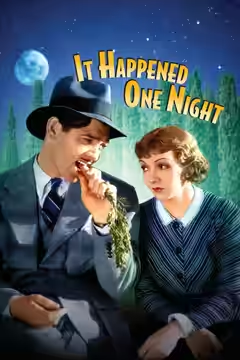
Frank Capra and Robert Riskin made It Happened One Night two years before this, and Mr. Deeds Goes to Town is what they did with the confidence it bought them. It is a fable. A good man is given a fortune, a city of clever people sets out to make a fool of him, and the film asks which side we are on. It is not a hard question and Capra does not pretend it is. What he does instead is make the good man funny, the city attractive and the woman sent to trap him worth rooting for. We recommend it warmly. It preaches in places, and around the hour mark it slows, and neither fault is fatal.
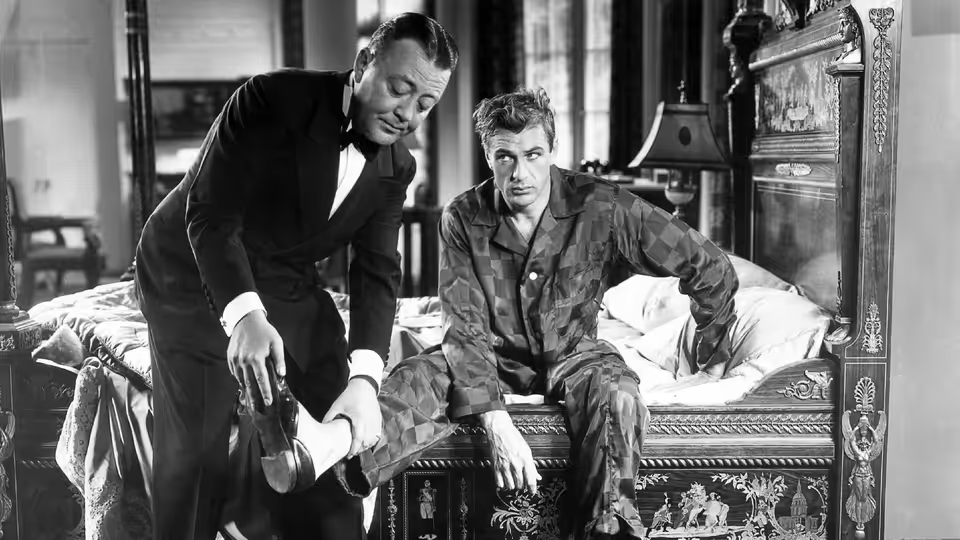
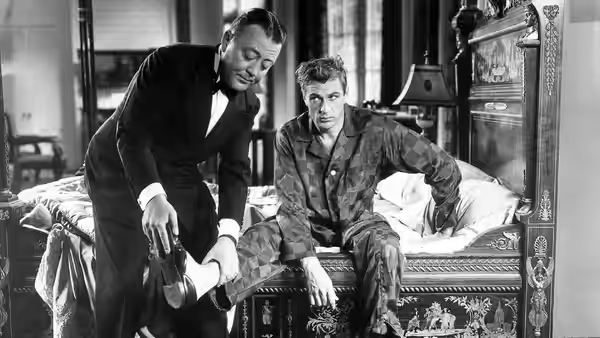
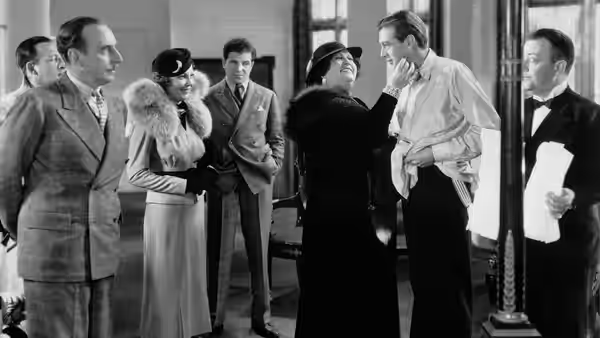
Cooper is the reason it works. He talks slowly, but Longfellow Deeds is not slow; he is watching, and Cooper lets us see him decide when to answer and when to let a fool keep talking. Left alone in his new mansion he slides down the bannister, then shouts into the hall to hear the echo, and within a minute the butlers are shouting too. We laughed out loud, and then noticed how carefully the scene had been built: Deeds is the only person in the house who has thought to enjoy it. Cooper never plays him as a rube. He plays him as a man who has not yet been given a reason to be unkind.
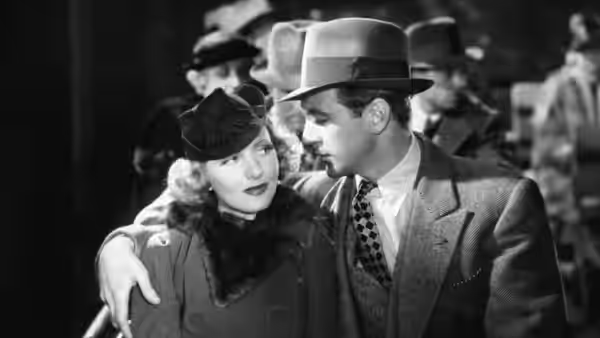
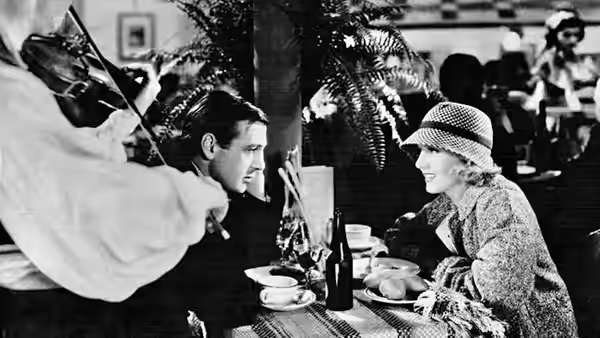
Jean Arthur has the harder part, because Babe Bennett is lying from her first scene and the film needs us to like her anyway. Arthur’s voice cracks on the wrong syllables, and she uses that to make Babe sound as if she is always slightly surprised by what she has just said. The scene that got us is at a bandstand in the park at night, Deeds humming a tune and Babe beating time on a rubbish bin, both of them happy. It moved us more than we expected, because she is stringing him along for a story and Capra keeps the camera on her face long enough for us to watch her realise she does not want to.
Joseph Walker photographs the mansion as a place built for someone else: long shadowed halls, a staircase that dwarfs the man on it, doors that take two servants to open. His close-ups of Arthur are soft and lit from the side, and they do a good deal of the courting the script has no time for. Gene Havlick cuts the newspaper campaign against Deeds as a rush of headlines and spinning presses, so that we feel the city’s contempt arriving all at once. Howard Jackson and Louis Silvers keep the score modest and let the town band’s farewell, and Deeds’s own tuba, carry the tune. Samuel Lange puts Arthur in a plain cloth coat for her disguise and it makes her look nothing like a woman with a byline.
The faults are Riskin’s, mostly. He has written a screenplay in which everyone with an education is a snob and everyone without one is wise, and when Deeds punches a poet at a dinner for mocking his verses the film wants us to cheer. We did not. Douglass Dumbrille’s Cedar is a villain from his first appearance and never acquires a second dimension. There is also a stretch in the middle, after the headlines and before the story turns, where the film repeats its one joke about New York and the 115 minutes begin to show. Lionel Stander’s gravel and Raymond Walburn’s unflappable butler Walter help it through.
The second half takes a turn we will not describe, except that it hands H. B. Warner’s Judge May the job of listening, and Warner listens beautifully. Set against Capra’s own work this is gentler than It Happened One Night and less angry than Mr. Smith Goes to Washington, and it sits between them in quality too. The reviews so far agree with us, more or less.
Adam Sandler remade it in 2002. You may safely stay here.