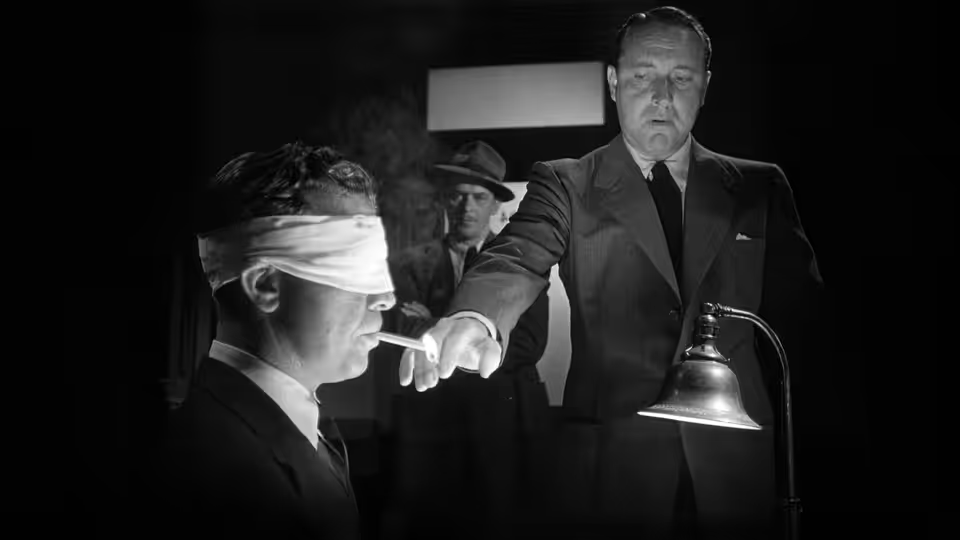
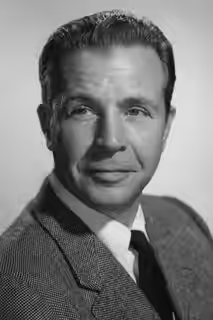
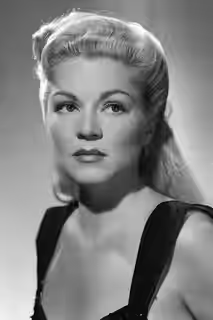
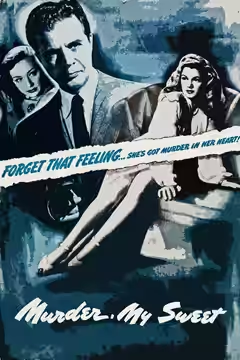
Edward Dmytryk’s Murder, My Sweet is a sharp, grubby crime thriller with a wonderfully impertinent Dick Powell. Its dialogue is more reliable than its plotting, but the performances make the slow stretches worth tolerating.
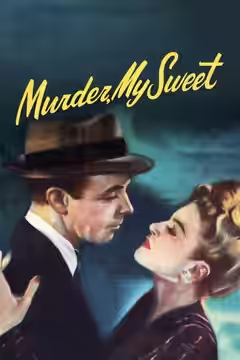
Edward Dmytryk’s Murder, My Sweet is a sharp, grubby crime thriller, worth the evening even when the mystery loses some of its momentum. Dick Powell gives Philip Marlowe the impatience of someone who has heard too many plausible stories already. It is an entertaining performance, with a trace of smugness that occasionally gets in the way. John Paxton’s screenplay, adapted from a novel by Raymond Chandler, supplies enough good talk to make that a tolerable fault.
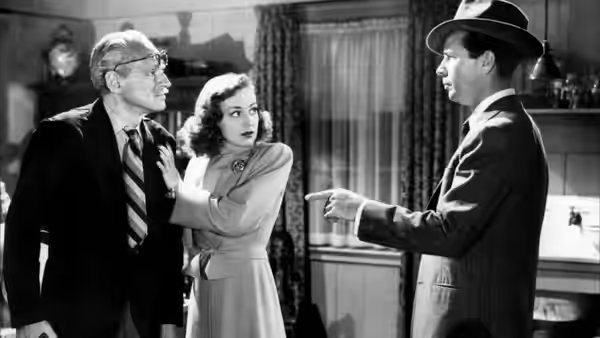
Powell understands that a cutting remark need not be announced as one. His conversational delivery makes even the sharper lines sound habitual, and the hard-boiled manner benefits from that lightness. We laughed at his insolence. The pleasure comes from how little effort he seems to spend on being offensive, though there are moments when his readiness with an answer makes Marlowe feel too comfortable. A little hesitation would have given the performance more weight.
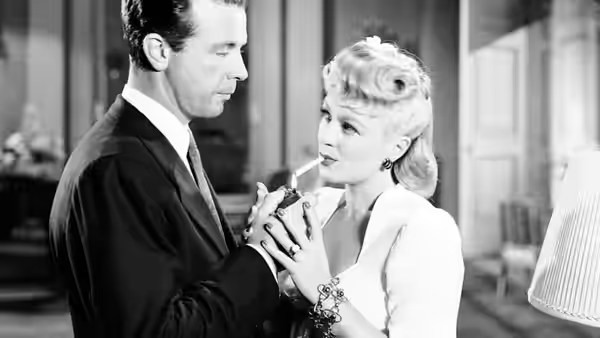
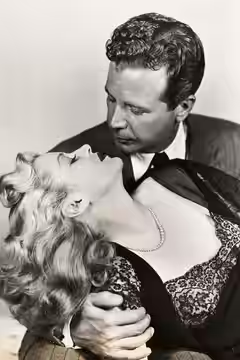
Claire Trevor’s Helen Grayle gives Powell someone worth watching just as closely. Trevor has the assurance the film needs: she holds our attention without competing with his verbal manner, and the contrast makes both performances more effective. Her presence also helps stop Marlowe from dominating the film quite as completely as his voice might suggest. Dmytryk allows the actors enough time to make us curious about them before moving the story along.
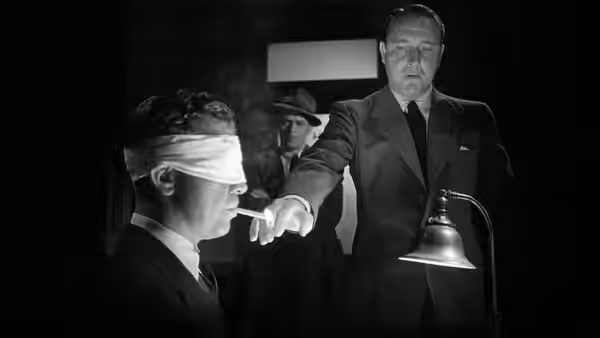
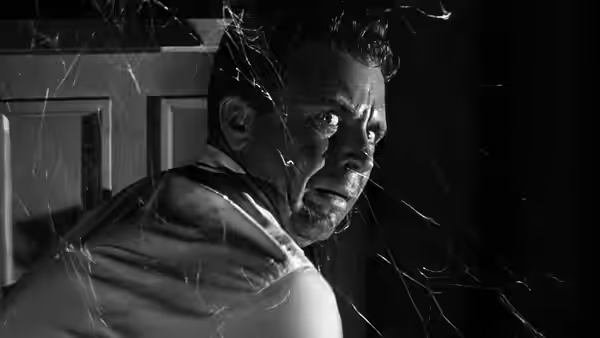
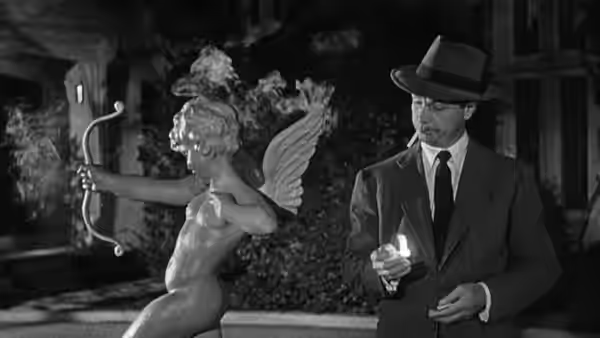
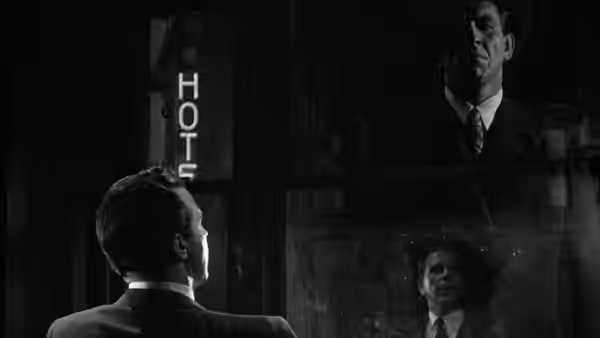
Harry J. Wild’s photography gives the film a persuasive air of shabbiness. The surroundings look inhabited, and the sordidness never feels like an excuse to arrange an attractive picture. This helps Dmytryk make even the conversations uncomfortable, since the setting gives us little reason to expect anyone to behave well. The images establish that unease without consistently taking our attention away from the performers.
Joseph Noriega’s editing has a harder job when the plotting slows down. At those points, the dialogue remains lively but a scene takes longer than it should to move us on; a 95-minute running time does not guarantee a film without slack. Roy Webb’s music supplies a useful pressure, though it is not what we remember afterwards. The voices are what we listen for, and the film is most engaging when it lets a performer control the pace.
Dmytryk uses the voiceover economically, and this is one of the film’s soundest decisions. Marlowe’s way of telling things remains part of the entertainment without making the action feel like an illustrated reading. The trouble comes when the screenplay asks a fluent explanation to carry a weak piece of plotting. We can enjoy the line and still question what it has just explained; the slower passages give us too much time to do that.
Anyone coming to noir chiefly for impenetrable shadows may find Dmytryk’s approach lighter than expected. Much of the tension comes from listening to people sizing one another up, and Powell makes those exchanges worth attending to. We would not choose it as an exercise in faultless plotting. Give it an evening when a sour joke and some untrustworthy company sound more inviting than a case that closes neatly.