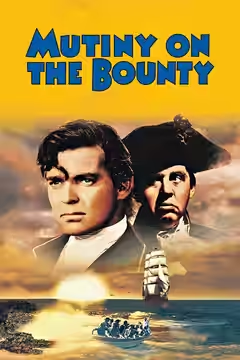
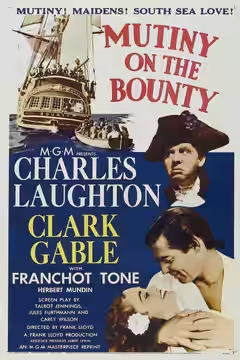
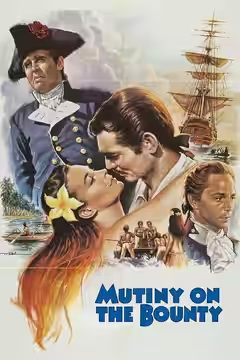
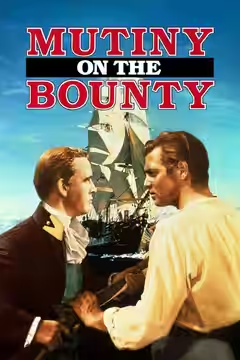
Frank Lloyd’s sea adventure belongs to Charles Laughton, whose Bligh is small, precise and frightening. The Tahiti stretch drifts and Clark Gable is plainly a Hollywood star in a Royal Navy coat, but we recommend it without much hesitation.
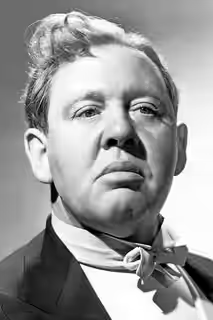
Frank Lloyd’s film of the Charles Nordhoff and James Norman Hall novel is sold as a sea adventure, and it delivers one: sail, storm, a tropical shore. What it is actually about is a man with unchecked power over a wooden box of other men, and what he does with it. Charles Laughton is that man, and he is the reason the film is still worth an evening. Most of the rest is solid, some of it is slack, and none of it is a match for him.
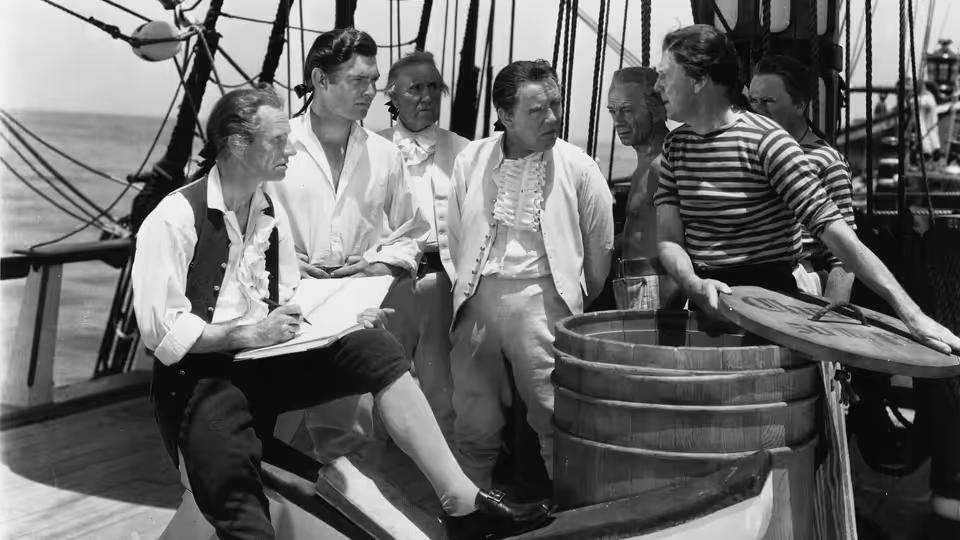
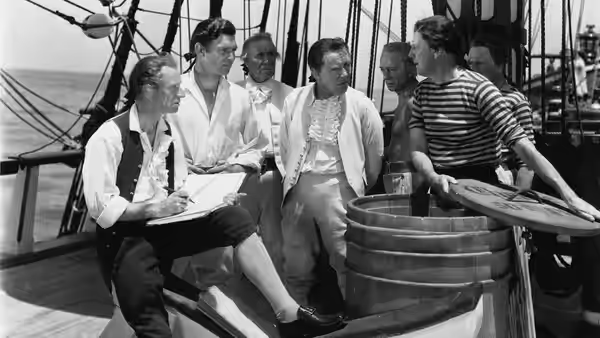
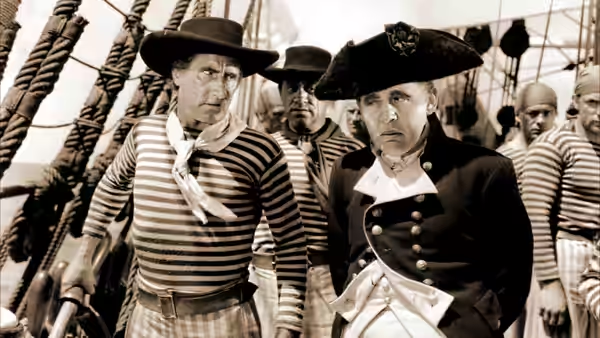
The Bounty leaves Portsmouth in 1787 bound for Tahiti and breadfruit. Before she has cleared harbour, Captaine Bligh has a flogging carried out on a man the surgeon has just pronounced dead, and the sentence is completed as written. Laughton plays it without raising his voice. He is small, buttoned to the throat, hat pulled low, hands behind his back, and he addresses the crew as if reading from a ledger. We were appalled, and the film had barely started; it was not the lash that did it but the way Bligh treated a dead man’s flogging as a matter of good order. The punishments that follow all come out of that first scene.
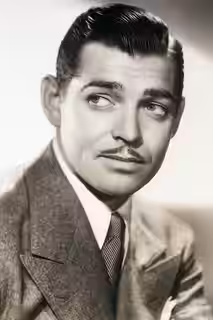
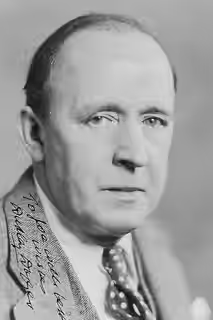
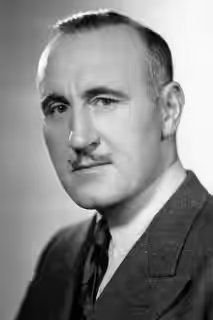
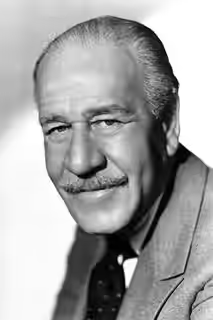
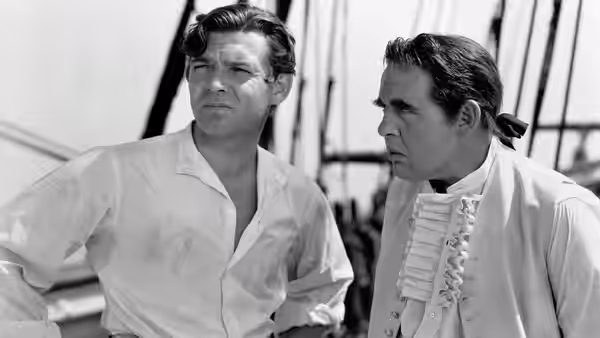
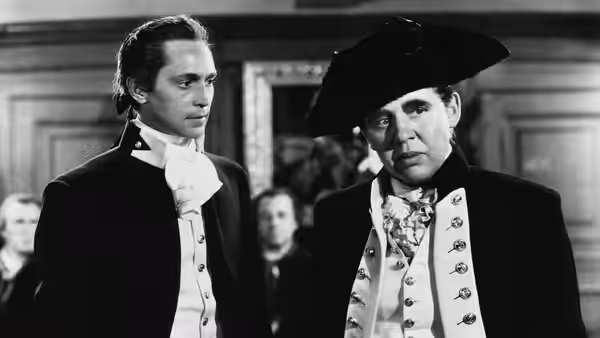
Clark Gable, as Lieutenant Fletcher Christian, makes no attempt at an English accent and does not look as though anyone asked him to. He wears the coat open, stands with his weight on one hip and answers Bligh in flat American, and he plays less like a Georgian officer than a shop steward facing the foreman. As history it is nonsense. As opposition it works, because the film needs a contempt the whole crew can see at a glance. Franchot Tone has the harder part as Roger Byam, the midshipman sent by Joseph Banks (Henry Stephenson) to compile a Tahitian dictionary: he dines with Bligh and drinks with Christian, and Tone keeps him decent without making him dull. Dudley Digges is good as Bacchus, the surgeon who keeps his nerve in a bottle, and Eddie Quillan’s Tommy Ellison, taken from a pub with a baby at home, is the face the film cuts to when it wants us to remember who pays.
Arthur Edeson shoots the ship from the deck and from the water, low enough that the masts and canvas fill the top of the frame and the men underneath look like cargo. The attempt on the Horn is water over the rail and men clinging to lines, and it convinces. Margaret Booth, who edited and has a screenplay credit as well, cuts the outbound voyage between quarterdeck and lower deck so that a cask of water and a round of cheese carry as much weight as any sword. Herbert Stothart’s score leans on brass and a hymn tune and is loudest when the ship is under sail, which is where it belongs. He has the sense to go quiet when Laughton is talking.
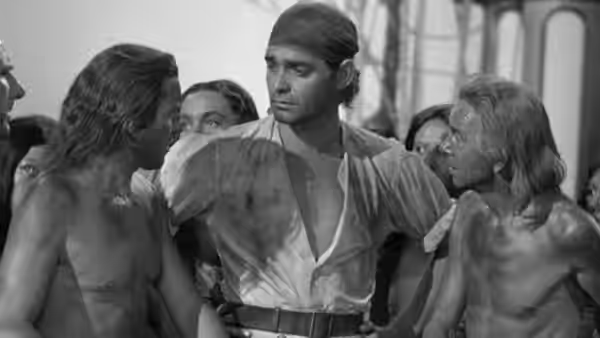
Then the ship reaches Tahiti and the film loses its grip for a while. Edeson’s camera goes to the beach and the canoes and stays there. Movita Castaneda and Mamo Clark, as Tehani and Maimiti, are given the job of being beautiful and falling in love with Englishmen, and the script by Jules Furthman, Talbot Jennings and Carey Wilson gives them little else. The romances are done in a few shots each and the film seems relieved to get back aboard. It does get back, and the second half contains the sequence the title promises, staged with speed and real confusion. After it the story splits, the last third moves indoors and slows, and fills with speeches about the Navy. It is the part we would skip on a second viewing.
A word for the man the film condemns. The historical William Bligh was, on most readings, a competent and not unusually cruel officer, and Laughton’s portrait has stuck to his name ever since. The film does not care, and it is honest about not caring: the point is a system that puts one man’s temper beyond appeal, and Bligh is the temper. The 1984 retelling with Anthony Hopkins tried to be fair to him, and was less exciting for it.
It is 132 minutes and a PG, and it looks its age in the way a good ship does. See it for Laughton, put up with the beach, and notice how often the camera is on the men who have no lines.