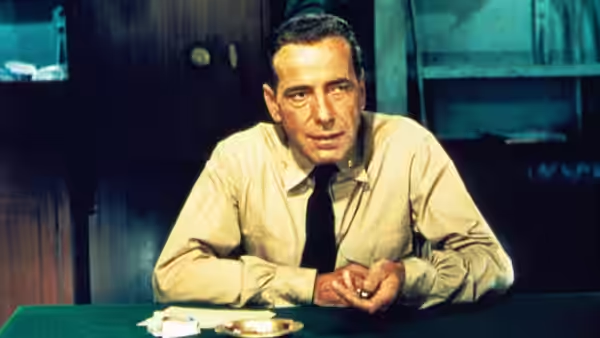
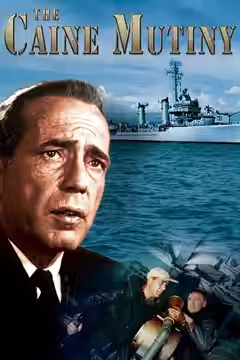
Edward Dmytryk’s film of Herman Wouk’s novel is plain, solid Hollywood carpentry with one remarkable thing in it: Humphrey Bogart, tired and frightened, playing a captain who is coming apart. The shore-leave romance is dead weight, and there is a lot of it.
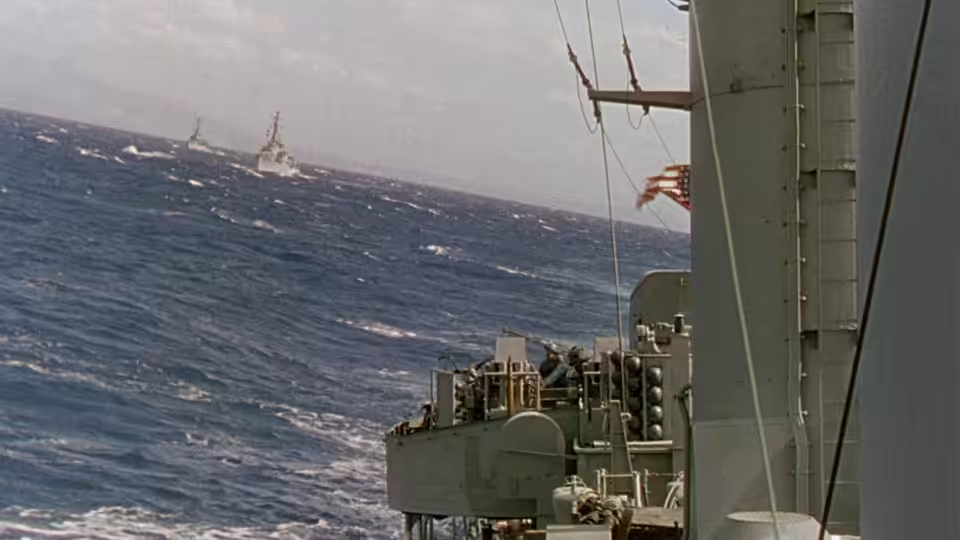
Edward Dmytryk’s film of Herman Wouk’s novel puts a rusting destroyer-minesweeper called the Caine in the Pacific in the middle of the Second World War, hands it a new captain, and spends 124 minutes asking whether the officers who eventually take the ship off him were right to do it. Stanley Roberts’s screenplay trims the book to a ship, a court and a girl. The ship and the court are good. The girl is not the film’s fault, exactly, but she is its problem, and we will come to her.
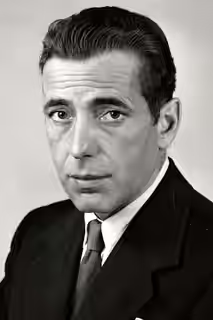
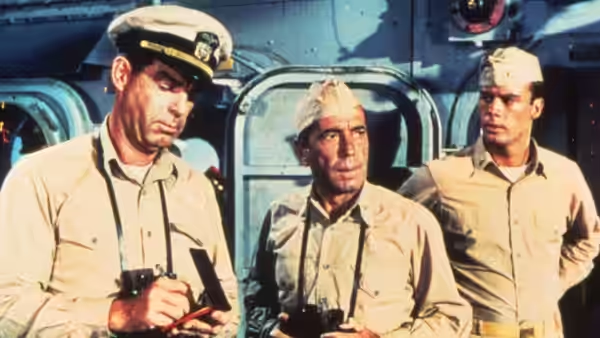
What the film has, above everything else, is Humphrey Bogart. Lt. Cmdr. Philip Francis Queeg comes aboard promising to run a taut ship, tells the wardroom he is not there to be their friend, and rolls two steel balls in his palm while he says it. Bogart plays him with none of his usual ease. He looks tired, and the tiredness is right: this is a man who has been at sea too long and knows he is not up to it. The night he turns the ship over hunting for a quart of strawberries missing from the officers’ mess, we were embarrassed for him, and then we were sorry for him, and we had not expected the second.
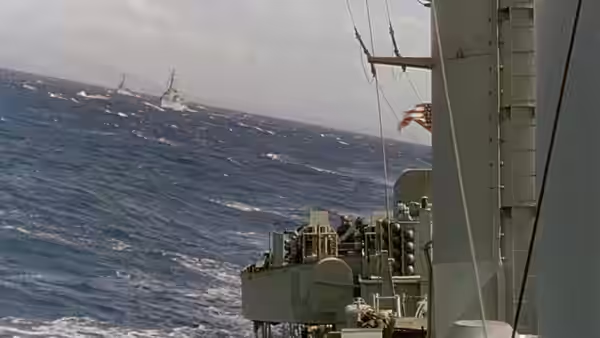
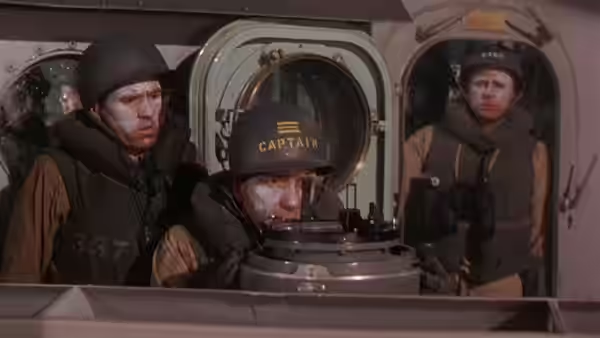
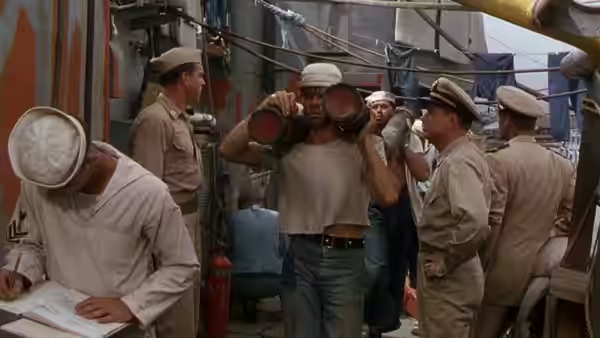
Rudolph Sternad’s Caine is a ship nobody would choose: rust down the hull, a bridge with too many men on it, a wardroom table you cannot get round without asking someone to move. Franz Planer shoots it in colour, the sea a flat hard blue and the steel a grey that never looks clean, so that Queeg’s white-glove standards look absurd before he has opened his mouth. Max Steiner gives the ship a brass march that does its job and gives the romance a wash of strings that does not. William Lyon and Henry Batista cut the shipboard scenes short and hard and let the shore scenes drift, which may be honest to the material but does not help it.
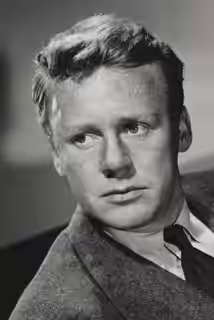
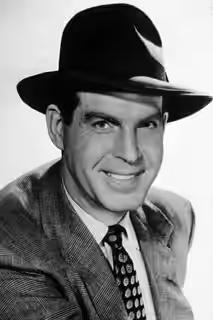
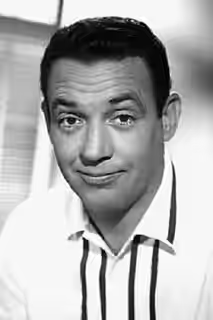
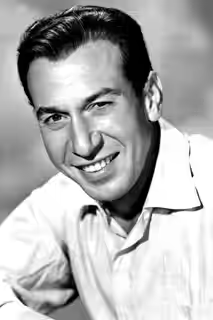
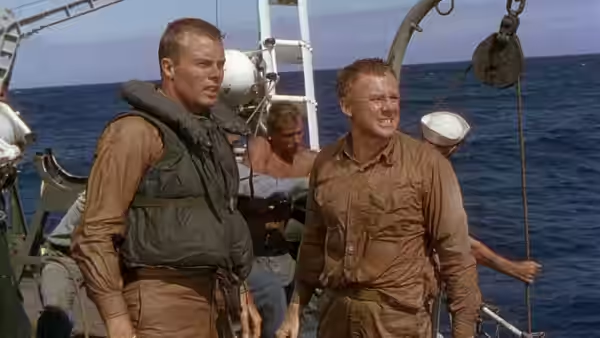
Van Johnson’s Lt. Stephen Maryk is the executive officer, a decent, slow man who obeys until he cannot, and Johnson plays the slowness as a virtue that turns into a trap. Fred MacMurray’s Lt. Tom Keefer is the ship’s novelist, the officer who talks the others into everything and puts his own name to none of it; MacMurray’s great screen quality, a friendliness you do not quite trust, has rarely been used so precisely. Tom Tully’s Comdr. DeVriess, the slovenly captain Queeg replaces, is on screen for a quarter of an hour and we missed him for the rest. Lee Marvin turns up as a sailor called Meatball and is already Lee Marvin. In the courtroom, E.G. Marshall prosecutes as a man who thinks the case is simple and José Ferrer defends as a man who wishes he were anywhere else.
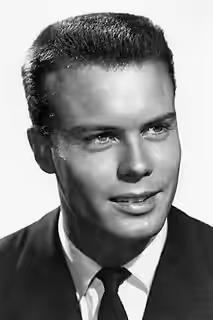
Then there is Ens. Willie Keith. Robert Francis is billed second and plays the officer through whose eyes we are meant to see all this, and the film has decided he must also have a nightclub singer, May Wynn, played by an actress who is also called May Wynn, and a mother (Katherine Warren) who disapproves of her. Every time the Caine makes port the picture stops dead. We were bored ashore, plainly bored, checking how long until someone put to sea again, and the fault is not the actors’ but the screenplay’s, which keeps the shape of Keith’s education from the book without ever showing him learn anything. Jean Louis dresses the singer in gowns that belong to a different, glossier film, which is roughly where those scenes belong too.
Dmytryk directs without flourish. The camera is set down among the men and left there while they talk, and in the wardroom and the court that is enough, because Bogart is doing the work. The storm that brings matters to a head is short and rough and well staged. The closing minutes we will not describe, except to say that the film wants to be against Queeg and for the Navy at the same time, and a late speech is delivered as though it settled the question when it only changes the subject.
See it for Bogart, who is not in nearly enough of it and owns all of it, and for MacMurray, who does the most damage without raising his voice. When the Caine is at sea it is a good film. When it is in port it is waiting to be one.