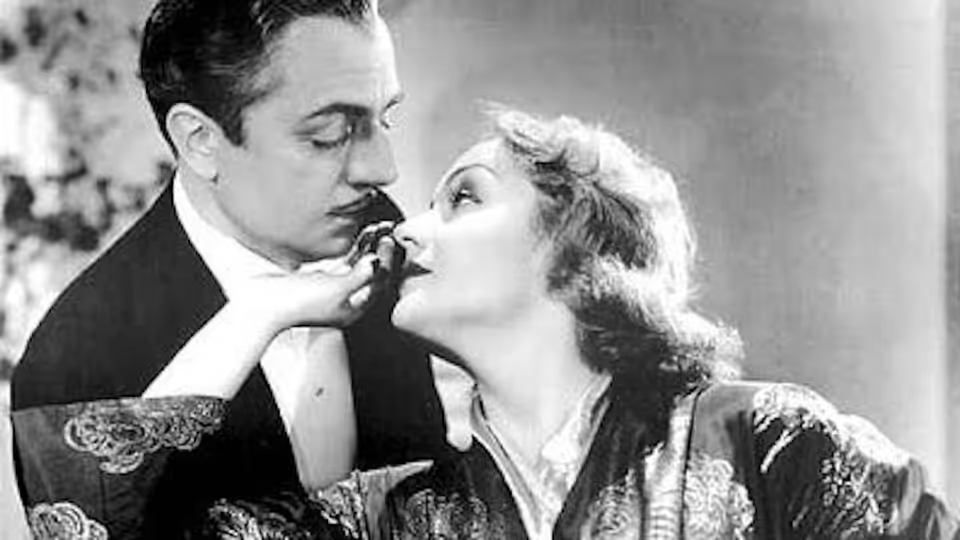
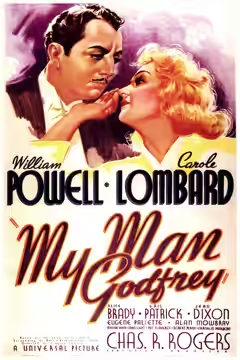
William Powell and Carole Lombard make this screwball comedy worth seeking out, with Gregory La Cava keeping a demanding household funny. Its treatment of wealth is forgiving, but the performances give the farce warmth and purpose.
My Man Godfrey is a funny, generous screwball comedy, and William Powell and Carole Lombard are reason enough to see it. Gregory La Cava allows the Bullock family to be exhausting without making the film a chore. Its interest in money and status gives the farce some welcome bite. The reservation is that its affection for these people sometimes blunts its criticism of how they behave.
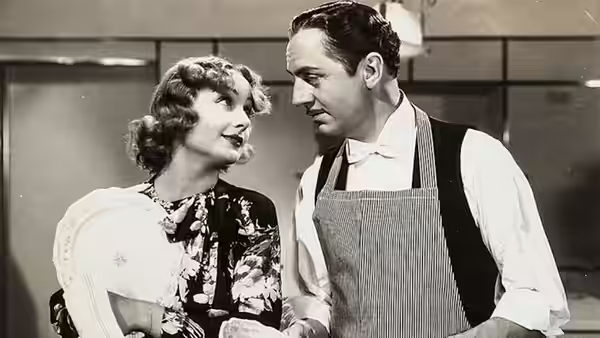
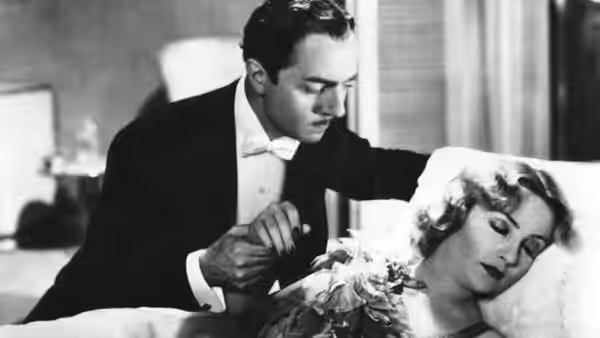
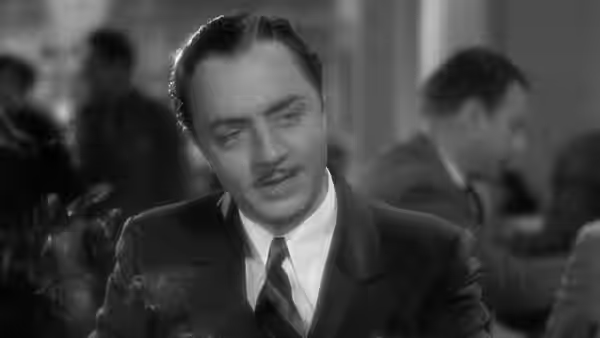
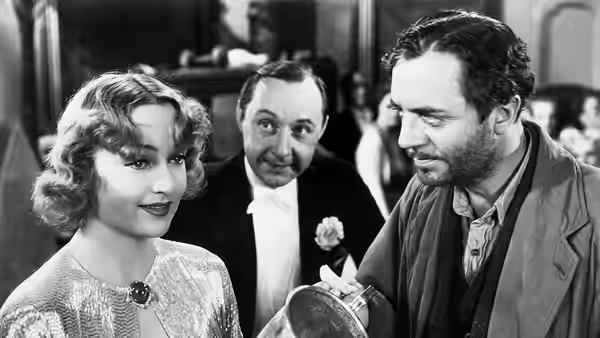
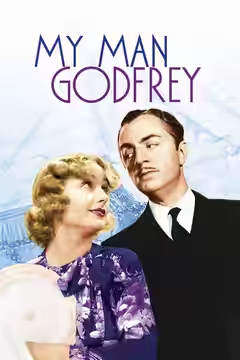
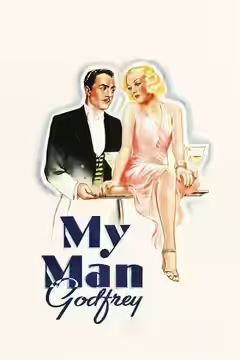
William Powell gives Godfrey a dignity that survives the farce around him. We are never asked to find a servant funny simply because he is a servant, and the performance makes us watch the people demanding his attention more closely. His restraint is funny in itself, but it also puts a useful limit on the family’s ability to dominate the film. He can hold our attention without competing at their volume.
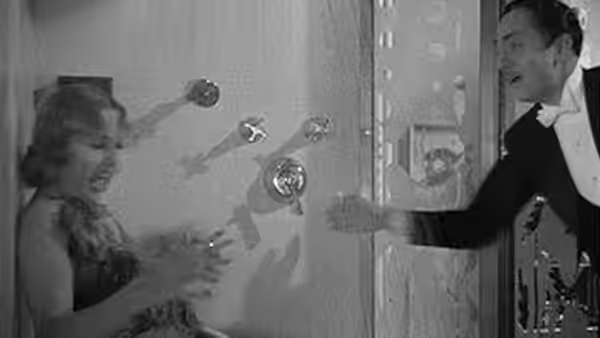
Carole Lombard takes the riskier route with Irene Bullock, making unreasonable behaviour feel urgent and personal. We laughed at how seriously she treats Irene’s demands; the character’s complete conviction is what makes the foolishness work. There is feeling in that conviction, too, so the romantic comedy has something to draw on beyond the pleasure of watching someone disregard everyone else’s wishes. At times Irene’s insistence grows wearing, and the film is a little too ready to find her endearing.
Alice Brady is especially good as Angelica Bullock, playing absurdity with the confidence of someone who has never needed to reconsider a thought. Mischa Auer’s Carlo adds to the commotion without seeming to belong to a different comedy. Gregory La Cava gives the ensemble enough freedom for its exchanges to feel unpredictable, though the family sometimes becomes too much of a collection of comic turns. Those are the stretches when we want fewer people demanding to be funny.
Ted Tetzlaff’s cinematography keeps the performances easy to read, and its polish suits the family’s comfortable view of itself. Travis Banton’s costume design helps make privilege visible before anyone has to explain it. Editors Ted J. Kent and Russell F. Schoengarth give the competing performances a workable rhythm, preserving the difference between Godfrey’s restraint and the family’s agitation. The pace is lively without making every exchange feel hurried. This matters in screwball comedy, where frantic cutting can be mistaken for actors actually being funny together.
The screenplay by Eric S. Hatch and Morrie Ryskind is less convincing when its social observations are treated as serious criticism. It recognises the ugliness of entitlement, but the Bullocks are so entertaining that their conduct is easily forgiven. That is a limitation worth naming, rather than pretending every joke about wealthy people amounts to a searching examination of wealth. The romance and the farce are better developed than the politics, and the pleasure of the performances makes that easy to overlook.
At 95 minutes, it is a sensible length for company this demanding. Within screwball comedy, it belongs to the warmer end of the genre, where the pleasure depends on finding something to like in people who would be a considerable nuisance in the next room. Watch it with someone who has had a difficult day being polite to unreasonable people.