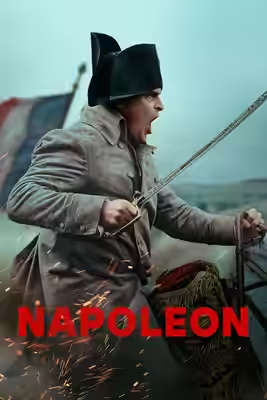
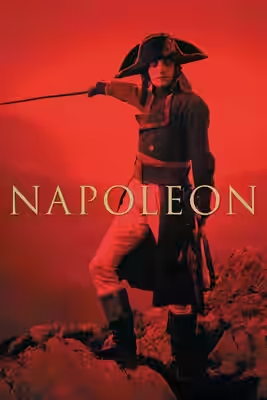
Ridley Scott stages the battles as well as anyone working and rushes everything between them. Joaquin Phoenix plays the Emperor as a sulking oddity, Vanessa Kirby holds the film together, and 158 minutes is not long enough to decide what any of it means.
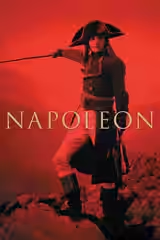
Ridley Scott sets out to cover the whole adult life of Napoleon Bonaparte in 158 minutes, from the Terror to the end, and David Scarpa’s script takes the only route that leaves open, which is to run. We meet Napoleon (Joaquin Phoenix) in the crowd as Marie Antoinette goes to the guillotine, watch him take Toulon by night, and are in Egypt before the film has drawn breath. The battles are worth your evening. The man between them never comes into focus, and that is the film’s problem in one sentence.
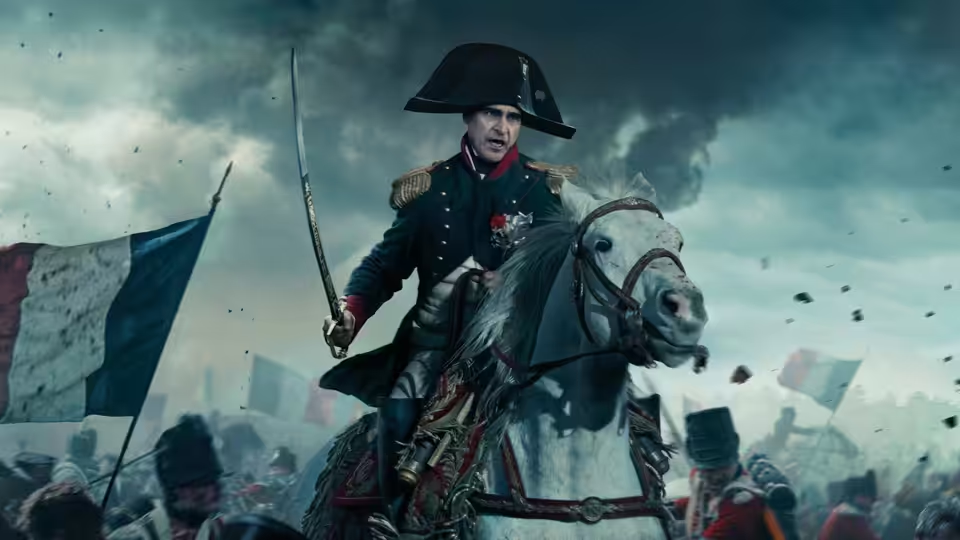
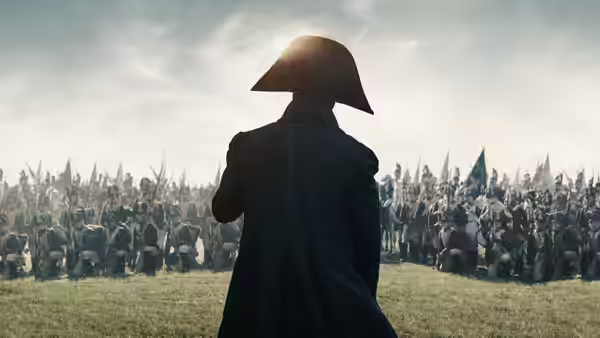
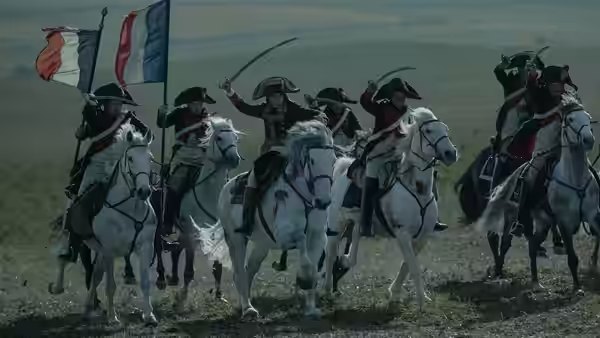
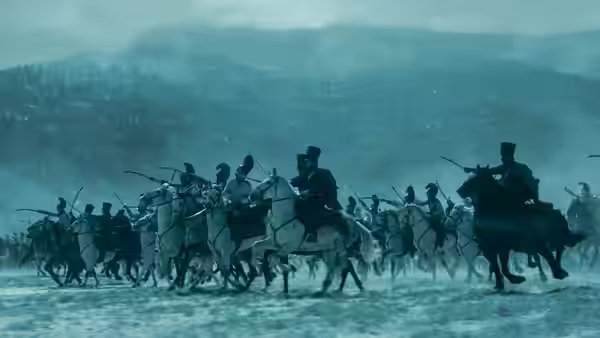
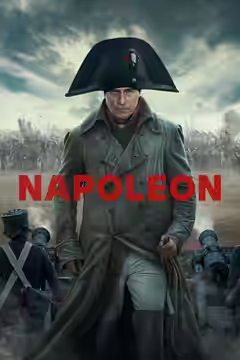
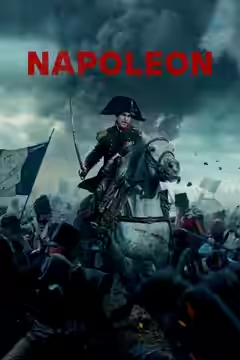
When Scott is on a battlefield he is still as good as anyone working. Toulon is done in the dark, a fort stormed by lantern light, a horse opened by a cannonball at close range. Austerlitz is the set piece, and Dariusz Wolski shoots it in a hard white light with the sky the same colour as the snow, so the Austrian and Russian columns are dark marks on a blank page until the French guns turn the frozen lake into water. We were horrified. Wolski puts the camera under the ice and lets us watch men and horses sink past it in a red cloud, the sound drops away, and for a minute the size of the thing and the cost of it are in the same frame. It does not happen again.
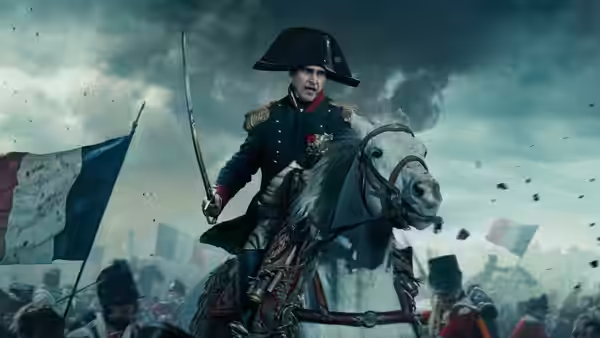
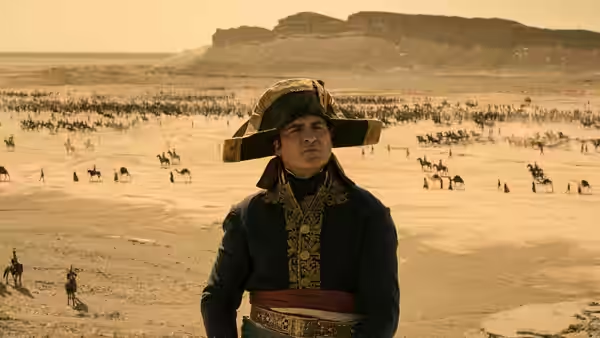
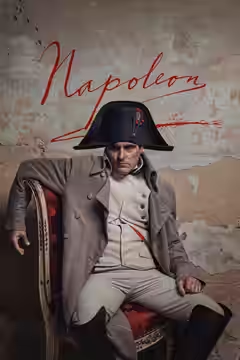
Phoenix plays Napoleon as a sulking oddity: a small man in a large hat who mumbles, eats with his fingers, grunts at Josephine across a table and cannot hold a room without a gun in it. It is a deliberate choice and often a funny one, and it takes the air out of every scene that wants to be grand, which is clearly the intention. What the performance does not do is change. Phoenix is the same man at Toulon as at the coronation, and a film that covers this much ground needs its lead to age, harden or break. He does none of it.
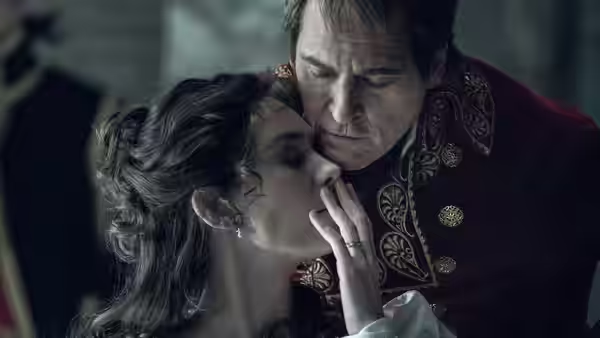
Vanessa Kirby is the reason to stay. Her Josephine is older than her husband, bored by him, and aware from their first meeting that he will do anything she tells him to. Kirby plays every scene as a woman working out what a look will cost, and the marriage, with its letters and its bedroom bargains and its long silences, is the only part of the film with a beginning, a middle and an argument. When she is off screen for a battle we found ourselves waiting for her to come back, which is not what a film called Napoleon should have us doing.
The trouble is the space between. Claire Simpson and Sam Restivo cut the years as a run of captions and postcards: a date, a city, a scene, a date. The retreat from Russia, which took an army, gets a few minutes of snow. Tahar Rahim’s Barras and Paul Rhys’s Talleyrand are the two men who make and unmake Napoleon and neither gets a scene long enough to show how. Rupert Everett’s Wellington arrives late and is enjoyably rude. Miles Jupp’s Emperor Francis is a good small joke. Martin Phipps scores nearly all of it with choir and drum, loud, and the few quiet cues, under Kirby, are the ones we remembered.
The rooms of state are cold and enormous and lit from the windows, and the coronation is staged to match the David painting everyone half remembers. Janty Yates and David Crossman keep Phoenix in the grey coat and the bicorne for most of the film and put Kirby in the high-waisted white muslin of the period. None of this is at fault. The script is.
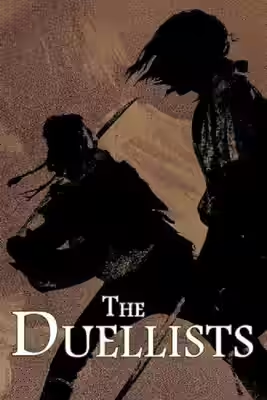
Scott began, in The Duellists (1977), with two officers in Napoleon’s army fighting the same private feud for fifteen years, and that film understood that a man’s obsession is the story and the wars are the weather. Gladiator (2000) had one idea about power and one man to carry it. Napoleon has better battles than either and no shape at all. Most critics have been warmer than we are, largely for the spectacle and for Kirby, and we grant both.
See it for Austerlitz, for Kirby, and for Phoenix in his stranger moments, and see it in a cinema if you can, where the guns land in the chest. Scott has trailed a longer cut. On this evidence the film needs the time, and the man deserved a second draft.