Paul Greengrass slows down for a Western and finds a remarkable young actor in Helena Zengel. The rest is handsome and honourable and moves at a walk, and only one shootout on a ridge reminds us who is directing.
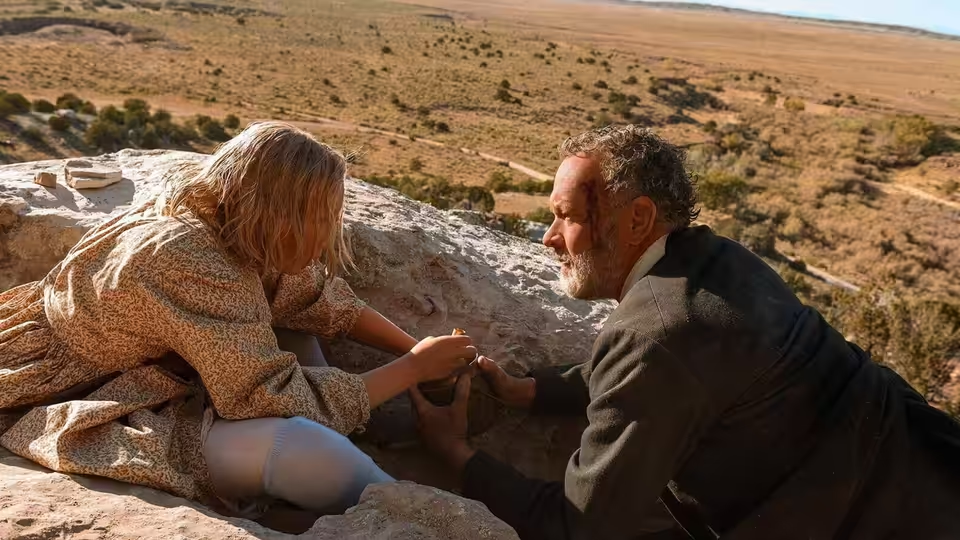
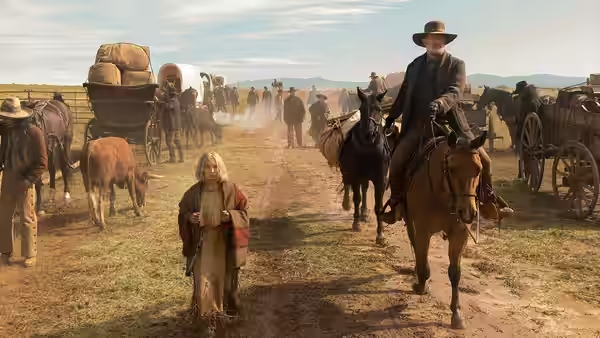
Paul Greengrass, who made his name shaking a camera through Bloody Sunday and the Bourne films, sits it on a tripod for this one. Texas, 1870. Captain Jefferson Kyle Kidd (Tom Hanks) rides from town to town reading newspapers aloud to anyone with ten cents, and on the road he finds a wagon, a body and a girl. Johanna (Helena Zengel) was born German, raised Kiowa, and has now lost both families; the papers with her say she belongs to an aunt and uncle near Castroville. Kidd tries to hand her to the army and ends up taking her himself.
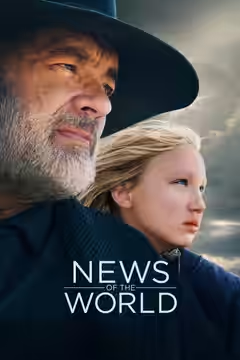
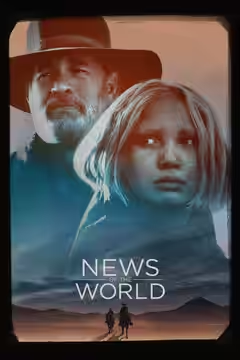
Zengel is the reason to watch it. She plays Johanna without a word of English for most of the running time, speaking Kiowa and, later, a little German, and she never once asks us to like her. She eats with her hands, bolts at the sound of a wagon wheel, sings to the dead, and looks at Hanks the way a cat looks at a stranger’s hand. When she and Kidd start trading words for things, bird and horse and bread, the film finds a rhythm it never quite loses.
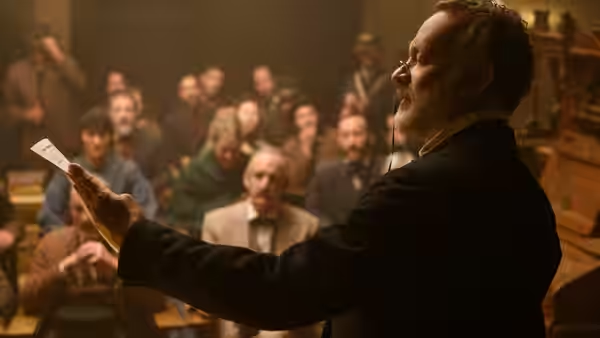
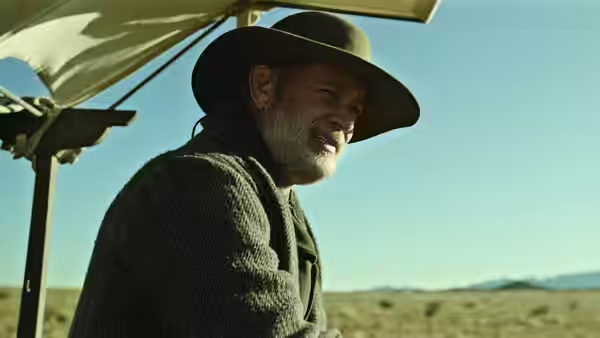
Hanks does what Hanks does, a little lower and quieter than usual. Kidd is a printer by trade with something in San Antonio he keeps not talking about, and the readings are the best of him: standing on a box, glasses on, giving a room of tired men a mine disaster in Pennsylvania and a fever outbreak down south, and knowing exactly when to pause. Between towns the script gives him less than it thinks.
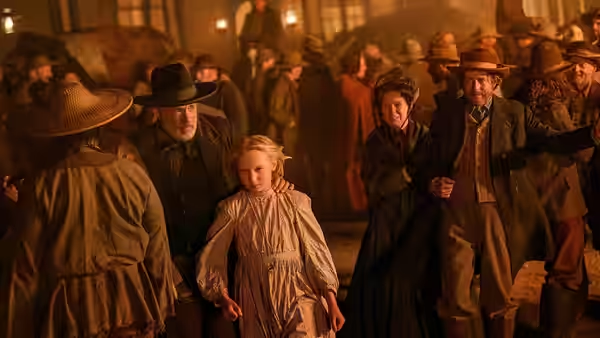
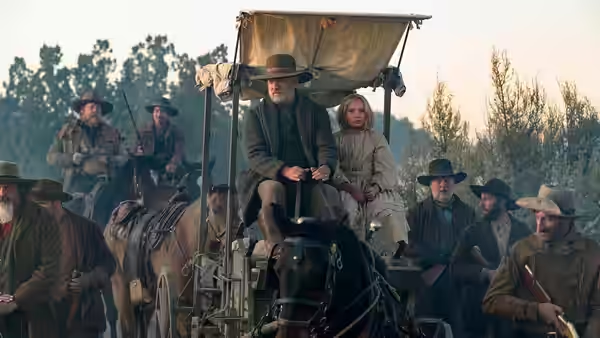
Dariusz Wolski shoots it wide and low, the grass the colour of old rope, the sky doing most of the work. He keeps the two of them small in the frame, a wagon on a hillside with weather coming. David Crank’s towns are mud and raw plank, with Union soldiers in the street five years after the surrender and nobody pleased about it. James Newton Howard’s score is strings and a sparse piano, mostly held back; it swells when the road opens out, and we could have done without the last bar of most of those swells.
Then, on a ridge, the old Greengrass turns up. Almay (Michael Angelo Covino), the ex-soldier who tried to buy the girl in Dallas, follows them out of town with two friends, and for ten minutes the film becomes what its director does better than almost anyone: a fight in real space, where the distances matter, with a shotgun, too few shells and a child who turns out to be more use than expected. William Goldenberg cuts it fast and clean and we sat forward for the first time. We were properly gripped.
The middle hour is where it sags. There is a county run by a man named Farley (Thomas Francis Murphy) who prints his own newspaper and would like Kidd to read it, and the film’s point about who gets to tell the news is made so plainly that nobody in the audience could miss it, which is presumably the idea. There is a dust storm. We were restless, and a little annoyed at being restless in front of pictures this good.
Against the Westerns it borrows from, this is a gentle one. True Grit gave its girl a tongue and its man a bottle; The Searchers let its hero be poisonous. Kidd is neither, and Greengrass, who made United 93 without a single soft edge, has made a film in which nearly every edge is soft. And yet the last ten minutes, which we will not describe, caught us out. We had been dry-eyed for a hundred minutes and were suddenly not, and the credit belongs to Zengel’s face and to Hanks for letting it have the scene.
It runs 118 minutes and carries a 12, and there is nothing in it a twelve-year-old should not see, including one body hanging from a tree that the film is right not to cut away from. Watch it on a quiet night when you want a film to treat you decently. It will not surprise you, and it does not intend to.