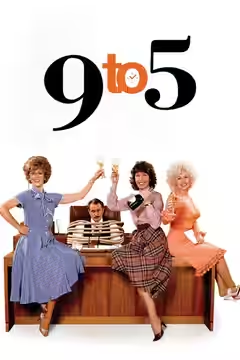
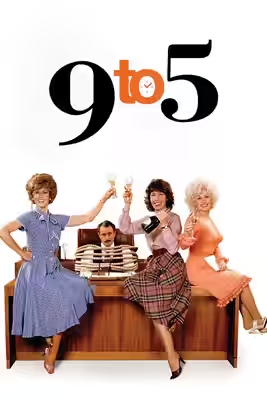
Colin Higgins’s office comedy is warm, broad and still angry under the laughs, with Lily Tomlin and Dolly Parton doing the heavy lifting and Dabney Coleman a boss worth every grudge. The farce it turns into is cruder than the setup deserves.
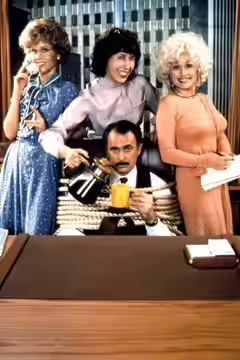
Nine to Five opens with a song and an alarm clock, and for its first half hour it is as sharp a workplace comedy as Hollywood has made. Three women work for a man who is, in the film’s own words, a sexist, egotistical, lying, hypocritical bigot, and the first job of the script by Patricia Resnick and Colin Higgins is to make us believe every one of those words. It does, quickly and with detail. The second job is to let the women get their own back, and here Higgins reaches for farce rather than satire. The film gets louder and a little cheaper when he does. It is still a good evening.
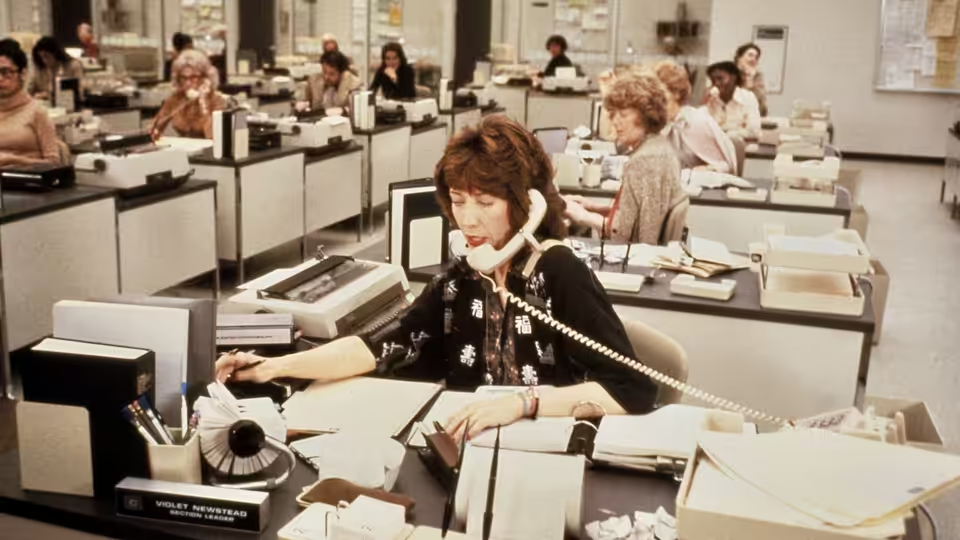
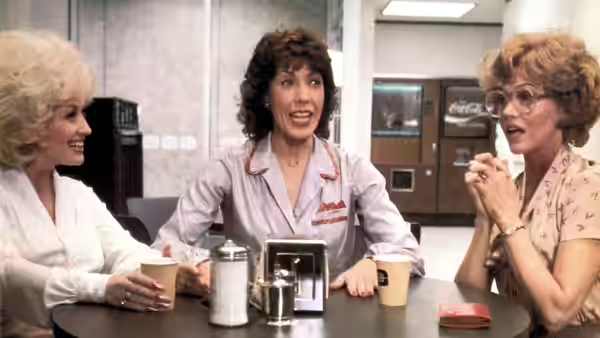
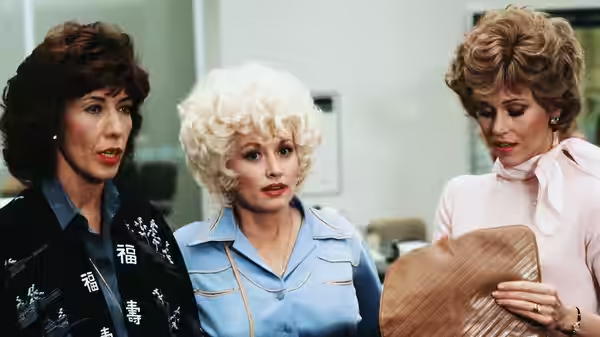
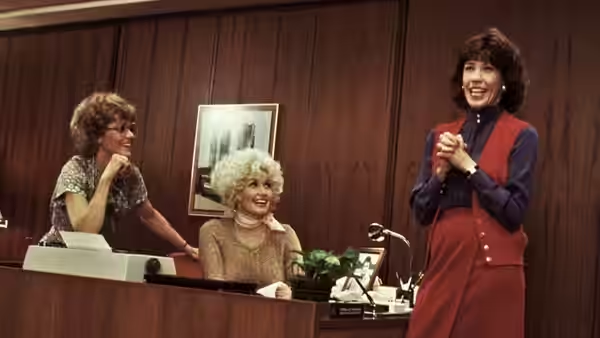
Lily Tomlin is the reason to watch. Violet has run the department for years, trained most of the men who are now above her, and takes bad news without moving her face. The scene in which Hart tells her the promotion has gone to a man because clients prefer dealing with men made us properly angry, and that anger is Tomlin’s doing: she does not raise her voice, she simply stands there and lets us watch her add it to a list. Dolly Parton, in her first film, arrives fully formed. She plays Doralee as a woman who knows exactly what everyone in the office thinks of her and has decided to be kind anyway, and when she finally tells Hart what she will do to him if he touches her again, it is the best speech in the film and she delivers it like a weather report.
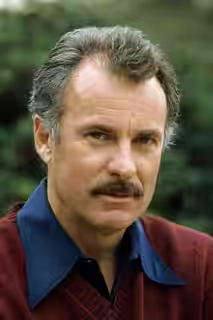
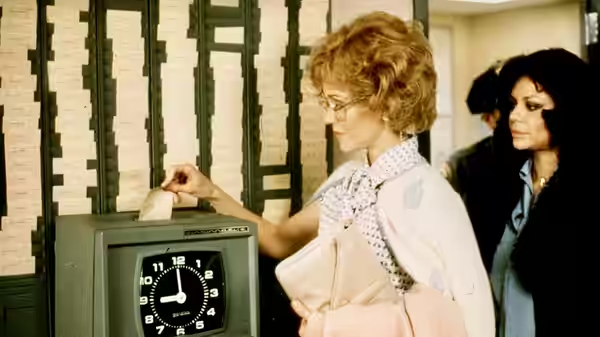
Jane Fonda is the odd one out. Judy is frightened and prim, with bows at her throat, and some of the stiffness is the point: this is a woman who has never worked and has just been left by her husband (Lawrence Pressman, briefly, as Dick Bernly). But the script keeps giving Fonda the straight lines while the other two get the jokes, and she looks as if she knows it. Dabney Coleman, meanwhile, plays Hart without a wink. He believes he is reasonable, which is why he is funny, and we laughed out loud at him more than once, usually in the second before one of the women did something about it.
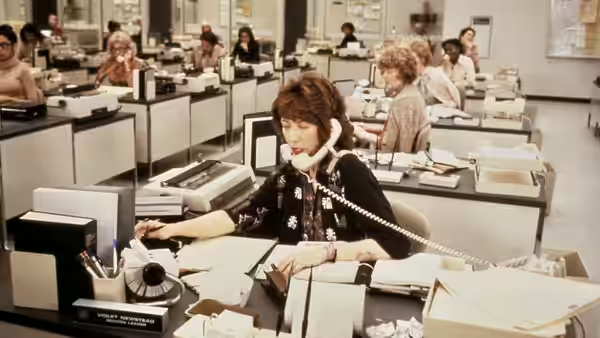
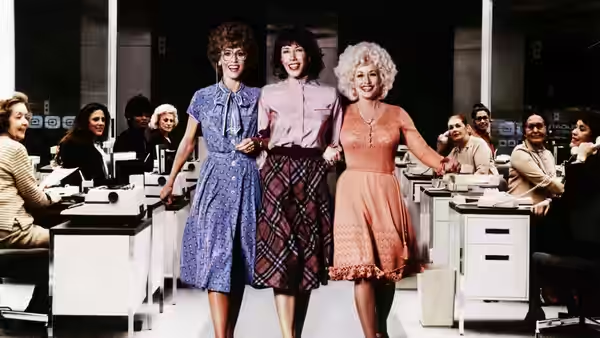
Reynaldo Villalobos shoots the office flat and bright, fluorescent tubes over beige partitions, and saves anything handsome for the fantasy sequences, each of which gets its own borrowed look. Dean Mitzner’s typing pool is rows of identical desks with a glass wall between the women and the men, so that you can always see who is watching whom. Ann Roth puts Parton in tight bright dresses and heels, Tomlin in brown suits, Fonda in ruffles, and you can read each woman’s position from her collar. Charles Fox’s score is light and stays out of the way of the jokes, which is the right decision.
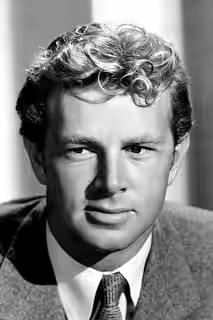
The trouble starts when the fantasies stop being fantasies. The second half takes a turn we will not describe, except to say that it involves a hospital, a mistake and a great deal of running about, and that Pembroke J. Herring’s editing, brisk in the first hour, starts to feel like three sitcom episodes stitched end to end. The women’s grievances were specific: pay, promotion, who gets the credit. The remedies, when they come, are tidy in a way that feels agreed in a meeting. Sterling Hayden turns up late as Russell Tinsworthy, and his scene lets the film off a hook it had taken some care to set.
Higgins knows how to build a farce; it is simply that the first act of this one promised something with more teeth. The two reviews we have read are warmer on Tomlin and Parton than on the plot, and we are too. See it for them, for Coleman, and for Villalobos’s three small films inside the film. It runs 110 minutes and carries a 15, which seems severe for a picture whose worst offence is a joint.