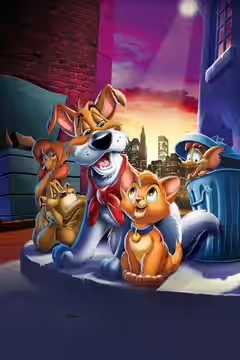
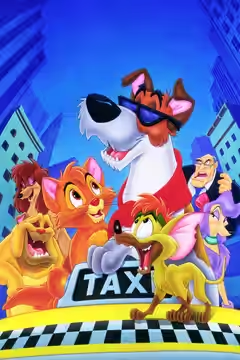
George Scribner’s brisk animal comedy has a lively voice cast and some enjoyable supporting turns. Its passive hero keeps it slight, but there is enough warmth for an undemanding family evening.
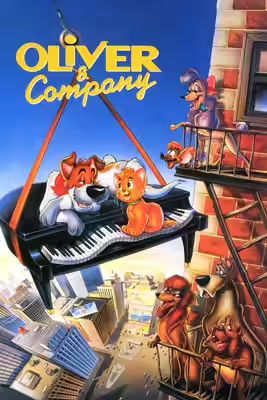
Oliver & Company is a cheerful, uneven family film whose supporting characters make a stronger impression than its hero. George Scribner’s animal reworking of Oliver Twist has enough comic life for an undemanding evening, though it offers little to linger over afterwards. The urban setting gives the familiar story a useful change of surroundings. At 74 minutes, it moves quickly, sometimes so quickly that getting us fond of Oliver seems to have been left to his appearance.
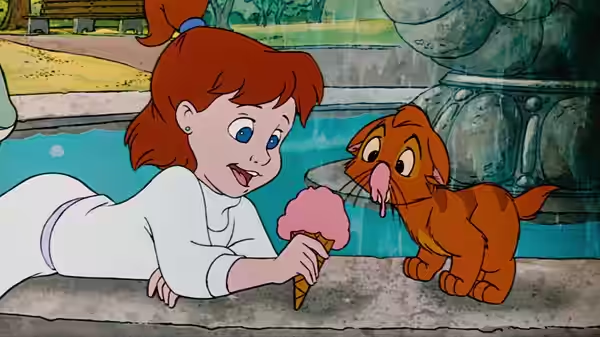
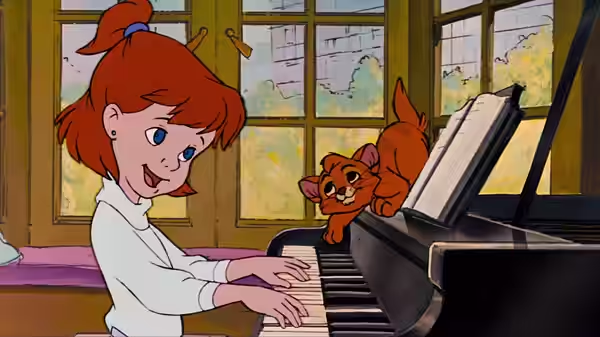
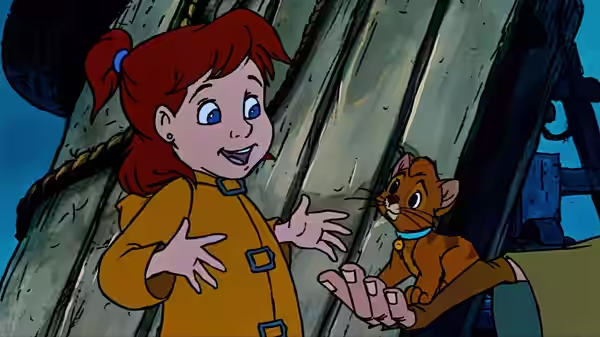
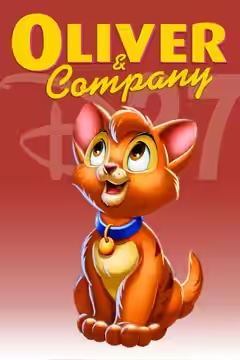
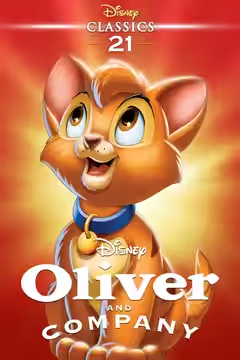
The opening does earn that fondness. We felt sorry for Oliver when the other kittens found homes and he was left behind; the situation is plain, and so is his need for company. Joey Lawrence gives him an appealing voice, but the film never quite works out how to make him interesting once he has our sympathy. His passivity becomes a problem because we spend so much time waiting for the other characters to decide what happens next.
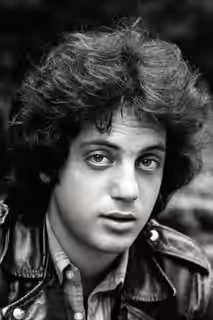
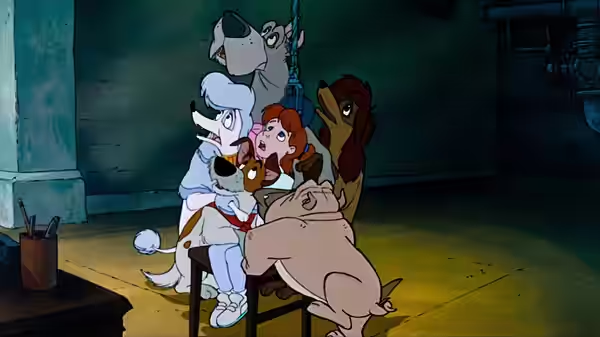
Billy Joel gives Dodger an easy confidence, and the character supplies the momentum Oliver lacks. Dom DeLuise is a good choice for Fagin, giving him enough warmth to make his predicament matter. The debt to Sykes provides a clear reason for anxiety, although the writing makes relatively little of Fagin beyond his immediate difficulties. These are enjoyable voices to spend time with, and their distinct personalities help us keep track of a crowded cast without making every introduction feel like a roll call.
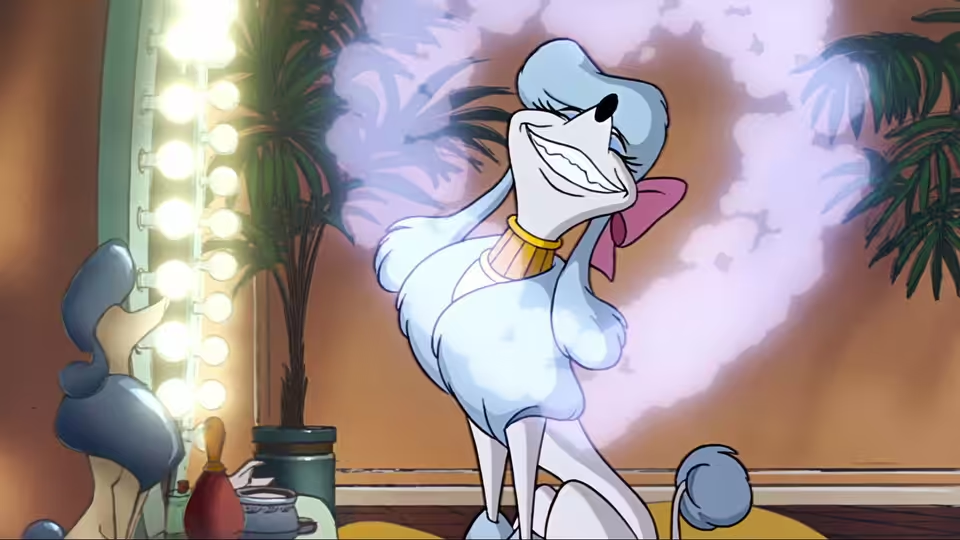
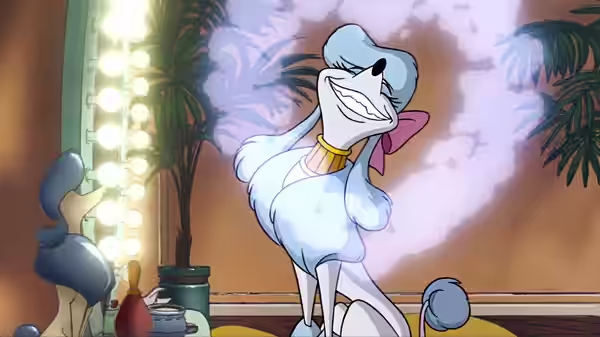
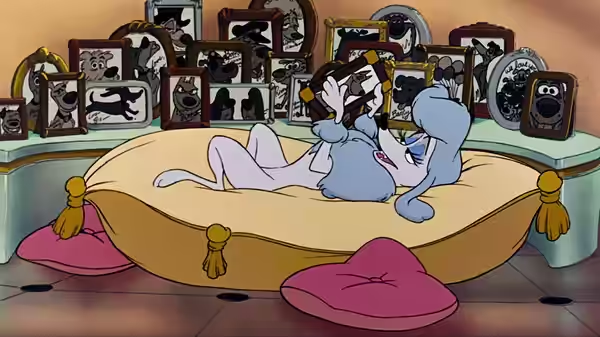
Tito and Georgette are the chief pleasures, voiced by Cheech Marin and Bette Midler and animated with a liveliness that keeps their scenes alert. Their personalities remain clear even when the comedy gets broad, which matters in a film with so many animals competing for attention. We do not need every supporting character to develop a complicated inner life; we do need to enjoy watching them, and these two give the film that immediate appeal. The difficulty is returning to Oliver after somebody else has been allowed to be funny.
Editors James Melton and Mark A. Hester keep the pace brisk enough that the thinness is not always immediately apparent. There is little room for the comedy to drag, but also little space for a relationship to grow beyond what we grasped on first meeting the characters. J.A.C. Redford’s score supports the buoyant tone, although music cannot give Oliver the decisions the screenplay withholds. Writers Tim Disney, James Mangold and Jim Cox keep the tale clear, yet the hero’s lack of initiative leaves the stronger comic parts doing too much of the work.
As a family comedy, it is pleasant enough to sit through with children, but adults have relatively little extra to discover. The animal retelling need not carry every concern of Charles Dickens; it does need enough personality to sustain our interest between jokes. Here that interest depends too heavily on who happens to be speaking. Choose it for a short, undemanding evening, and allow the supporting cast to be the attraction.