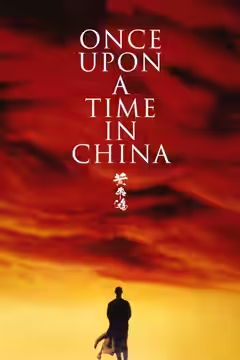
Tsui Hark remakes the folk hero Wong Fei Hung as a doctor who would rather not fight, and Jet Li plays him with a rare stillness. The comedy is broad and the middle sags, but the fights are as good as the genre gets.
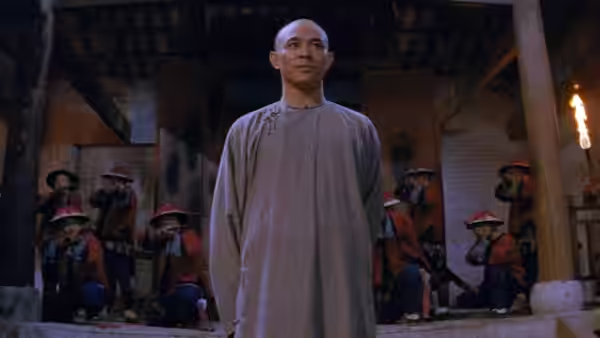
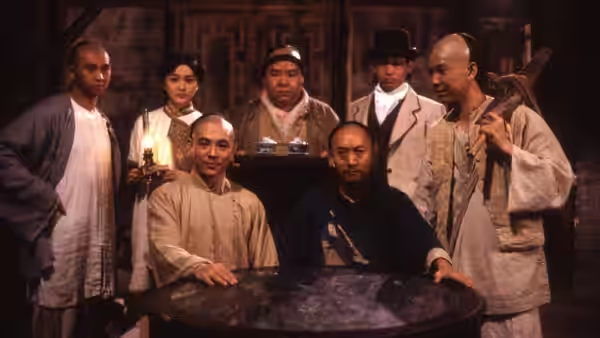
Tsui Hark puts Wong Fei Hung in Foshan in the last years of the Qing dynasty, with foreign gunboats in the harbour and an American company signing labourers up for the gold fields. Wong (Jet Li) runs a clinic, drills the local militia and wants nothing more than to be left alone to do both. The script, by Tsui Hark with Edward Leung Yiu-Ming, Elsa Tang Bik-Yin and Yuen Kai-Chi, does not leave him alone for a minute.
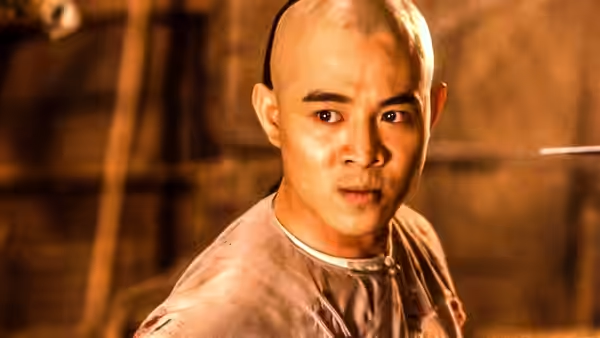
Li is the reason it works. He plays Wong as the slowest man in a town where everybody else is running, hands folded behind his back, a small frown for each new absurdity. When he does move, Tsui Hark and editor Marco Mak show the kick twice from two angles, then cut back to Li standing perfectly still as if nothing had happened. His courtship of 13th Aunt (Rosamund Kwan) is done in glances and gifts: she measures him for a Western suit, photographs him with a box camera, and he has no idea what to do with either. Kwan plays her as the one person in Foshan who has seen the future and is not frightened of it.
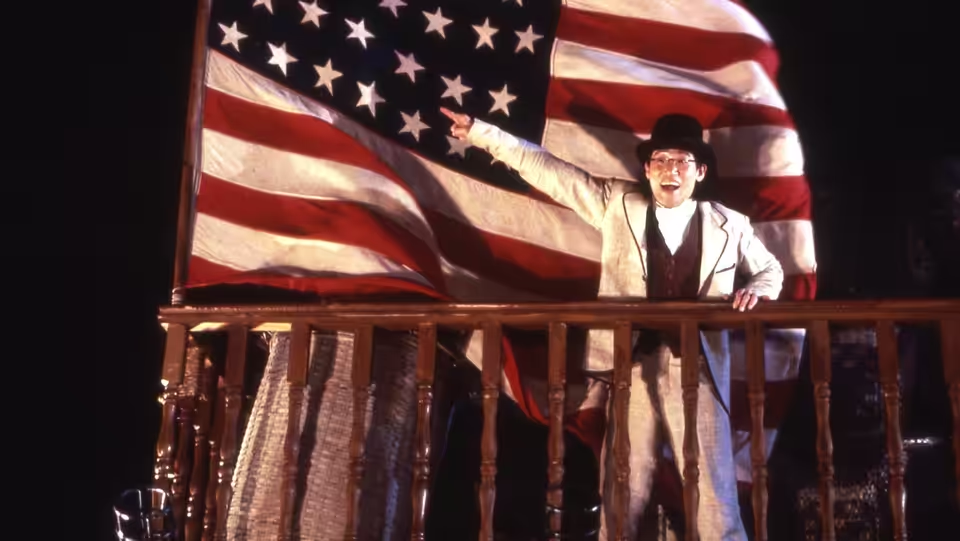
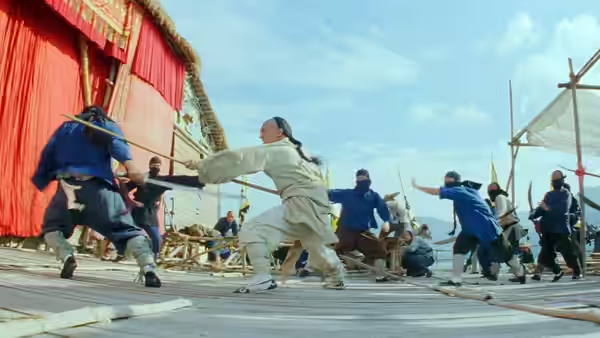
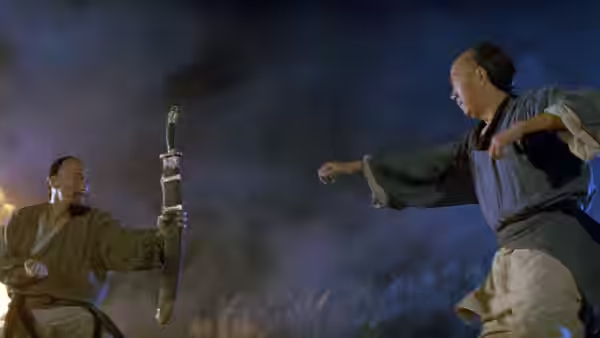
Five cinematographers are credited: Bill Wong Chung-Piu, Arthur Wong Ngok-Tai, Wilson Chan Pui-Ka, David Chung and Ardy Lam. The palette holds: dust in shafts of light, rain on the docks, red lanterns, and the militia drilling on a beach at dawn against a red sky while James Wong’s theme rises under them. Romeo Diaz and James Wong give the fights drums and give everything else that theme, and they reach for it at least twice too often. The theatre fight, up among the ropes and rafters with Leung Foon (Yuen Biao) swinging through the middle of it, shows the method. Tsui Hark shoots the building, and the fighters have to use it.
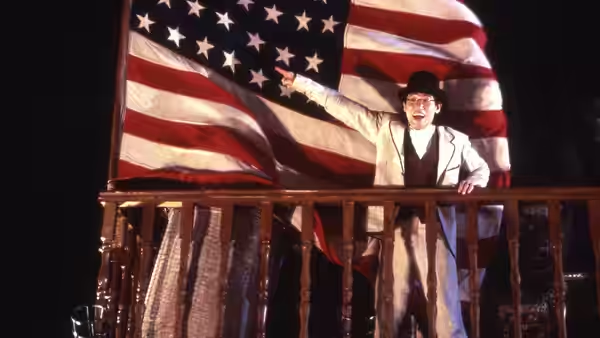
The comedy is where it hurts. Buck Teeth So (Jacky Cheung), home from America with better English than Cantonese, is a single joke told for two hours. The Westerners are cardboard, the trader and the missionary who interprets for him about as subtle as the cannon they stand beside. The middle stretch is a lot of people running between the clinic, the governor’s office and the docks, and Mak cannot quite keep the competing plots moving. At 133 minutes, it asks for patience between fights.
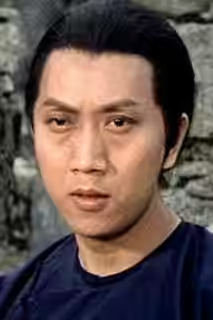
Then there is Iron Robe Yim Chun Tung (Yen Shi-Kwan), a wandering master who arrives in Foshan starving and is taken up by the Shaho gang as a sideshow. He moved us more than the hero did. There is a scene of him eating, alone, after a fight, and Yen plays it without a word. His hunger gives the film’s concerns about sovereignty and cultural identity a human consequence that the speeches struggle to match.
Against Tsui Hark’s own record, Peking Opera Blues (1986) is quicker and funnier. Here he makes a kung fu film angry about history without forgetting the pleasure of watching people fight. Yuen Biao is given a theatre boy who wants a teacher and is then rather forgotten about, which is a waste. The fights are inventive enough to earn our patience, and Li’s composure gives the film someone worth following through the muddle. See it with subtitles rather than a dub, and forgive it the middle.