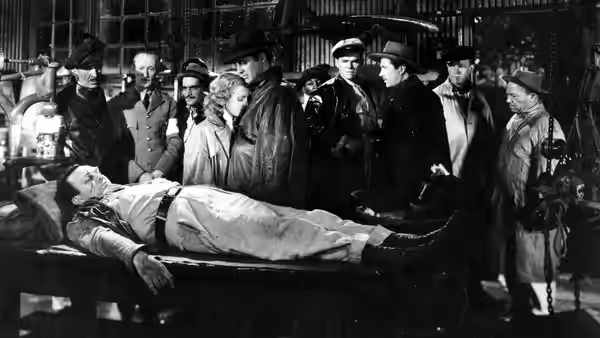
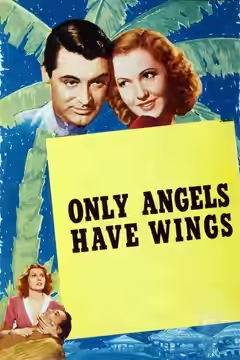
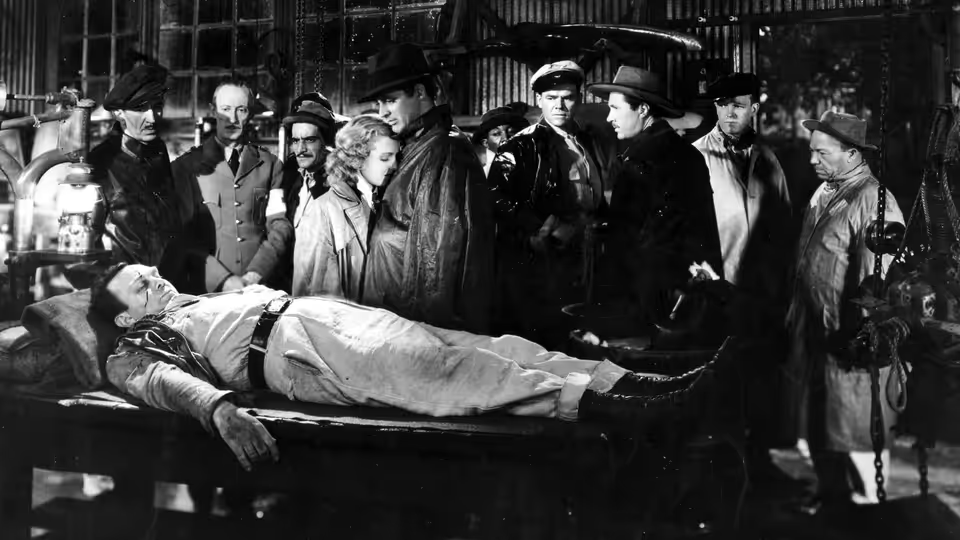
Men gather around an injured man lying on a stretcher indoors
Film review

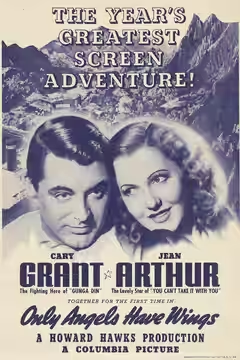
Only Angels Have Wings

1939 · Directed by Howard Hawks · 2h 01m

In a sentenceThe flying looks dangerous, but asking Cary Grant to discuss his feelings seems to require more courage

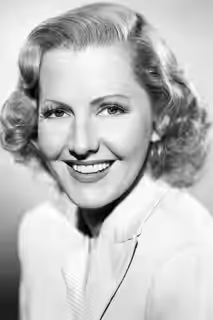
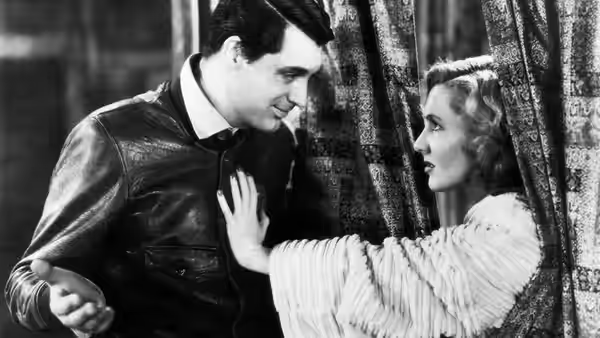
Geoff Carter (Cary Grant) belongs to a circle of pilots who treat danger as part of the working day. Bonnie Lee (Jean Arthur) draws close to him, but the men’s habit of keeping fear and grief to themselves complicates their romance. Kid Dabb (Thomas Mitchell) is among the people who make up this working community. The pilots depend on one another as they face hazardous work, while friendship helps them live with the possibility of loss. Bonnie tries to find a place in Geoff’s life, where flying and loyalty to his companions already claim much of his attention.

Fi1m review

Howard Hawks’s aviation romance is gripping, funny and moving, with Cary Grant and Jean Arthur making guarded affection feel urgent. We recommend it, despite its indulgence towards the pilots’ stubborn pride.

Howard Hawks makes the dangerous business of flying feel inseparable from the business of getting along with other people. Only Angels Have Wings is a deeply satisfying adventure and romance, with one reservation: it sometimes gives male obstinacy more respect than it deserves. The pilots’ competence is attractive, and so is their refusal to turn fear into a public occasion. But Hawks also lets us feel how difficult it would be to love someone who treats an admission of need as a professional failing.

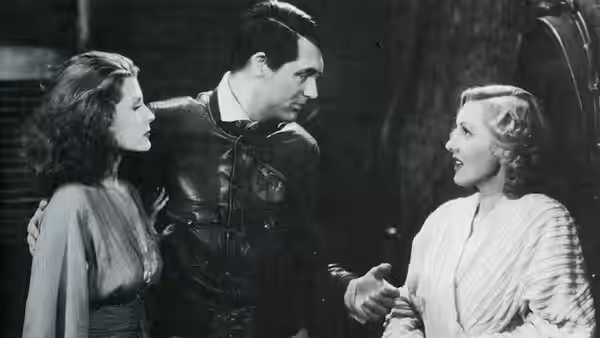
Cary Grant’s Geoff Carter gives that problem a persuasive human form. Grant makes reserve engaging without suggesting that it would be easy to live with, and Jean Arthur’s Bonnie Lee supplies enough spirit to keep the romance from becoming an exercise in admiring him. Their attraction is convincing because both performances retain a certain bite. Jules Furthman’s screenplay gives them dialogue worth listening to, and the humour does useful work: we enjoy their company before being asked to care about their difficulties.

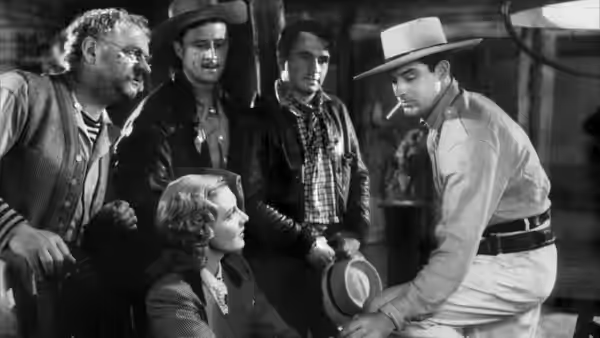
Joseph Walker’s cinematography makes the confined sets serve the drama, keeping us alert to how people occupy the same space. There is pressure in having so little room to be privately afraid, and Hawks makes the group itself feel difficult to escape. We were more tense watching the pilots together than we expected to be. Their guarded behaviour in those tight surroundings makes even companionship feel demanding, though the aerial sequences provide plenty of excitement of their own.

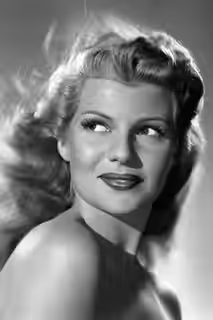
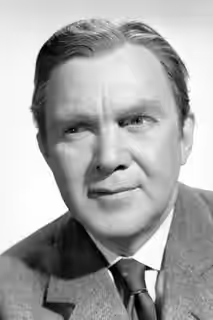
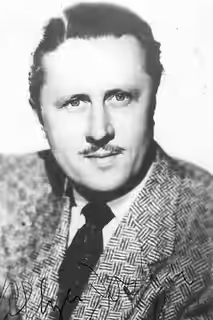
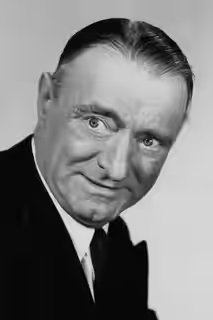
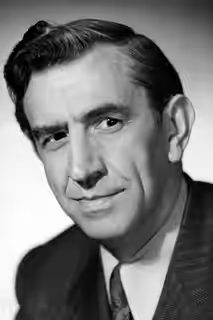
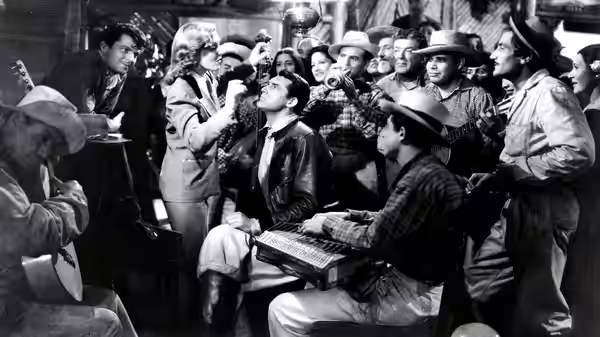
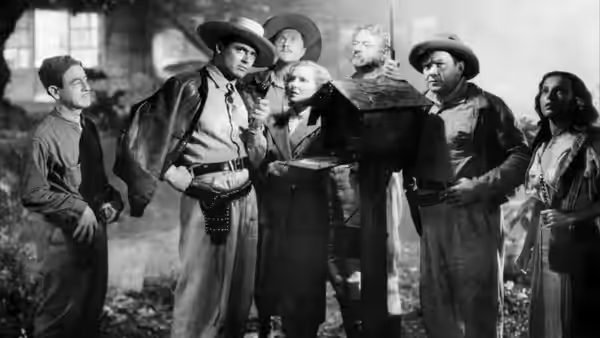
Thomas Mitchell’s Kid Dabb helps make that companionship worth the trouble; the ensemble gives the impression of people who have reasons to keep coming back to one another. Rita Hayworth’s Judy registers strongly without pulling attention away from the group. Richard Barthelmess, as Bat MacPherson, is less consistently engaging, and his restraint can look a little inert beside Grant’s. Still, the supporting performances matter as much as the central romance, which is essential in a film asking us to believe in this working community.

Viola Lawrence’s editing handles the mixture of drama, comedy and flying with a welcome lack of fuss. The changes of pace work because our interest stays with the people, rather than having to start again whenever the film changes mood. We would rank Dimitri Tiomkin’s music below the actors’ voices among its pleasures; the sharp talk and guarded responses are what stay with us. At 121 minutes, the film has time to establish the group’s company as something we might miss.

The limitation is Hawks’s indulgence towards the men’s code. Keeping a job going despite fear is admirable; making emotional reticence the condition of belonging can become tiresome, especially when the romance has to accommodate it. Arthur’s spirited performance prevents that imbalance from settling into complacency, but we occasionally wanted the film to question its pilots a little harder. Their stubbornness does not always deserve the same regard as their courage.

As an aviation adventure, it offers excitement without letting the flying overwhelm the people who do it. The romance also earns its place: affection is difficult here because the habits that keep these people working do not make them easy companions. That gives the film a warmth we would not expect from so much practised toughness. See it for Grant and Arthur, and allow the other faces time to become equally important.
Critical consensus AI synthesised

85
Positive
12
Mixed
1
Negative
0

The reviews lean strongly positive, with praise clustering around Howard Hawks’s direction, the ensemble and the feeling beneath the pilots’ professional stoicism. Critics repeatedly find the camaraderie convincing and the mixture of adventure, comedy and melancholy effective. Cary Grant and Jean Arthur attract particular attention for their performances and romantic chemistry. The aerial sequences provide excitement, while several reviews find just as much tension in the confined spaces where the characters work and gather.

The differences are mostly matters of enthusiasm rather than fundamental objections. Little White Lies finds the film less purely entertaining than some of Hawks’s other work, but especially moving. The Guardian is warmly appreciative without placing it among its favourite Hawks films. Empire supplies a more specific reservation, identifying Richard Barthelmess as the ensemble’s weak link. Across the available assessments, those qualifications sit within broad admiration for the film’s craft and emotional restraint.

Radio Times
★★★★★ · Tony Sloman
100

The critic gives the film a strongly positive assessment, calling it one of Howard Hawks's finest works. They single out the superb cast and the palpable tension created by the confined sets.

Read the full review →
Slant Magazine
2 October 2003 · ★★★★/4 · Zach Campbell
100

Campbell treats the film as a gorgeous masterwork that examines stoicism and grief within a professional group. He praises Hawks’s carefully composed spaces and the way their visual patterns express characters’ changing emotional states.

Read the full review →
The AV Club
9 April 2016 · Mike D'Angelo
90*

D'Angelo argues that the film is a strong contender for Hollywood's greatest and praises its unusual blend of pragmatism and deep feeling. He especially singles out how the final scene makes an emotionally restrained romantic gesture achingly moving.

Read the full review →
The Independent
14 May 2015 · Geoffrey Macnab
90*

Macnab warmly praises this re-release as a quintessential Howard Hawks film. He singles out its spectacular aerial sequences and the pilots’ fatalistic machismo.

Read the full review →
The New Yorker
90*

The capsule presents the film as a stirring, highly effective workplace drama. It especially praises Cary Grant and Jean Arthur’s chemistry, while also highlighting the supporting ensemble.

Read the full review →
Little White Lies
· Adam Cook
85*

Cook praises the film as Hawks’ most moving work, despite finding it less purely entertaining than some of his other films. He singles out its vivid camaraderie and melancholy portrayal of life among daredevil pilots.

Read the full review →

Straight answers AI written, from our review

Is Only Angels Have Wings worth watching?
Only Angels Have Wings is well worth watching for its gripping aviation adventure, sharp humour and convincing romance; we score it 88 out of 100. We recommend it especially for Cary Grant and Jean Arthur’s guarded affection and the pilots’ convincing companionship, though its respect for the men’s courage sometimes extends too generously to their stubbornness.
How long is Only Angels Have Wings, and what is it rated?
Only Angels Have Wings runs 2h 01m. It is a romance and adventure film.
Where can I watch Only Angels Have Wings in Finland?
Only Angels Have Wings is not on any streaming or rental service in Finland at the moment. It is available in 8 other countries; change your country at the top of the page to see where. Availability is checked daily.
How does Only Angels Have Wings compare to The Wages of Fear?
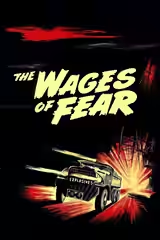
Only Angels Have Wings is the warmer, more varied choice beside The Wages of Fear, making room for romance and humour alongside dangerous work. We favour it for engaging company and affection under pressure; The Wages of Fear is the better fit for sustained tension with little romantic consolation, provided its long wait in town does not test your patience.
What should I watch after Only Angels Have Wings?
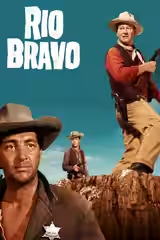
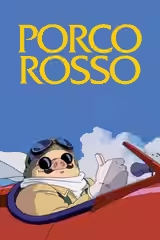
After Only Angels Have Wings, try The Wages of Fear (1953, Fi1m 90): Dangerous work and fraying nerves, with far less room for romantic consolation. Then Rio Bravo (1959, Fi1m 88): Hawks again, making professional competence and stubborn friendship worth an evening’s company; and Porco Rosso (1992, Fi1m 81): An aviation romance equally fond of pilots who hide their feelings behind gruffness.

Cast

Awards

Academy Awards, 1940

Nominated
Best Cinematography, Black-and-White
Nominated
Best Special Effects

If you liked this, try…

  1. The Wages of Fear (1953, Fi1m 90)Dangerous work and fraying nerves, with far less room for romantic consolation.

  2. Rio Bravo (1959, Fi1m 88)Hawks again, making professional competence and stubborn friendship worth an evening’s company.

  3. The Train (1964) · not on Fi1m yetPractical skill becomes gripping action, with machinery that never feels incidental.

  4. Porco Rosso (1992, Fi1m 81)An aviation romance equally fond of pilots who hide their feelings behind gruffness.

  5. A Matter of Life and Death (1946, Fi1m 92)Another romance in which flying makes ordinary declarations of love rather complicated.