Ron Howard’s family comedy is funny, warmly acted and alert to the irritation that comes with affection. Steve Martin and Dianne Wiest give it weight, though the closing stretch is too eager to make everyone feel better.
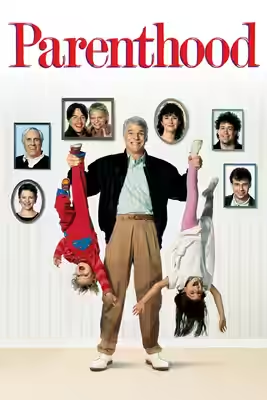
Ron Howard’s Parenthood is a good family comedy with enough irritation in it to make the affection believable. Its achievement is to give an extended family several points of view without making every relative serve the same lesson. We recommend it for the performances and the jokes, with a reservation about how firmly it steers us towards comfort. These relatives do not always understand one another, and the comedy is better when it lets that remain awkward.
Lowell Ganz and Babaloo Mandel’s screenplay is strongest when it lets competing complaints stand without appointing a winner. The range of family experience gives the comedy more to work with than a succession of parenting mishaps, and there is room for people to be unreasonable without becoming intolerable. Some of the dialogue is too neatly composed: we can hear the line being readied before it arrives. That does not stop it being funny, but it makes the people sound a little more articulate about their difficulties than we believe.
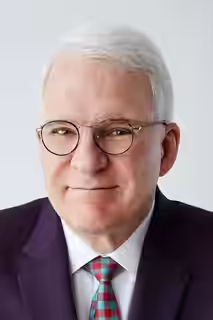
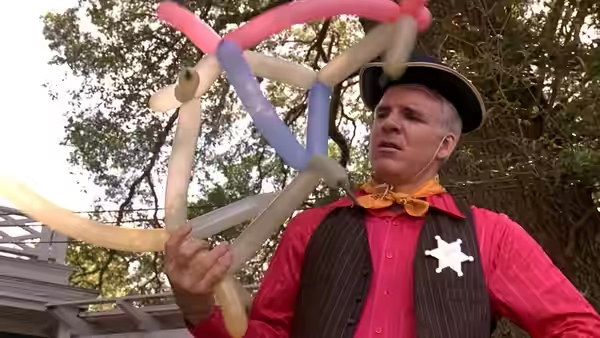
Steve Martin, as Gil Buckman, gives the film a useful centre without making the ensemble feel like an interruption. His comic precision helps, but we enjoy the jokes more because he takes the emotional demands of the part seriously. Mary Steenburgen, as Karen Buckman, offers a steadier presence, and her less emphatic approach is welcome beside the bigger performances. Ron Howard gives his cast room to vary the pace and force of an exchange.
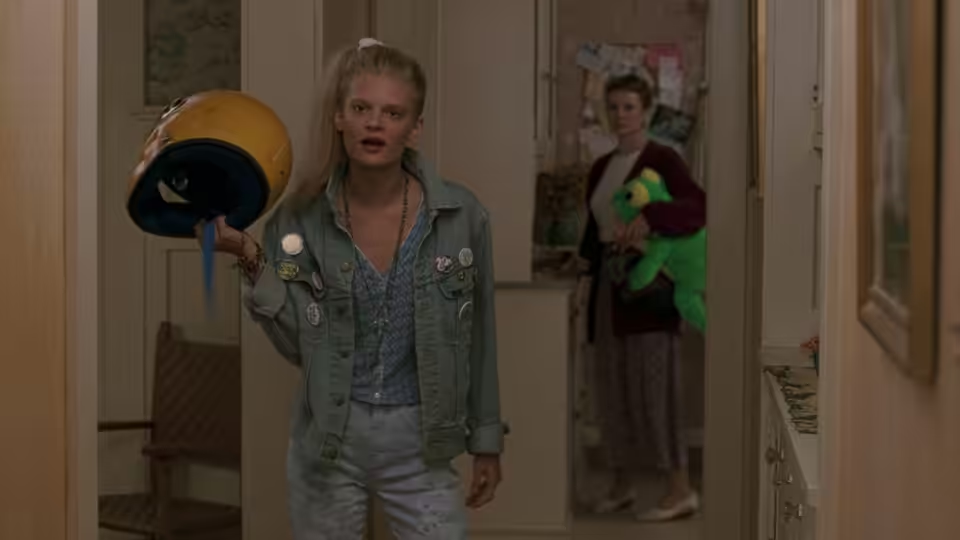
Dianne Wiest gives the performance that stayed with us, as Helen Buckman Lampkin Bowman. We were moved by the spirit she brings to the family friction: she makes the effort of remaining engaged with other people feel tiring, and worth making. There is enough bite in her delivery to prevent warmth becoming mere agreeableness. When the writing sounds prepared, her energy helps it sound like something a person might actually need to say.
We value Donald McAlpine’s cinematography and Todd Hallowell’s production design chiefly for how little they compete with the actors. Editors Mike Hill and Daniel P. Hanley keep the many storylines legible, though the leisurely pace occasionally becomes indulgent. At 124 minutes, the film could afford to lose a little time between its better exchanges. Randy Newman’s music contributes to the warmth, but the performances need less help with that than the film seems to think.
The weaker jokes choose an easy target and move on, briefly making the film feel coarser than its better observations. More troublesome is the reassurance towards the end, which presses harder than the preceding comedy has earned. Family comedies often become anxious about sending anyone away unhappy, and this one shares that habit. A little less insistence would have helped us believe the comfort it offers.
For a family comedy, it is unusually willing to spend time on people who cannot all be the lead. That breadth is worth the occasional slack patch, especially with this cast. Choose it for a companionable evening, provided you can forgive the extra reassurance before bedtime.