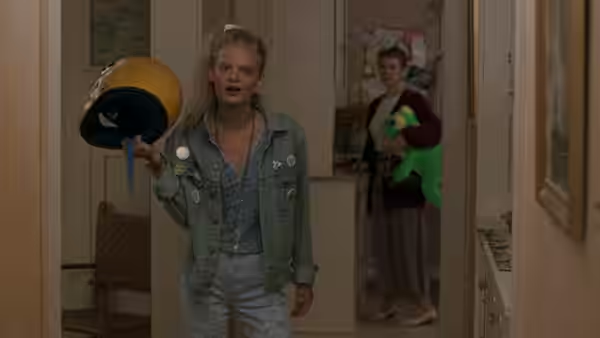
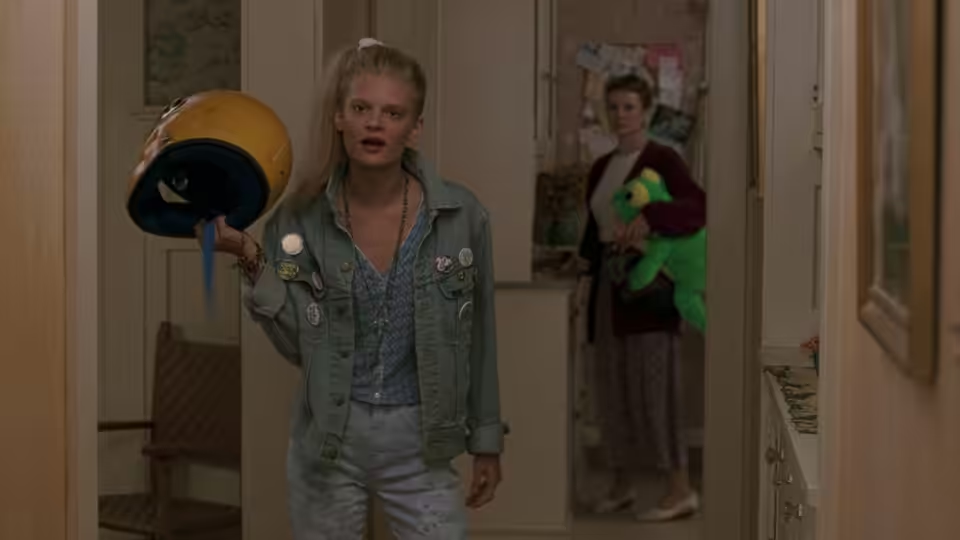
Garry Buckman (Joaquin Phoenix) holds a motorcycle helmet in a doorway as a woman watches
Film review

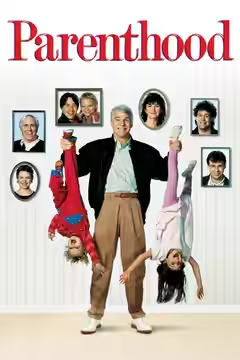
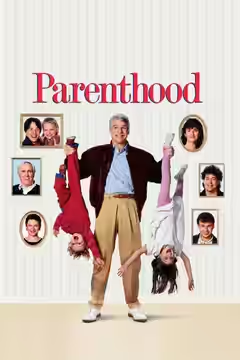
Parenthood

1989 · Directed by Ron Howard · 2h 04m

In a sentenceTwo hours with somebody else’s relatives, and for once we were not looking for an excuse to leave

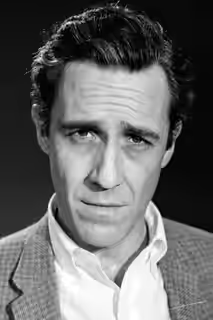
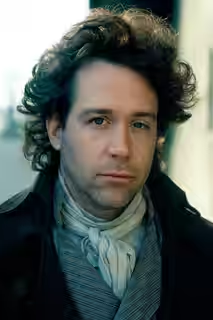
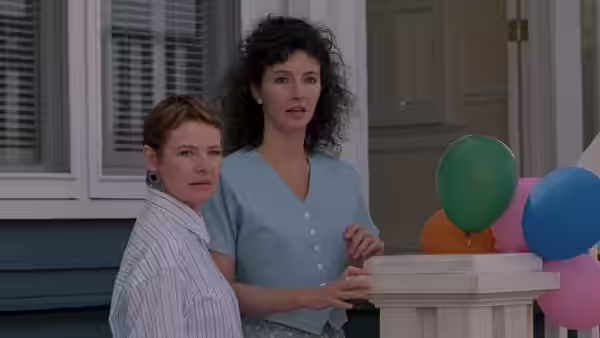
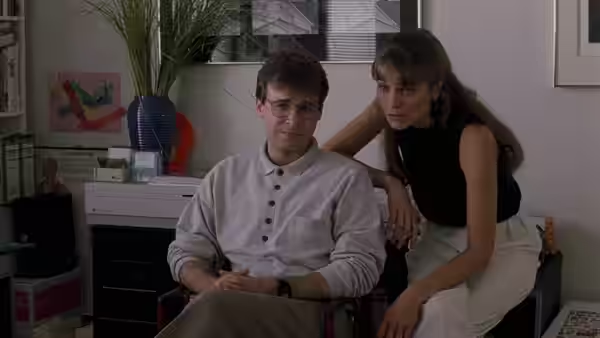
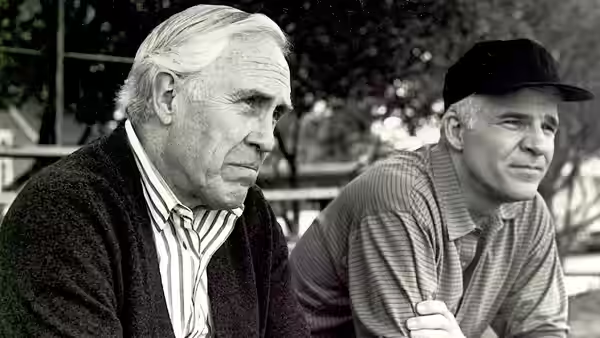
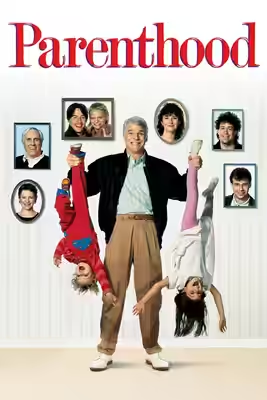
Gil Buckman (Steve Martin) and Karen Buckman (Mary Steenburgen) belong to an extended family whose members have different ideas about being parents and children. Helen Buckman Lampkin Bowman (Dianne Wiest) brings another perspective, alongside Frank Buckman (Jason Robards) and Larry Buckman (Tom Hulce). The story moves among the relatives and their competing concerns, rather than giving one person responsibility for explaining the family to everyone else. Affection keeps these people involved in one another’s lives, but it does not make their expectations agree or their individual difficulties easier to understand.

Fi1m review

Ron Howard’s family comedy is funny, warmly acted and alert to the irritation that comes with affection. Steve Martin and Dianne Wiest give it weight, though the closing stretch is too eager to make everyone feel better.

Ron Howard’s Parenthood is a good family comedy with enough irritation in it to make the affection believable. Its achievement is to give an extended family several points of view without making every relative serve the same lesson. We recommend it for the performances and the jokes, with a reservation about how firmly it steers us towards comfort. These relatives do not always understand one another, and the comedy is better when it lets that remain awkward.

Lowell Ganz and Babaloo Mandel’s screenplay is strongest when it lets competing complaints stand without appointing a winner. The range of family experience gives the comedy more to work with than a succession of parenting mishaps, and there is room for people to be unreasonable without becoming intolerable. Some of the dialogue is too neatly composed: we can hear the line being readied before it arrives. That does not stop it being funny, but it makes the people sound a little more articulate about their difficulties than we believe.

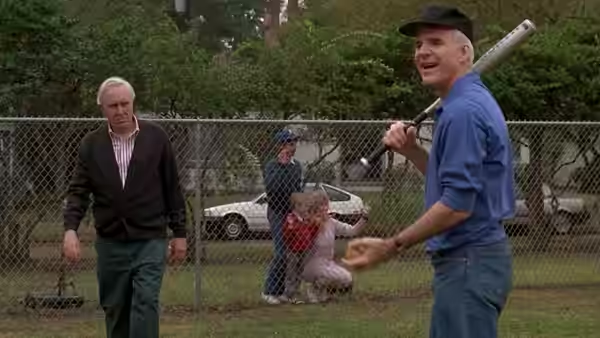
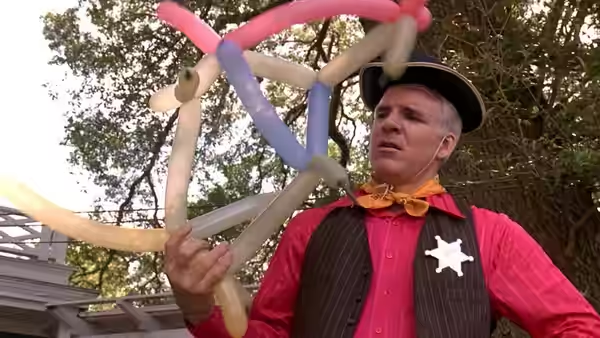
Steve Martin, as Gil Buckman, gives the film a useful centre without making the ensemble feel like an interruption. His comic precision helps, but we enjoy the jokes more because he takes the emotional demands of the part seriously. Mary Steenburgen, as Karen Buckman, offers a steadier presence, and her less emphatic approach is welcome beside the bigger performances. Ron Howard gives his cast room to vary the pace and force of an exchange.

Dianne Wiest gives the performance that stayed with us, as Helen Buckman Lampkin Bowman. We were moved by the spirit she brings to the family friction: she makes the effort of remaining engaged with other people feel tiring, and worth making. There is enough bite in her delivery to prevent warmth becoming mere agreeableness. When the writing sounds prepared, her energy helps it sound like something a person might actually need to say.

We value Donald McAlpine’s cinematography and Todd Hallowell’s production design chiefly for how little they compete with the actors. Editors Mike Hill and Daniel P. Hanley keep the many storylines legible, though the leisurely pace occasionally becomes indulgent. At 124 minutes, the film could afford to lose a little time between its better exchanges. Randy Newman’s music contributes to the warmth, but the performances need less help with that than the film seems to think.

The weaker jokes choose an easy target and move on, briefly making the film feel coarser than its better observations. More troublesome is the reassurance towards the end, which presses harder than the preceding comedy has earned. Family comedies often become anxious about sending anyone away unhappy, and this one shares that habit. A little less insistence would have helped us believe the comfort it offers.

For a family comedy, it is unusually willing to spend time on people who cannot all be the lead. That breadth is worth the occasional slack patch, especially with this cast. Choose it for a companionable evening, provided you can forgive the extra reassurance before bedtime.
Critical consensus AI synthesised

76
Positive
5
Mixed
2
Negative
0

Most critics find Parenthood an affectionate, perceptive family comedy, with praise centred on its ensemble and its attention to different generations within an extended family. The humour benefits from a bittersweet sense of how relatives support and frustrate one another. Ron Howard’s handling of the many storylines earns approval, while the Los Angeles Times singles out Dianne Wiest’s spirited performance and Empire welcomes the scope Steve Martin has to show his acting talents.

The reservations concern consistency and sentiment rather than the family portrait itself. Empire and the Los Angeles Times find the ending too sentimental or broad, though other reviews see the warmth as well judged. Time Out offers a more qualified response, praising the opening and one-liners but finding the comedy uneven. The balance remains favourable, with the less enthusiastic assessments questioning how reliably the jokes and emotion work.

Slant Magazine
29 April 2007 · ★★★½/4 · Eric Henderson
88

Henderson calls the film a middlebrow masterpiece, despite its screenwriter-like dialogue and conventional sensibilities. He praises its warmly acted, balanced portrayal of family bonds and the ways relatives remain separate from one another.

Read the full review →
Variety
31 December 1988 · Variety Staff
85*

The review finds the film ambitious, keenly observed, and often funny. It singles out the film’s broad range of perspectives across an extended family as its masterstroke.

Read the full review →
Los Angeles Times
2 August 1989 · SHEILA BENSON
82*

Benson finds the film a witty, perceptive family comedy whose bittersweet realism gives its jokes depth. She praises Dianne Wiest’s spirited character and performance, while faulting the broad ending and a few cheap-shot jokes.

Read the full review →
Radio Times
★★★★ · John Ferguson
80

The critic finds it an affectionate, leisurely comedy that avoids oversentimentality. They praise Ron Howard’s handling of its many storylines and the performances of the ensemble cast.

Read the full review →
Empire
1 January 2012 · Caroline Westbrook
70*

Westbrook finds the film funny and touching, though its ending turns overly slushy. She praises the ensemble performances, especially Steve Martin’s chance to show his acting talents.

Read the full review →
The New York Times
2 August 1989 · Janet Maslin
64*

The page is identified as a review of the film, but its text is inaccessible. The critic’s verdict and any specific praise or complaint cannot be established.

Read the full review →

Straight answers AI written, from our review

Is Parenthood worth watching?
Parenthood is worth watching for its funny, warmly acted portrait of family friction, and we score it 78 out of 100. We recommend it for a companionable evening, especially for Steve Martin and Dianne Wiest, though the leisurely pace occasionally drags and the closing stretch pushes too hard for reassurance.
How long is Parenthood, and what is it rated?
Parenthood runs 2h 04m. It is a comedy and drama film.
Where can I watch Parenthood in Ukraine?
Parenthood is not on any streaming or rental service in Ukraine at the moment. It is available in 16 other countries; change your country at the top of the page to see where. Availability is checked daily.
How violent or frightening is Parenthood, and is it suitable for children?
Parenthood has a UK 15 certificate, so it is not suitable for children under 15 despite its focus on family life. We describe some jokes as coarse, but do not identify specific violence or frightening material; the certificate is the clearest guide here, rather than the warmth of the comedy.
How does Parenthood compare to Life Is Sweet?
Parenthood is the more reassuring family comedy; we favour Life Is Sweet for sharper tempers and affection that feels less forced. Both find humour in relatives’ disappointments, but we recommend Parenthood for a companionable evening and Life Is Sweet for viewers willing to give its performances time, despite comic turns that sometimes approach caricature.
What should I watch after Parenthood?
After Parenthood, try Life Is Sweet (1990, Fi1m 84): Another untidy family, with sharper tempers and less insistence on reassurance. Then Tokyo Story (1953, Fi1m 92): For a quieter, more painful account of relatives failing to understand one another; and Monsoon Wedding (2001, Fi1m 80): Another crowded family gathering where affection cannot keep every grievance quiet.

Cast

Awards

Academy Awards, 1990

Nominated
Best Supporting Actress

If you liked this, try…

  1. Life Is Sweet (1990, Fi1m 84)Another untidy family, with sharper tempers and less insistence on reassurance.

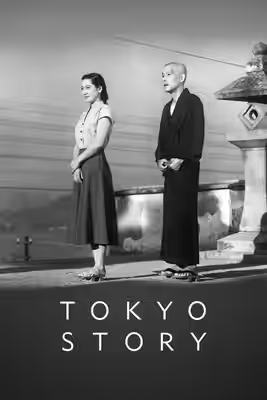
  2. Tokyo Story (1953, Fi1m 92)For a quieter, more painful account of relatives failing to understand one another.

  3. 20th Century Women (2016) · not reviewed yetMore uncertain parenting, with room for children to answer the adults back.

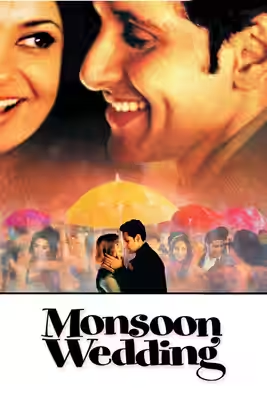
  4. Monsoon Wedding (2001, Fi1m 80)Another crowded family gathering where affection cannot keep every grievance quiet.

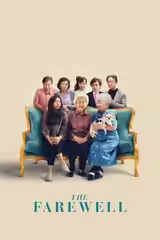
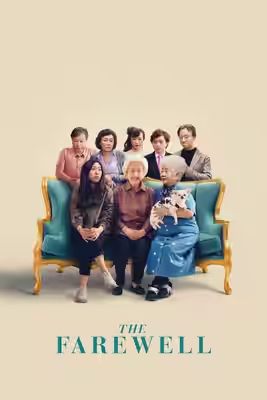
  5. The Farewell (2019, Fi1m 84)Family concern becomes suffocating, while the comedy stays close to the hurt.

Free account

Know what to watch tonight

Two lists that know where things are streaming, collections you can share, your own score beside ours, and Discover that remembers what you have seen.

  • Want to see, sorted by what is streaming now
  • Seen, with your score out of ten
  • No adverts, ever