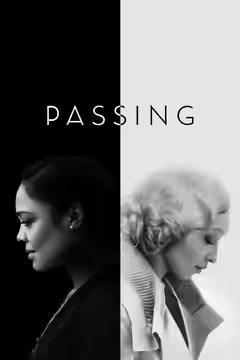
Rebecca Hall’s Passing is an unsettling drama carried by Tessa Thompson and Ruth Negga, whose silences deserve close attention. Its careful manners sometimes dampen the tension, but we recommend it for the uneasy intimacy between its leads.
Rebecca Hall’s Passing is an absorbing drama, even when its restraint becomes excessive. Working from a novel by Nella Larsen, Rebecca Hall puts Irene Redfield’s fascination with Clare Kendry at the centre of a story about racial identity and desire. Much depends on our willingness to study Irene as closely as she studies Clare. Tessa Thompson and Ruth Negga make that an invitation worth accepting.
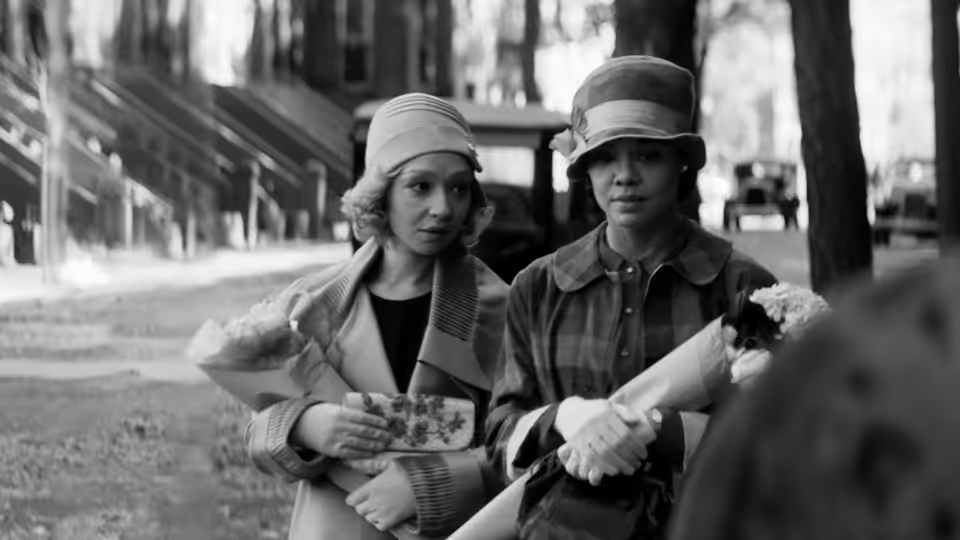
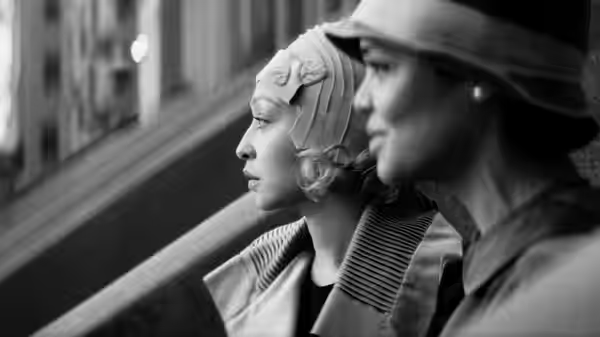
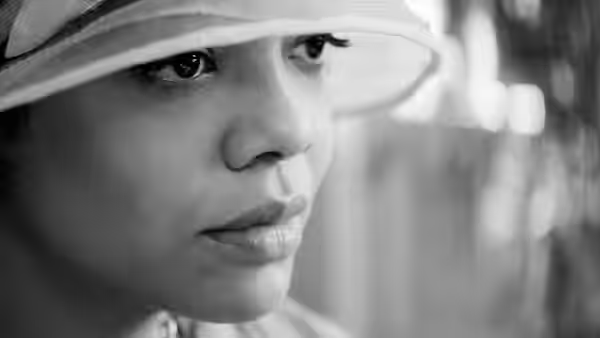
Tessa Thompson plays Irene with a composure that never looks comfortable. The effort of keeping her feelings contained is always there, and her attention to Clare leaves us wondering how much she understands about herself. We felt uneasy during the silences between them, because Irene’s scrutiny seems too intense to be harmless. Tessa Thompson makes that discomfort precise without reducing it to a single emotion. Envy, attraction and fear can all occupy the same look.
Ruth Negga gives Clare enough allure to make that attention understandable, without making her simply an object for Irene to study. There is a person here whose wants matter, even when we cannot confidently name them. Their chemistry gives the conversations a charge that the dialogue does not always manage on its own. The performances allow us to entertain several explanations for an exchange, and neither actor appears to be waiting for the screenplay to settle the matter.
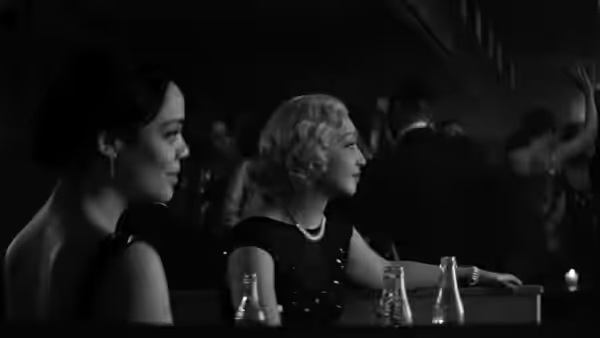
Eduard Grau’s black-and-white cinematography keeps the women compelling to look at without making them easy to read. The delicacy of the greys suits the performances, while the enclosed feel of the images makes such close attention uncomfortable. Nora Mendis’s production design contributes to that controlled atmosphere, though its refinement can occasionally make the people seem too carefully placed. We are most interested when an expression threatens to upset the composure of the picture.
Sabine Hoffmann’s editing gives the performances time to register, and the patient pace usually earns its keep. We can follow a change in feeling without having a line of dialogue explain it immediately. Dev Hynes’s music leaves less of an impression than the faces, which feels the right proportion for this film. At 98 minutes, Passing has room to pause; the trouble comes when a pause seems to repeat what the previous one has already told us.
Some of Rebecca Hall’s dialogue is too decorous for the feelings underneath it. Conversations occasionally lose their urgency, and the later passages feel hurried after so much measured attention to the women. That unevenness matters because Irene’s doubts need time to become ours, and a rush through them makes the uncertainty harder to share. The film is right not to explain every motive, but it sometimes leaves us sorting out the storytelling when we ought to be watching the people.
As a literary adaptation, this works best when it lets the actors suggest feelings that a longer explanation could make too tidy. Its limitations did not keep us at a distance from Irene and Clare, and their encounters stayed with us afterwards. We recommend it for those performances, with the caveat that its quietness occasionally becomes stiffness. Choose an evening when the conversation on the sofa can wait until afterwards.