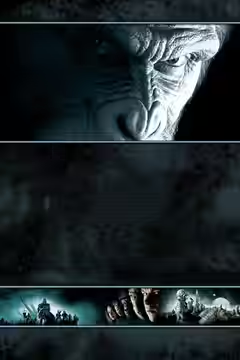
Tim Burton’s return to the ape planet has superb make-up, a furious Tim Roth and nothing for its human lead to do. Handsome, occasionally alarming, and dull for most of its middle hour; most critics were unimpressed, and so were we.
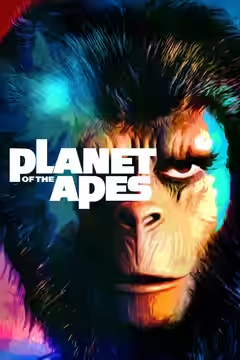
Tim Burton did not want to call this a remake, and it was sold as a re-imagining of the 1968 Planet of the Apes, which Franklin J. Schaffner made from Pierre Boulle’s novel. The distinction matters less than it was meant to. This is the same story with the furniture moved: an astronaut crashes on a world where apes rule and humans are hunted, and has to get home. Burton has spent 120 minutes on it, and the result is a poor film with some fine things in it. Most critics said so when it opened, and we are not going to argue.
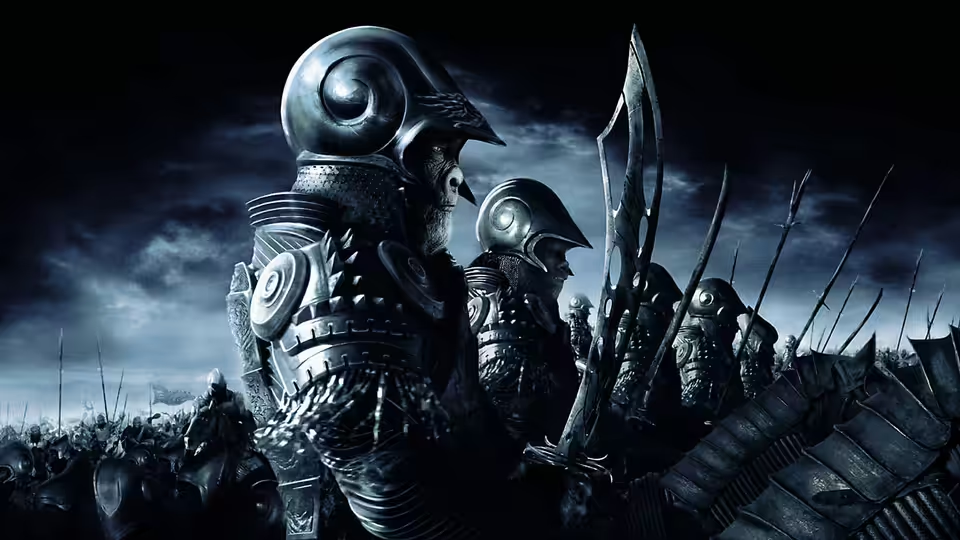
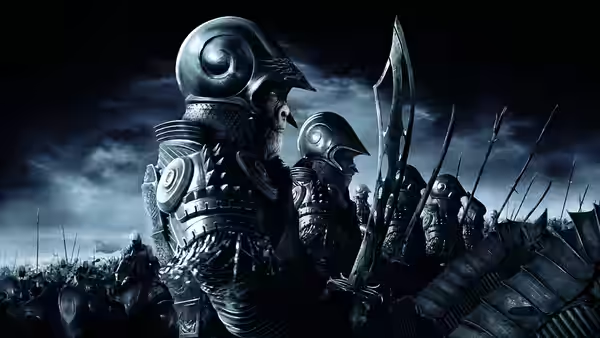
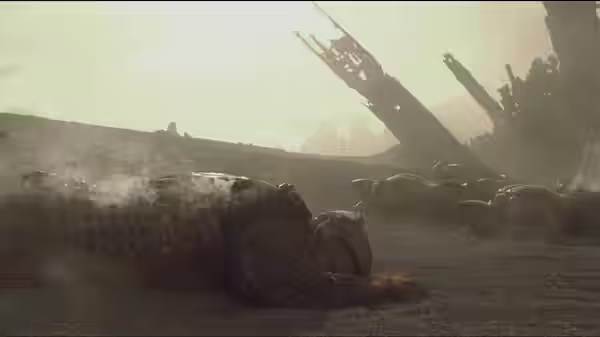
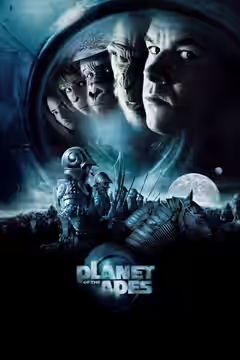
The opening is the best of it. Danny Elfman’s credits, drums and a low male chorus over Rick Heinrichs’s ape armour, helmets and breastplates turning slowly in the dark, promise something heavy and strange. Then we are on a space station, where Captain Leo Davidson (Mark Wahlberg) trains chimpanzees to fly pods, an electromagnetic storm arrives, and he goes after a lost chimp against orders. The crash and the first chase through the forest, Philippe Rousselot lighting the trees a wet grey-green with mist hanging between them, are done with real pace. For twenty minutes we thought the reviews might have been unfair.
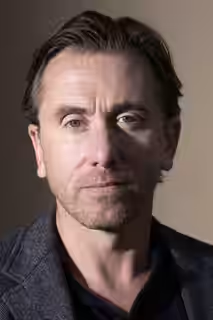
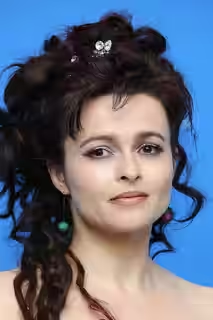
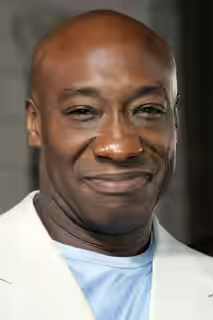
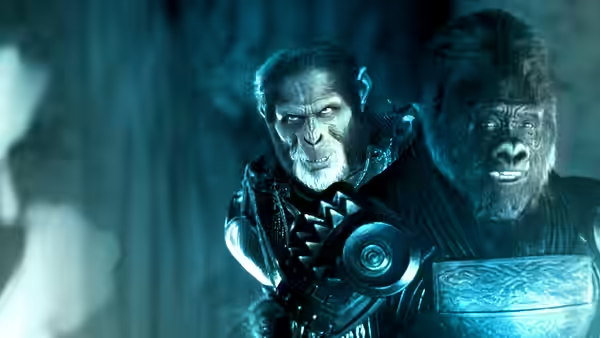
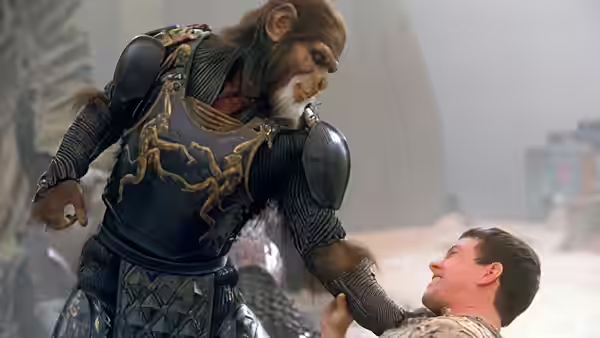
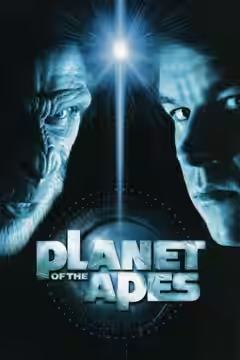
The apes are the reason to stay. The make-up lets the actors work their faces: brows lower, lips curl back, teeth show, and you can read a thought crossing an ape’s mind. Tim Roth’s Thade, a chimpanzee general who wants the humans wiped out, is the performance everyone remembers, and rightly. He moves in bursts, dropping to all fours, hurling himself at a wall, then going still and quiet, and when he leans into a captive’s face and breathes in, we were frightened, briefly, and grateful for it; nothing else in the film manages that. Helena Bonham Carter, as Ari, the senator’s daughter who keeps humans as a cause, does the opposite job, holding still so that the eyes do the acting, and she is good. Paul Giamatti’s Limbo, an orangutan who sells humans by the cage, is given the jokes and lands them. Michael Clarke Duncan carries Attar’s gorilla bulk as if he had always had it.
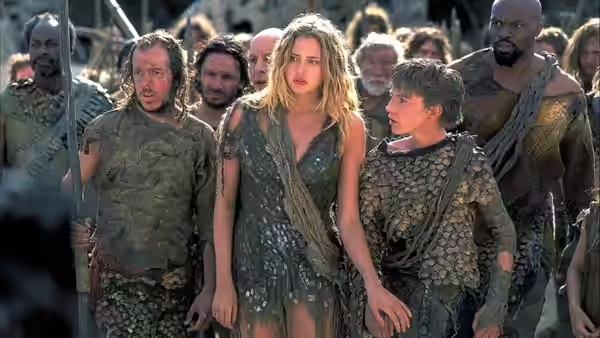
The humans are the problem. Wahlberg plays Leo as a man who would like to leave, which is the character, but he plays it with so little variation that by the middle hour we were bored and then puzzled: the film keeps asking us to follow him and never gives us a reason. Estella Warren’s Daena is there to be looked at and to be told to run. Kris Kristofferson, as her father Karubi, is on screen long enough to be recognised. The screenplay, by William Broyles Jr., Lawrence Konner and Mark Rosenthal, hands the apes lines from the 1968 film turned inside out, and every time it does we were pulled out of the picture to notice the joke.
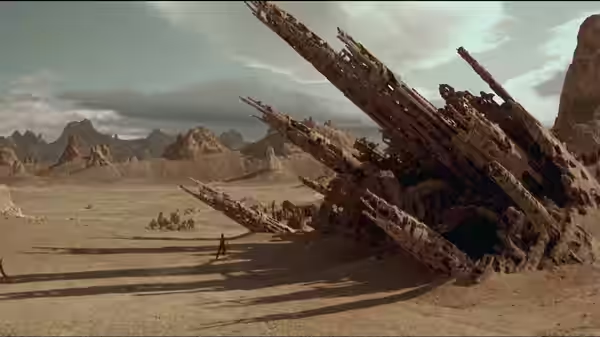
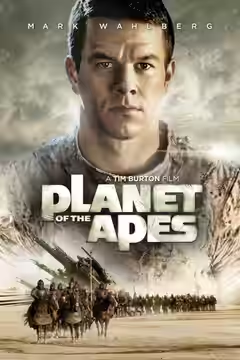
The middle is a trek: escape, forest, pursuit, camp, argument, forest again. Joel Negron and Chris Lebenzon keep it moving, but nobody has explained what it is moving towards, and each scene is shaped around the next chase rather than the people in it. The final battle is fought at dusk on a dry plain, and in the wide shots it is hard to tell one ape from the next; the geography goes and the stakes go with it. Elfman’s score, so good at the start, pounds through all of this at one volume.
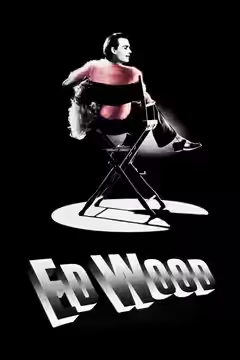
Burton’s better films, Batman (1989), Ed Wood (1994) and Sleepy Hollow (1999) among them, are about odd people in worlds that do not want them, and he plainly likes his odd people. Here the only one he seems to like is Thade. The 1968 film was a satire; this one is an action picture that has borrowed the satire’s props and put nothing behind them. Nobody says anything about humans and apes that a twelve-year-old has not already thought of.
The last few minutes take a turn we will not describe, except to say that we sat up, and then realised the film had not earned it and was hoping we would not check. See it for Roth, for Bonham Carter and for the first reel. Bring something to do during the middle.