Ryan Reynolds makes a cuddly detective good company, and Ryme City rewards a look around. But Pokémon Detective Pikachu struggles with a muddled mystery and human characters who rarely earn equal attention.
Director Rob Letterman has a workable idea: let the creatures inhabit a detective film, then give its cuddliest investigator a voice that knows how ridiculous this looks. Pokémon Detective Pikachu is decent family entertainment, particularly when it lets its mismatched leads do the talking. The trouble is that the mystery demands more attention than its writing earns. There is enough comic pleasure to keep it moving, but the confusion becomes a substantial nuisance.
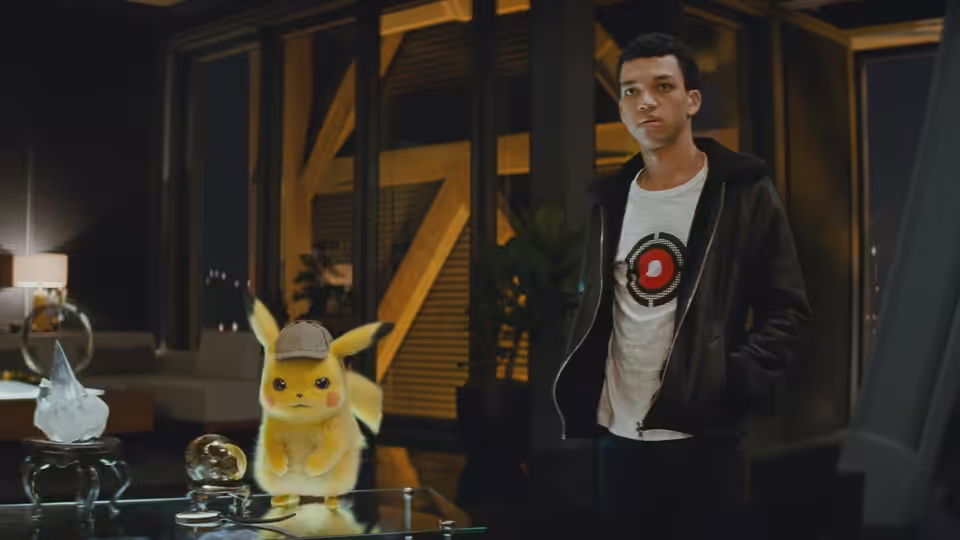
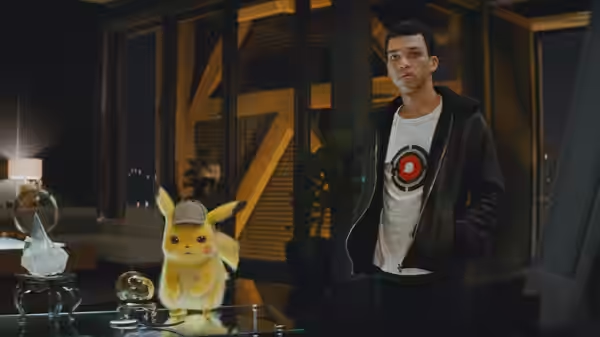
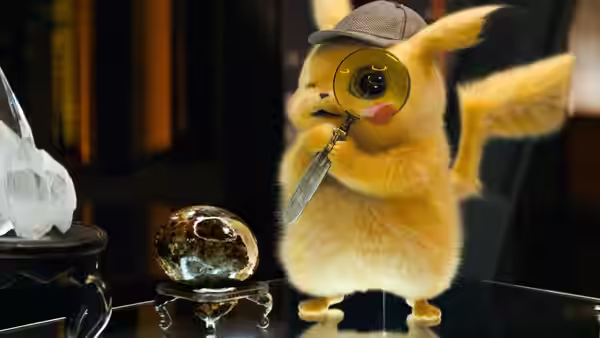
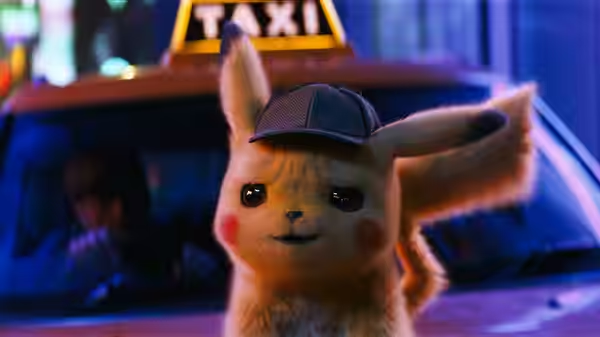
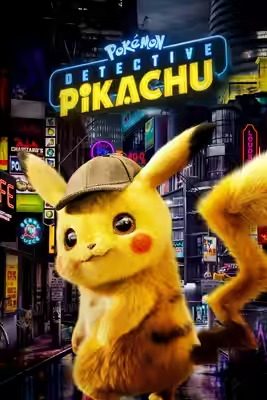
Ryan Reynolds understands the casting joke and gets useful mileage out of it. Pikachu’s soft appearance makes the knowing delivery funny before a line has quite finished, and the performance leaves room for warmth beneath the wisecracks. We laughed at the discrepancy between that cuddly face and the snark coming out of it. Some of the dialogue would barely qualify as a joke in a human mouth; here, the speaker supplies the extra work.
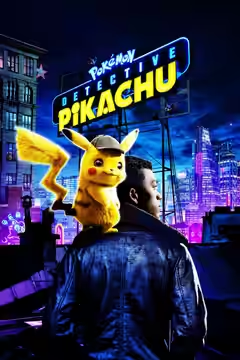
Justice Smith helps by giving Tim Goodman something for that energy to bounce against. Their chemistry makes the partnership worth following even when the investigation becomes difficult to care about, and the affection between them gives the film some welcome warmth. But Tim is thinly written, leaving Justice Smith with too little to make him interesting on his own. The human characters need more than proximity to a funny creature to hold our attention.
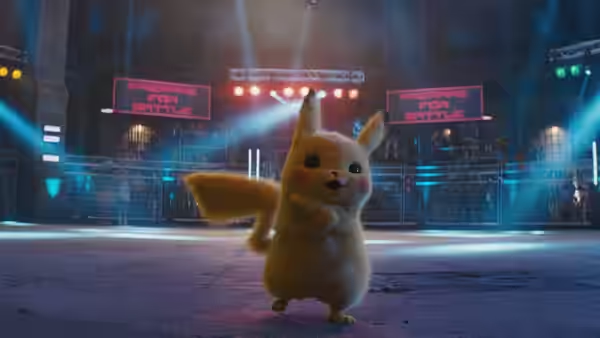
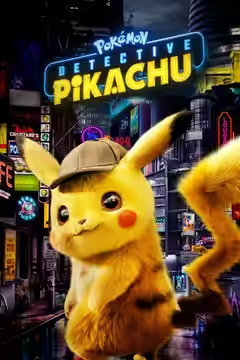
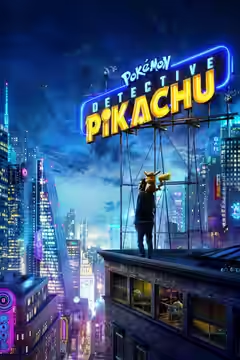
John Mathieson’s neon-lit, rain-slicked Ryme City gives the detective conceit a setting it deserves. The lighting establishes a noir atmosphere without making the Pokémon look out of place, while Nigel Phelps’s production design makes the city feel inhabited beyond the immediate business of the plot. Its detail invites us to look around, and the creatures seem to have somewhere to belong. The disappointment is how little time the film gives us to explore that everyday coexistence.
The screenplay, credited to Rob Letterman, Benji Samit, Derek Connolly and Dan Hernandez, is much less inviting. Exposition keeps arriving without bringing a corresponding sense of clarity, and the detective story grows cumbersome when it ought to be drawing us further in. Familiar plotting is not necessarily a fault in a family adventure; a clean, predictable chase can be perfectly satisfying. Here, the complications make the formula harder to follow without making it more interesting.
Editors Mark Sanger and James Thomas fare better with the comic partnership than with the stretches of explanation. The exchanges have a welcome quickness, but the larger adventure loses that easy pace as its plot becomes busier. Henry Jackman’s music does its job without giving the film much additional character. The action is also too familiar for a setting that keeps offering such peculiar things to look at.
A family detective film can afford a simple solution if following the clues is funny and the company engaging. This one has the company, intermittently, but makes the investigation needlessly awkward. At 105 minutes, it could use fewer explanations and more time with the creatures. Pokémon enthusiasts have enough reason to try it; anyone coming chiefly for the detective work should temper their expectations.