Robert Altman’s live-action cartoon is lopsided, underlit and sung by people who cannot sing, and parts of it are close to magical. Shelley Duvall is Olive Oyl to the life; the plot around her comes and goes.
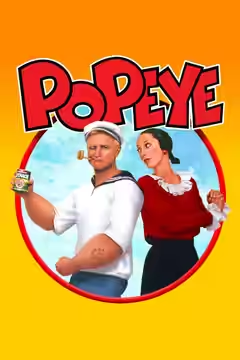
Robert Altman and the cartoonist Jules Feiffer have taken a comic strip about a sailor with a pipe and made it a musical, played by real people in a town built to look like a drawing. Popeye (Robin Williams) rows into the harbour at Sweethaven in a storm, looking for the father who left him as a baby. Popeye is misshapen, dim and oddly sung, and roughly half of it is a pleasure. The other half is a plot the film does not care about, and nor did we.
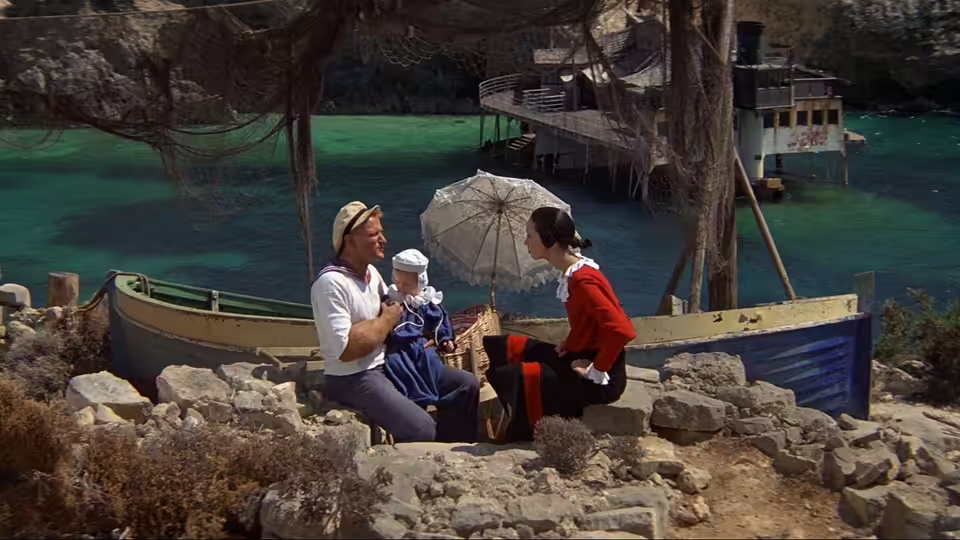
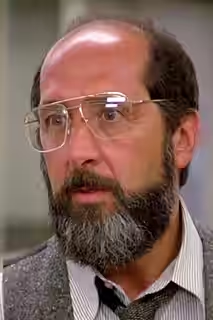
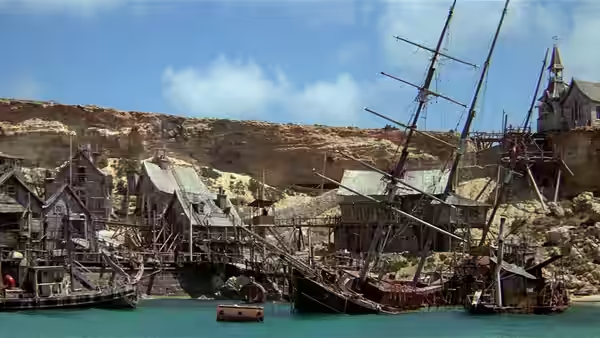
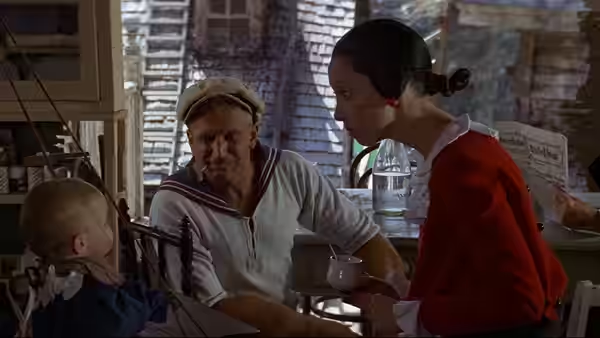
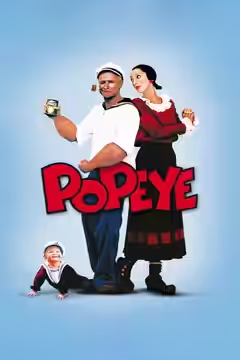
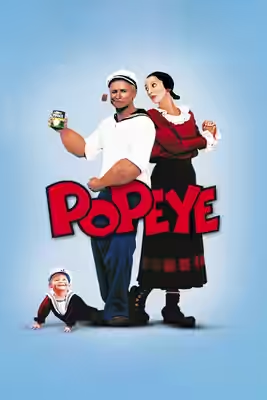
The town is the thing. Wolf Kroeger has built Sweethaven as a pile of timber shacks on stilts over the water, every roof pitched at a different angle, every staircase a little too steep, so that people lurch through it like the drawings they are meant to be. Giuseppe Rotunno shoots it under flat grey skies in washed browns and dirty whites, wrong for a cartoon and right for a town where the Taxman (Donald Moffat) charges a fee for asking questions. Scott Bushnell’s costumes do the rest: Popeye’s forearms, swollen to the size of hams, and Olive Oyl in a black dress and boots too big for her, like a coat stand that has learnt to walk.
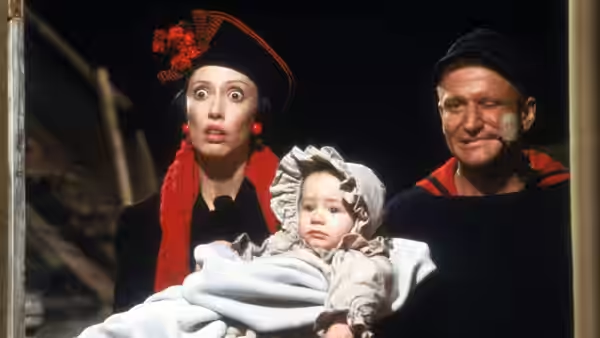
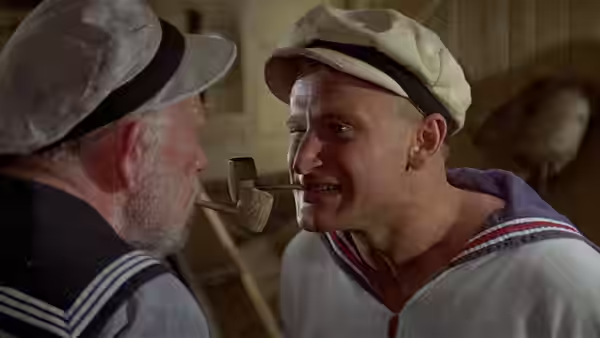
Williams, in his first film lead, plays Popeye as a mutter. He squints one eye shut, clamps the pipe in the side of his mouth and keeps up a running commentary of half-heard grievances, so that the funniest lines are the ones you nearly miss. It is a brave way to play a hero, and he never quite takes charge of the film. Shelley Duvall does. She is Olive Oyl to the life, all elbows and indignation, and when she stops to sing “He Needs Me” alone on the dock at night, swaying and barely holding the tune, it moved us far more than we had any reason to expect. The song is a plain confession of love by a woman who has never been in a position to make one, and Duvall sings it as if she has only just found out.
Harry Nilsson’s songs are like that throughout: thin, short and sung by people who are not singers. “Everything Is Food” is performed over a boarding house dinner during which the whole Oyl family (MacIntyre Dixon, Roberta Maxwell, Donovan Scott) talks at once, and Altman’s habit of letting dialogue overlap turns the number into a pleasant racket. John W. Holmes and David A. Simmons hold on the full room rather than the singer, so you watch the town eating rather than a performance. It is closer to how a family sounds than most musicals manage. Paul Dooley’s Wimpy is in nearly every frame of these scenes and never once stops chewing.
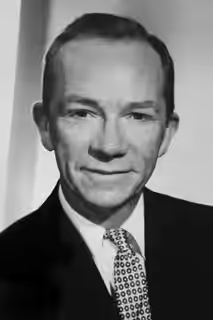
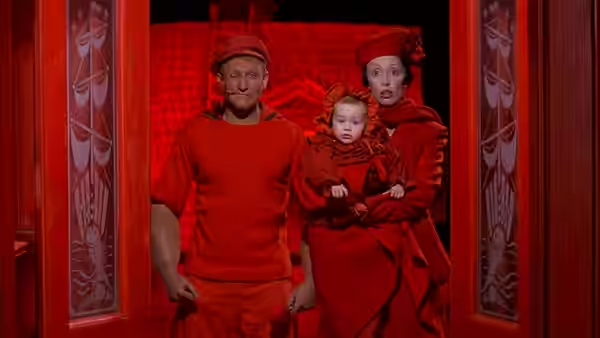
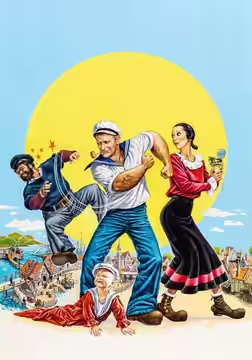
The trouble comes when the film has to move. Bluto (Paul L. Smith) is engaged to Olive and runs the town for the unseen Commodore, and the story needs him to be menacing; Smith glowers and bellows, but the fights are slack, men swinging past each other while the camera waits. The baby Swee’pea (Wesley Ivan Hurt), found in a basket, gives Popeye and Olive something to protect and the film a long stretch of business about his gift for picking winners. Around the eighty-minute mark we were fidgeting, aware that the film had waited too long to get to the spinach and that the payoff would not be large when it came. Ray Walston’s Poopdeck Pappy arrives late and is good value, an old sailor who refuses to be glad about anything. The last act, which we will not describe, goes to sea and goes to pieces.
Altman spent the seventies making large, loose, talk-filled films about American crowds, MASH (1970) and Nashville (1975) among them, and he has made the same film here, in a town of leaning shacks. It works for the crowd scenes and fails for the one that needs a hero to win. Watch it with children, who will not mind the plot, and listen for what Williams is saying under his breath. It runs 114 minutes and carries a U.