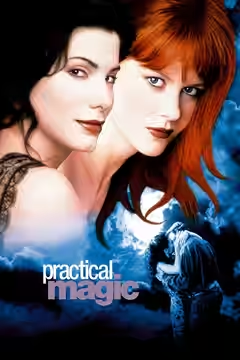
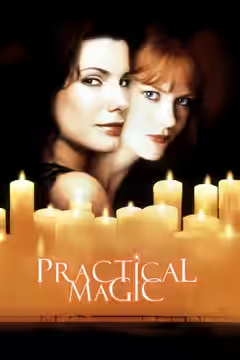
Griffin Dunne’s version of Alice Hoffman’s novel has two good sisters, two better aunts and a house we would move into tomorrow. It also has three screenwriters and about as many films inside it, and never picks one.
Practical Magic is about two sisters who cannot fall in love without killing somebody, and it cannot decide whether that is funny, sad or frightening. Griffin Dunne directs from Alice Hoffman’s novel, and three screenwriters, Akiva Goldsman, Adam Brooks and Robin Swicord, share the credit, which is usually a sign that a script has passed through several hands with different plans for it. It shows. There is a warm small-town comedy about a family of witches, a drama about sisters who need each other, a romance, and a horror film about a man who will not go away, and in 104 minutes none of them is given enough room to finish.
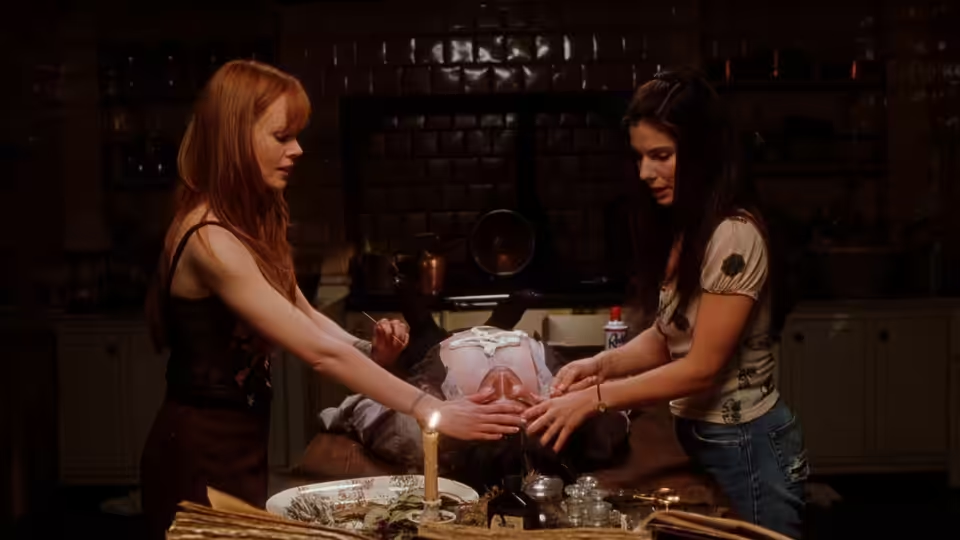
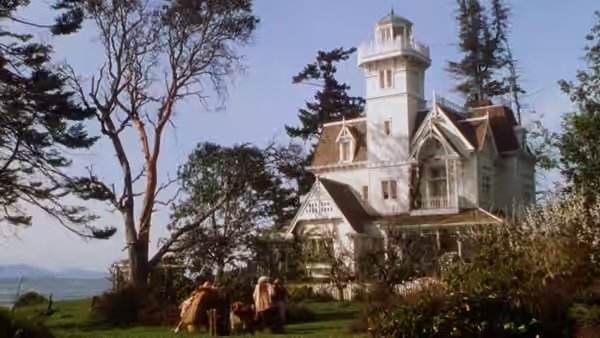
The best thing in the film is the house. Robin Standefer’s production design gives the Owens women a clapboard place on a bluff with a conservatory full of herbs, a kitchen the size of a chapel and a staircase built for slow entrances, and Andrew Dunn lights it as if it were always four o’clock on an October afternoon. Judianna Makovsky puts the aunts in velvet and the sisters in slips and cardigans. We would move in tomorrow, curse included, and we suspect that a good deal of the film’s long life comes down to other people feeling the same.
Stockard Channing and Dianne Wiest, as Aunt Frances and Aunt Jet, are the reason the comedy works. They hex the neighbours’ children on request and treat the family curse as an inconvenience, like damp. Channing does the sharp one and Wiest the soft one, and they finish each other’s sentences in a way that suggests sixty years of shared kitchens. The film gets worse every time it cuts away from them.
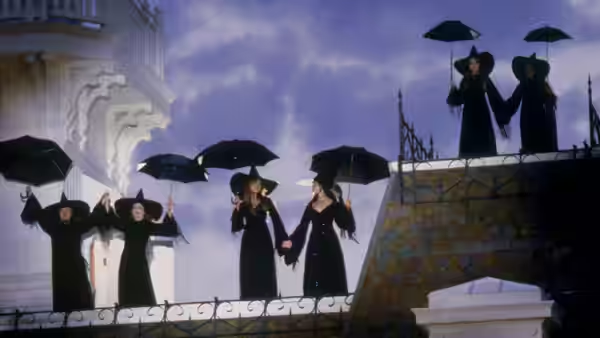
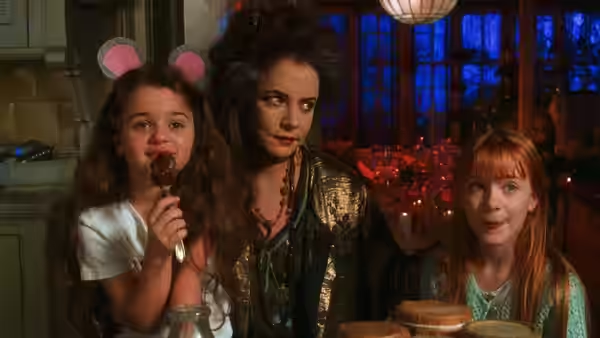
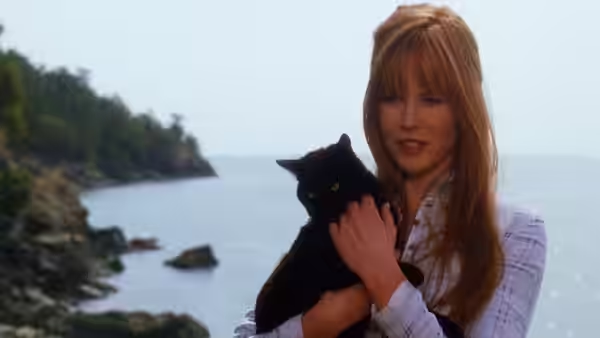
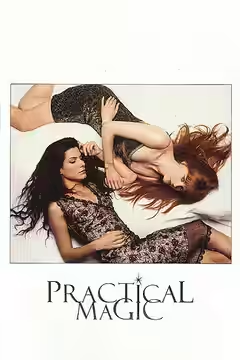
Sandra Bullock plays Sally as the one who stayed, running a shop and pretending to be ordinary, and Nicole Kidman plays Gillian as the one who ran, all red hair and bad boyfriends. They are good together. There is a scene of the two of them lying on a bed, talking about the men they have lost, that sounds like a real conversation between real sisters, and the film could have used ten more like it. The scene people remember is the midnight margaritas, the four women dancing round the kitchen table, and we were charmed by it against our better judgement; it is loose and slightly drunk and it is the one time the film stops arranging its actresses and lets them play.
The trouble arrives with Jimmy Angelov (Goran Višnjić), Gillian’s boyfriend, a man with a cowboy hat and a temper. Once he is in the story the film turns darker, and Dunne stages his scenes with real menace, but he stages them in the same warm light, so a frightened woman in a car is followed within a minute by the aunts being whimsical about a broom. Elizabeth Kling’s cutting is not the problem; the material does not join. Alan Silvestri’s score does its best to knit the pieces together and the pop songs do the rest, cued so that a Stevie Nicks track tells us how to feel before the scene has had a chance to. The second half takes a turn we will not describe, except to say that we felt our own jaw set during the last twenty minutes, which the film means as a rousing coming-together and which plays as a set piece somebody remembered they had promised.
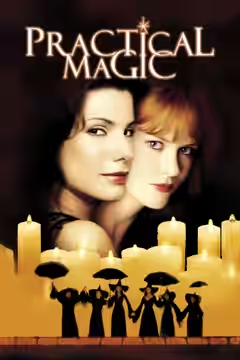
Aidan Quinn arrives in the second half as Gary Hallet, an investigator asking questions about Jimmy, and he is decent in the part. His scenes with Bullock are the part of the film that most resembles the poster, and they have the least room of anything here. Evan Rachel Wood and Alexandra Artrip, as Sally’s daughters Kylie and Antonia, get a few good lines and a lot of standing in doorways.
The witch comedy has a long history, from I Married a Witch to The Witches of Eastwick, and the good ones pick a tone and hold it. Practical Magic wants the sweetness of the first and the bite of the second and a weepie besides, and it settles for being pleasant. It has stayed loved, and we can see why: the house, the aunts, the margaritas. Those are real pleasures. They are also about forty minutes of the film.
See it on a wet autumn afternoon with someone who will not mind you talking during the plot. The 12 certificate is about right; there are two or three scenes that would frighten a small child and nothing that will trouble anyone else.