Sofia Coppola tells the Presley marriage from inside the house and keeps Elvis to the edge of the frame, and for an hour it is quietly chilling. Then the film runs out of new ways to show a girl waiting, and settles for pretty.
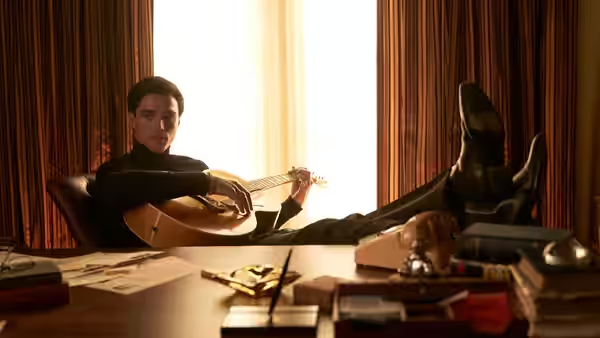
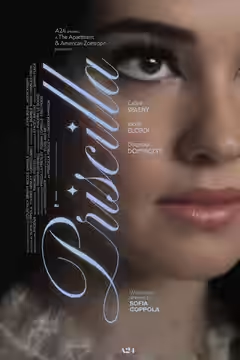
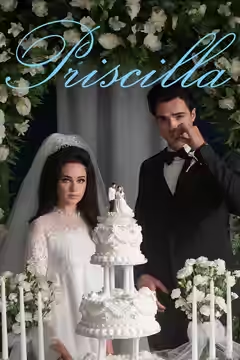
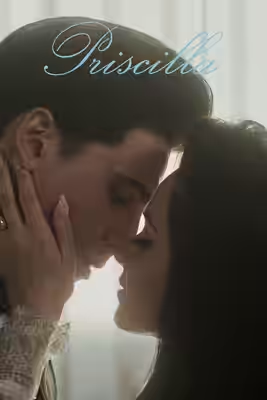
Sofia Coppola has been making the same film, in one form or another, since The Virgin Suicides: a girl shut in somewhere beautiful, and the doors slowly closing. Priscilla is that film with the most famous house in America for a set. It draws on Priscilla Presley’s memoir and takes her side entirely, which means Elvis Presley, played by Jacob Elordi, is kept to the edge of things, on the telephone, on a film set out of shot, asleep in the afternoon. None of his songs are on the soundtrack. It is a good film for about an hour, shrewd and quietly chilling, and then it has shown us what it has and keeps showing it.
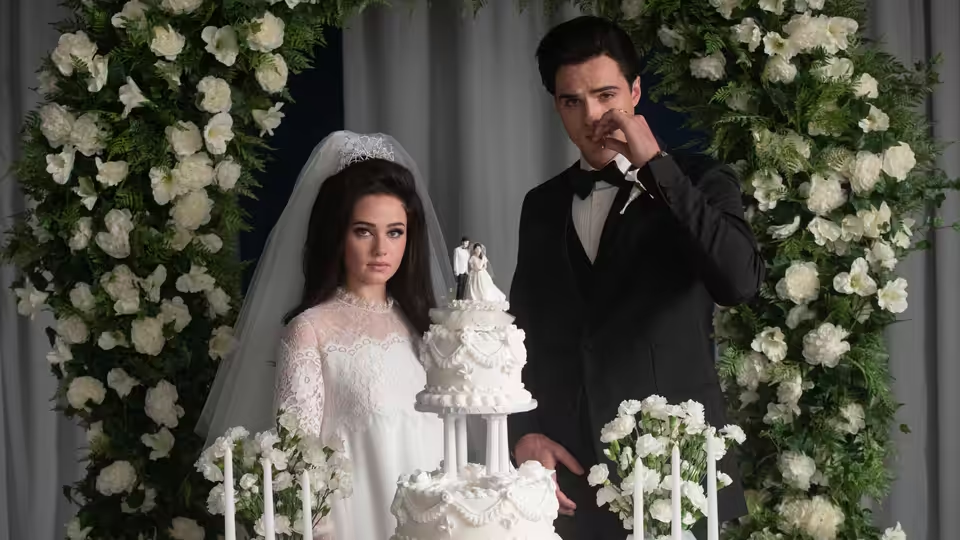
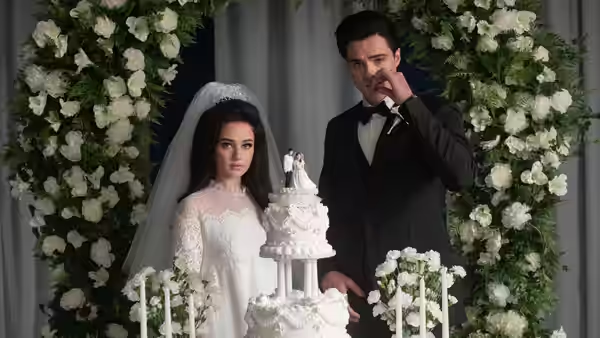
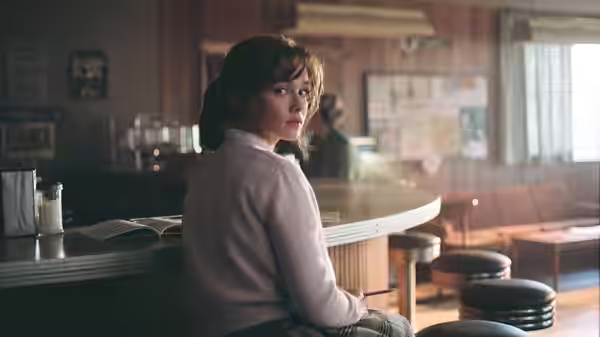
The first hour is the strong part. Cailee Spaeny plays Priscilla from fourteen, and Philippe Le Sourd shoots her small in wide rooms, soft light, low lamps, so that when Elordi enters a frame he takes up most of it. He is a head taller than she is and Coppola does not need to say a word about the difference. The party in Germany, where a homesick soldier asks a schoolgirl about her day and means it, is written without a villain in it, and that is what unnerves. We watched him ask her to come back and felt a small, cold drop in the stomach, because his voice was kind and nothing on screen was telling us to distrust it.
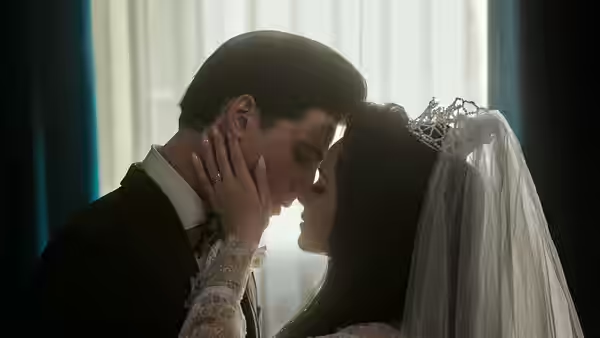
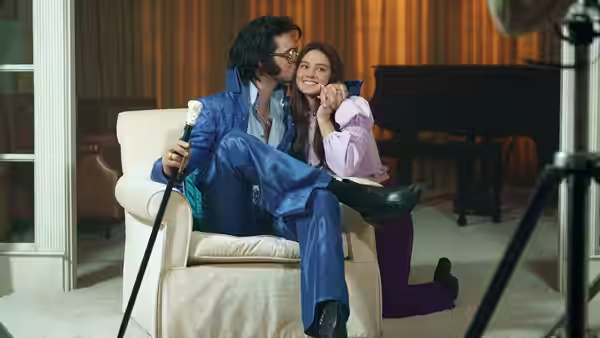
Then Graceland. Tamara Deverell’s design gives the house pale carpets, gold fittings and drawn curtains, and Le Sourd lights it as if it were always half past four in the afternoon. Priscilla finishes school there, comes home to an empty house, and waits. The best scene in the film is a small one. Elvis looks at a dress with a print on it and says, mildly, “that doesn’t suit you, baby”, and picks another; then the hair goes black, then the eyeliner goes on. Spaeny plays her as pleased. That is the unsettling part, and the film is about how long it takes to stop being pleased.
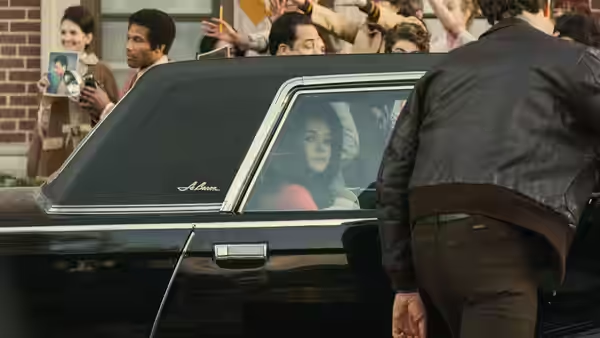
Sarah Flack cuts the years as a run of short, glancing scenes: a Christmas, a car, a telephone, another Christmas. Coppola has always been good at time passing without anything happening, and here it is the point rather than a mannerism. The score is by Thomas Mars, Deck d’Arcy, Christian Mazzalai and Laurent Brancowitz, the band Phoenix, and it stays low and warm. The songs laid over the montages are mostly from years after the events they play under, which sounds like a gimmick and is not; they keep the film from turning into a costume parade.
The trouble is the second half, which we will keep vague. Having built the pattern, Coppola repeats it: he is away, she waits, he is back, he is sweet, he is sudden, he is away again. Each repetition is shot as well as the last and tells us less. Elordi is good at the sweetness and the sudden turn, but the script never lets him be anything from the inside, so Elvis stays a weather system rather than a man, and a film about a marriage needs both people in it. Vernon Presley (Tim Post) and Grandma Dodger (Lynne Griffin) wander through the house without much to do. Around the eighty-minute mark we found ourselves admiring a bedspread and realising we were looking at the bedspread because nothing else in the shot had changed. The last stretch arrives quickly and stops rather than ends.
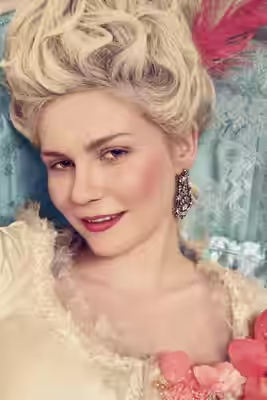
Set against Coppola’s own work it sits in the middle. It is more controlled than Marie Antoinette, which had the same idea and more fun with it, and it never reaches the ache of Lost in Translation, because Priscilla is given so little to say that we are asked to read her almost entirely from Spaeny’s face. Spaeny is up to that, and the film is worth seeing for her. At 113 minutes it is not long. It feels longer, and we think that is partly deliberate and partly not.
It is a 15 certificate, and rightly, though nothing in it is graphic. Go in wanting a film about a girl rather than a film about Elvis. There are plenty of the other kind.