Film review

The Virgin Suicides

2000 · Directed by Sofia Coppola · 1h 37m · MPA R

In a sentenceThe boys remember everything about the girls except how little they knew them

DramaRomance

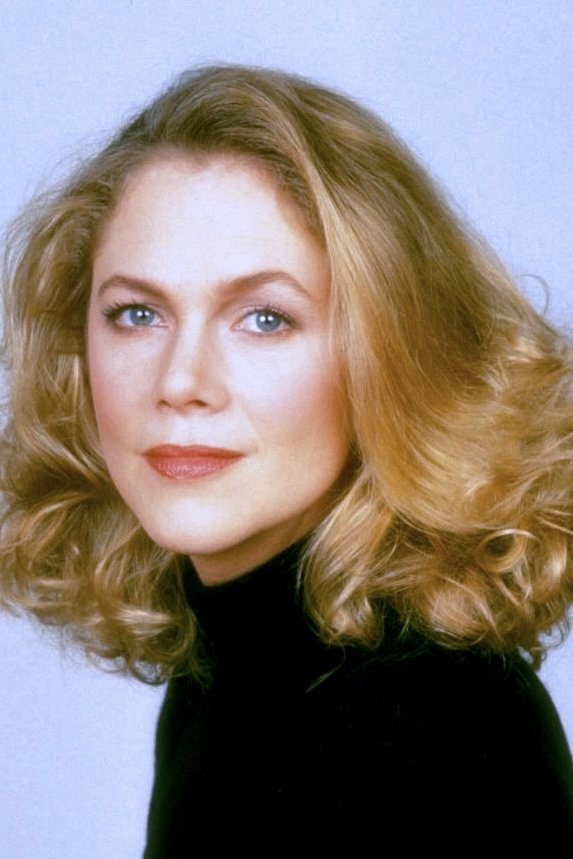
In a 1970s suburb, a group of boys becomes fascinated by the Lisbon sisters and tries to understand their lives. Lux (Kirsten Dunst) and her sisters live with Mr and Mrs Lisbon (James Woods and Kathleen Turner), in a household where adolescence meets parental repression. Josh Hartnett also appears as Trip Fontaine. With Giovanni Ribisi providing the narration, Sofia Coppola’s adaptation of Jeffrey Eugenides’s novel looks back on the girls through the boys’ memories. Attraction, fantasy and uncertainty shape their account of a family they cannot quite understand.

Plays from YouTube when you press play; nothing loads from them until then.

Fi1m review

Sofia Coppola’s The Virgin Suicides is a moving, dryly funny account of adolescent fascination and the harm it can overlook. Its dreaminess sometimes keeps the sisters too distant, but the performances make that distance painful.

The Virgin Suicides is moving, funny in uncomfortable places and worth seeing, though its distance from the Lisbon sisters can frustrate. Sofia Coppola adapts Jeffrey Eugenides’s novel through the memories of boys who are fascinated by the girls. Their attention seems flattering until we start to notice how much it misses. Giovanni Ribisi’s narration keeps us close to the boys’ attempts to explain what they remember.

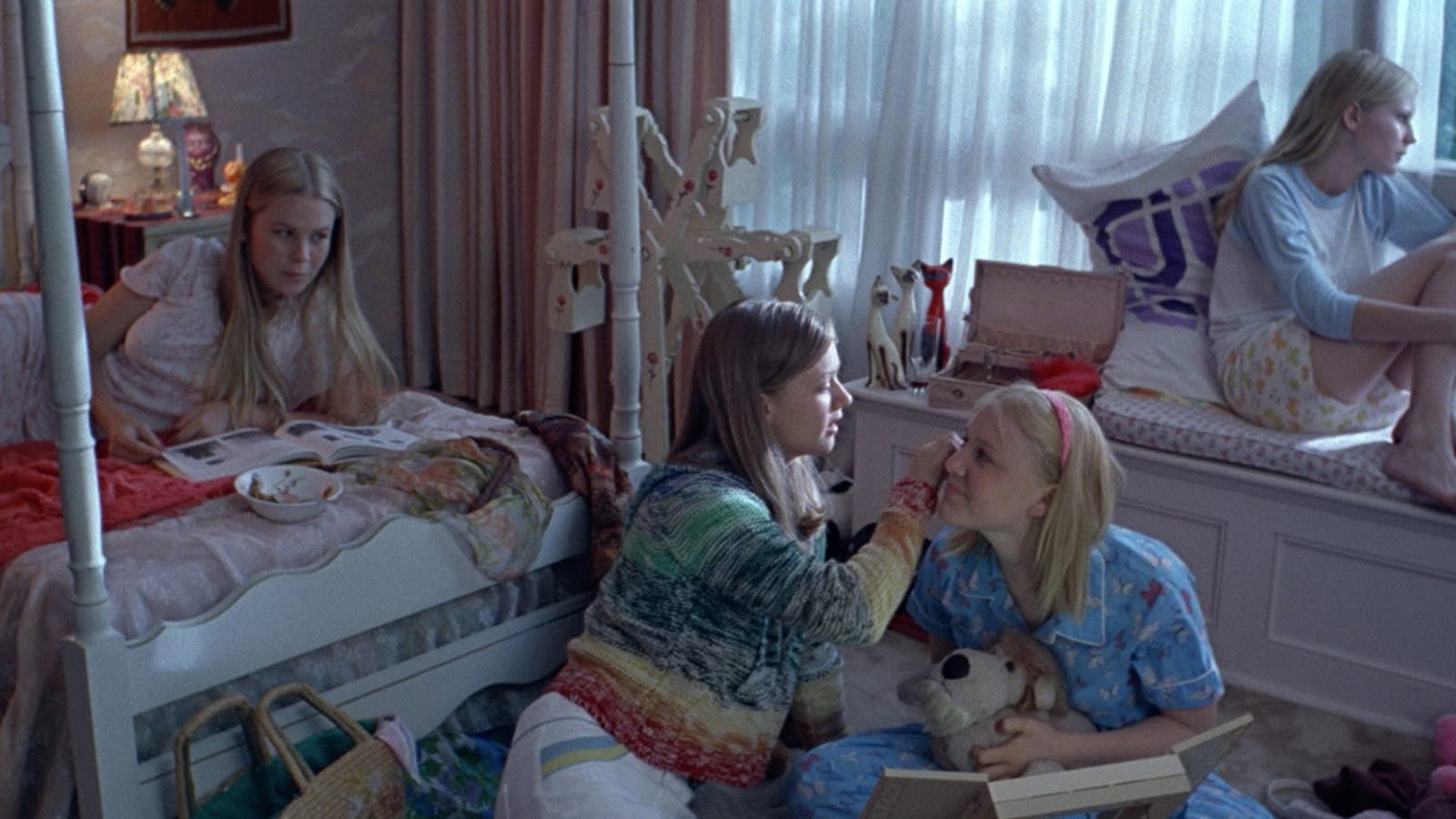
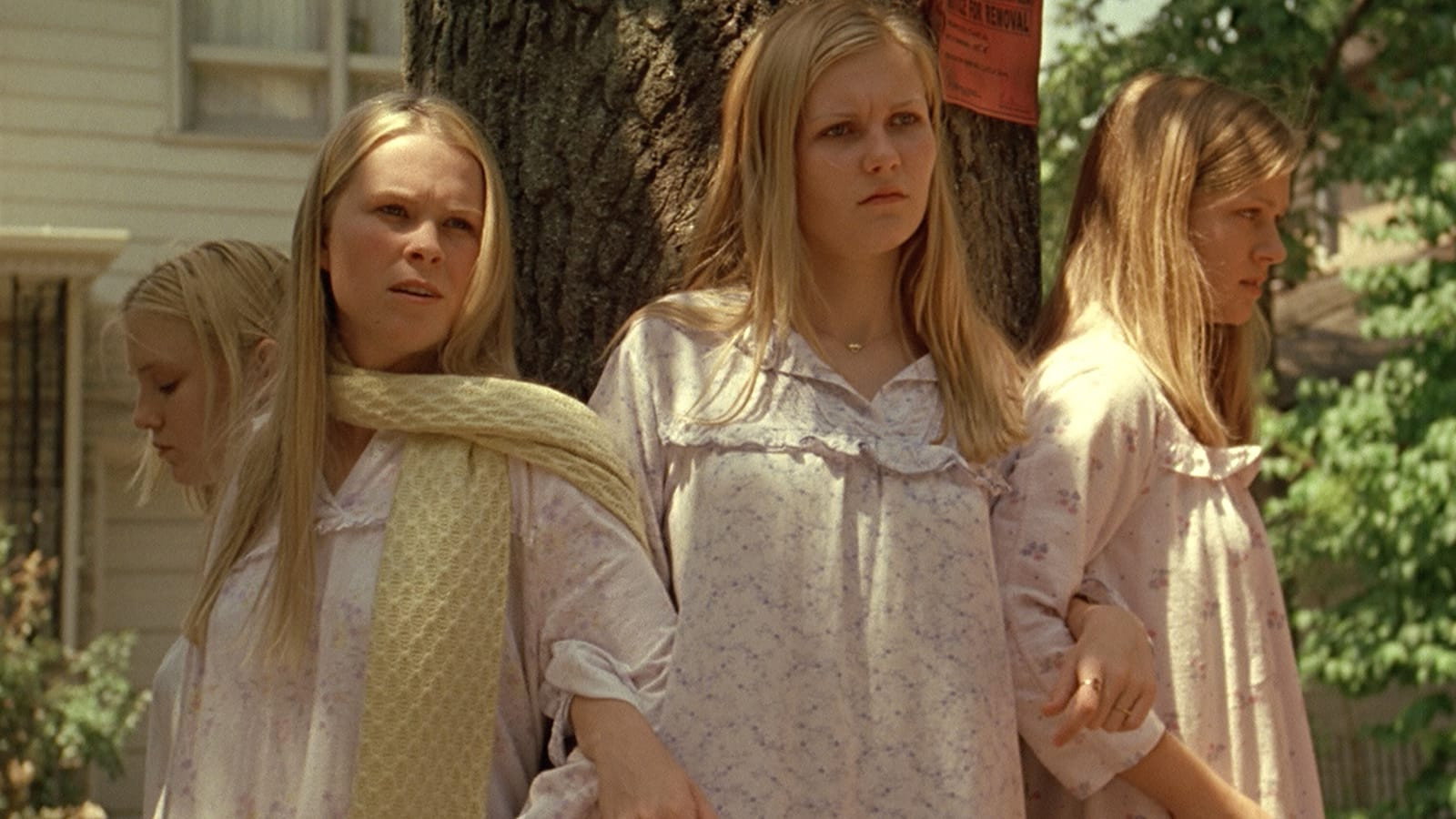
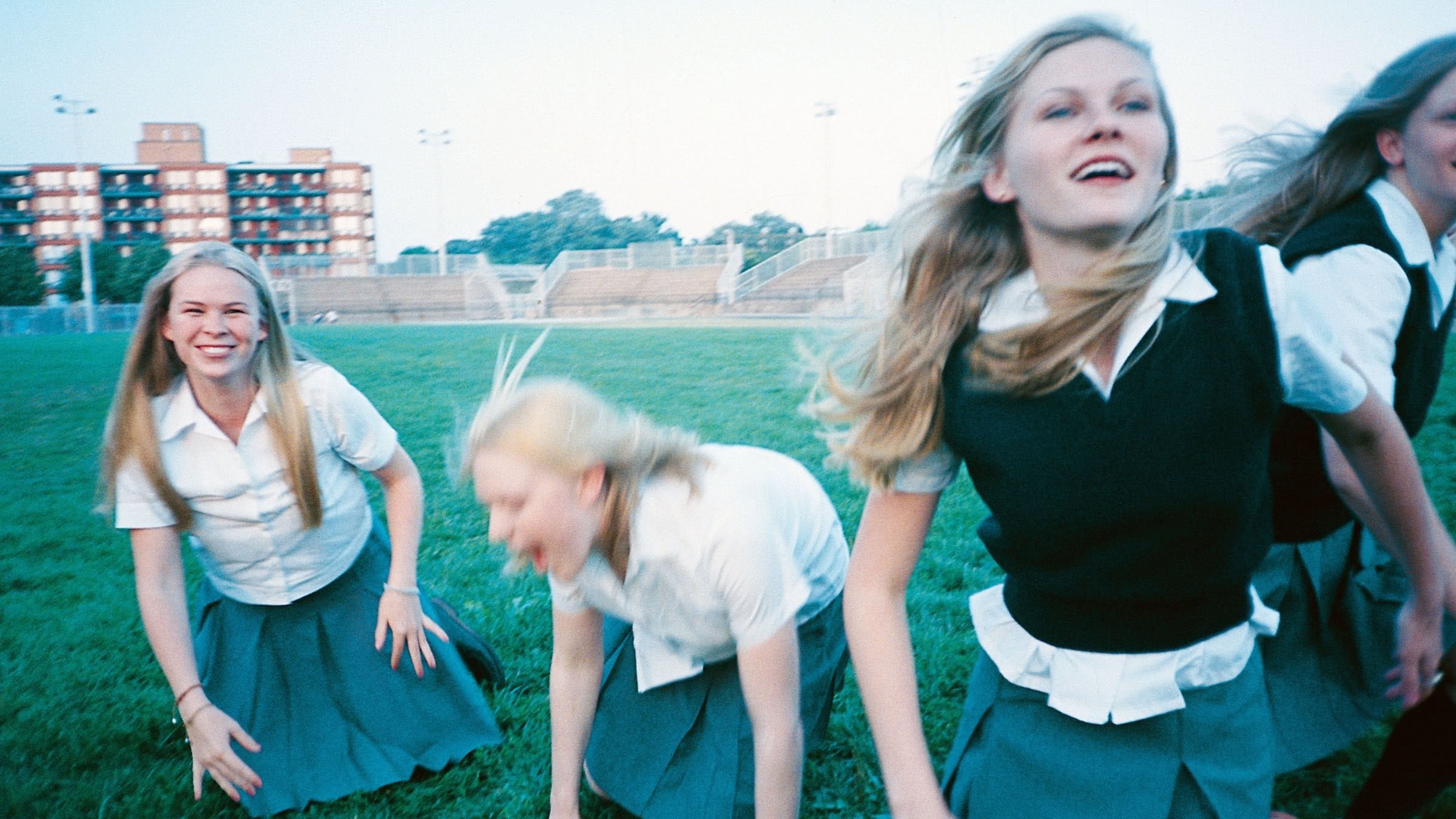
Kirsten Dunst, as Lux, gives the boys’ fascination a credible focus without making their idea of her feel complete. There is humour in her assurance, and an unpredictability that stops the character becoming merely the object of somebody else’s longing. We were moved by the unease Dunst keeps beneath Lux’s confidence; being admired seems to offer her so little comfort. Coppola trusts the performance enough to leave some of that discomfort unexplained.

James Woods and Kathleen Turner give Mr and Mrs Lisbon enough ordinary parental weight to make the household’s repression troubling. Woods brings a warmth that seems unequal to the job of fatherhood; Turner makes the mother’s authority hard to shrug off. The performances let us recognise these parents without excusing them, and leave room for humour without turning them into comic monsters. Josh Hartnett’s Trip Fontaine belongs to the same convincingly adolescent world as Dunst’s Lux. The young performers keep attraction awkward enough to resist the polish of the surrounding images.

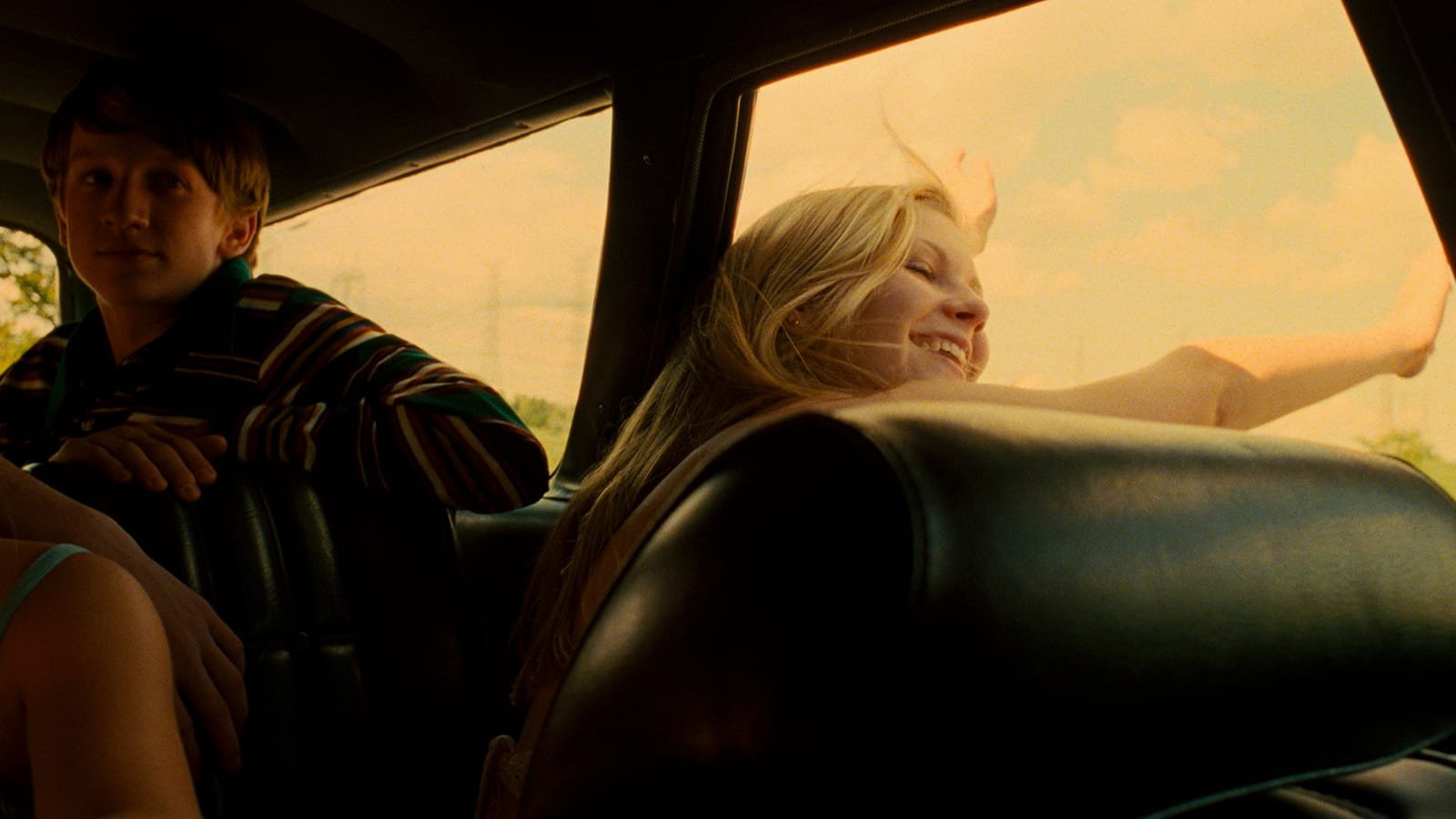
Edward Lachman’s cinematography makes the suburb look softened by the boys’ memory, encouraging us to share their pleasure in remembering it. Jasna Stefanovic’s production design gives the 1970s neighbourhood a settled, familiar appearance, a plausible place for adults to assume nothing is wrong. The family’s unhappiness does not require a visibly sinister setting to become believable. That ordinariness matters: it keeps the repression close to recognisable family life, even when the images grow dreamy.

Editors Melissa Kent and James Lyons allow the telling to drift through recollection and fantasy, giving us something to follow when the slight plot offers little forward movement. That rhythm suits the boys’ inability to leave the sisters alone in memory, although some passages add little to our sense of the girls. The music by Nicolas Godin and Jean-Benoît Dunckel sustains the dreaminess without making the sadness feel insistent. Its restraint leaves room for the dry humour, which matters in a story that could easily become oppressively solemn.

The limitation is that Lux becomes much easier to recognise as a person than her sisters. We can accept that the boys do not understand them and still wish Coppola had given the other girls more room. At times, her fascination with their mystery risks repeating the boys’ mistake, leaving us to admire people whose thoughts we cannot reach. A few more distinctions between the sisters would have made their unhappiness more affecting.

Teenage dramas often supply adults whose failings explain everything and young people who can state exactly what hurts. Coppola is more convincing about how much goes unspoken, even when her restraint becomes frustrating. This is a film to watch when there is time to sit quietly afterwards, rather than when you need a story to settle its questions before the lights come up.
Critical consensus AI synthesised

5 of 6
Positive
4
Mixed
1
Negative
0
The Guardian
21 May 2000 · Peter Bradshaw
80*

The critic finds Sofia Coppola's elliptical directorial debut terrific and haunting, capturing the novel's complexity while adding something of her own. It hovers on the edge of familiar genres but stands apart as a unique film that viewers should see even if they do not fully understand it.

Read the full review →
Total Film
19 May 2000
80*

Coppola's assured directorial debut is a truthful arthouse teen film that explores the dark side of adolescence with wit and delicacy. It singles out the believable teenage characters and beautifully shot, disturbingly erotic atmosphere for praise.

Read the full review →
Empire
1 January 2010 · Liz Moody
75*

This is a sultry, heady and seductive tale of adolescent turmoil and a stunning directorial debut. It singles out the stunning visuals, ethereal score and strong performances, especially by Kirsten Dunst, for praise while noting the slight plot.

Read the full review →
Evening Standard
10 April 2012
60*

Sofia Coppola's stylish and well-crafted debut is warm and evocative of teenage hormones and 1970s suburbia but leaves a huge question mark at its centre. It singles out the mood and performances by James Woods and Kathleen Turner for praise while criticising the lack of conclusions.

Read the full review →
Los Angeles Times
21 April 2000 · Kevin Thomas

Coppola shows impressive maturity and assured skill in her directorial debut, adapting the novel into a highly affecting, venturesome film that moves smoothly from pitch-dark humor to a stark emotional toll. It is a somber, downbeat tale of repressed lives in a seemingly normal suburban family that ultimately feels like a real downer.

Read the full review →
RogerEbert.com
5 May 2000 · Roger Ebert

The film captures the gawky, insecure yearning of neighborhood boys for the Lisbon sisters as much as the girls' own story, mourning the end of adolescent idealism and the compromises of adulthood. Coppola plays the material in a minor key with an air of mystery and loss rather than hammering home explanations.

Read the full review →

Cast

Stills

If you liked this, try…

Picnic at Hanging Rock poster

Picnic at Hanging Rock

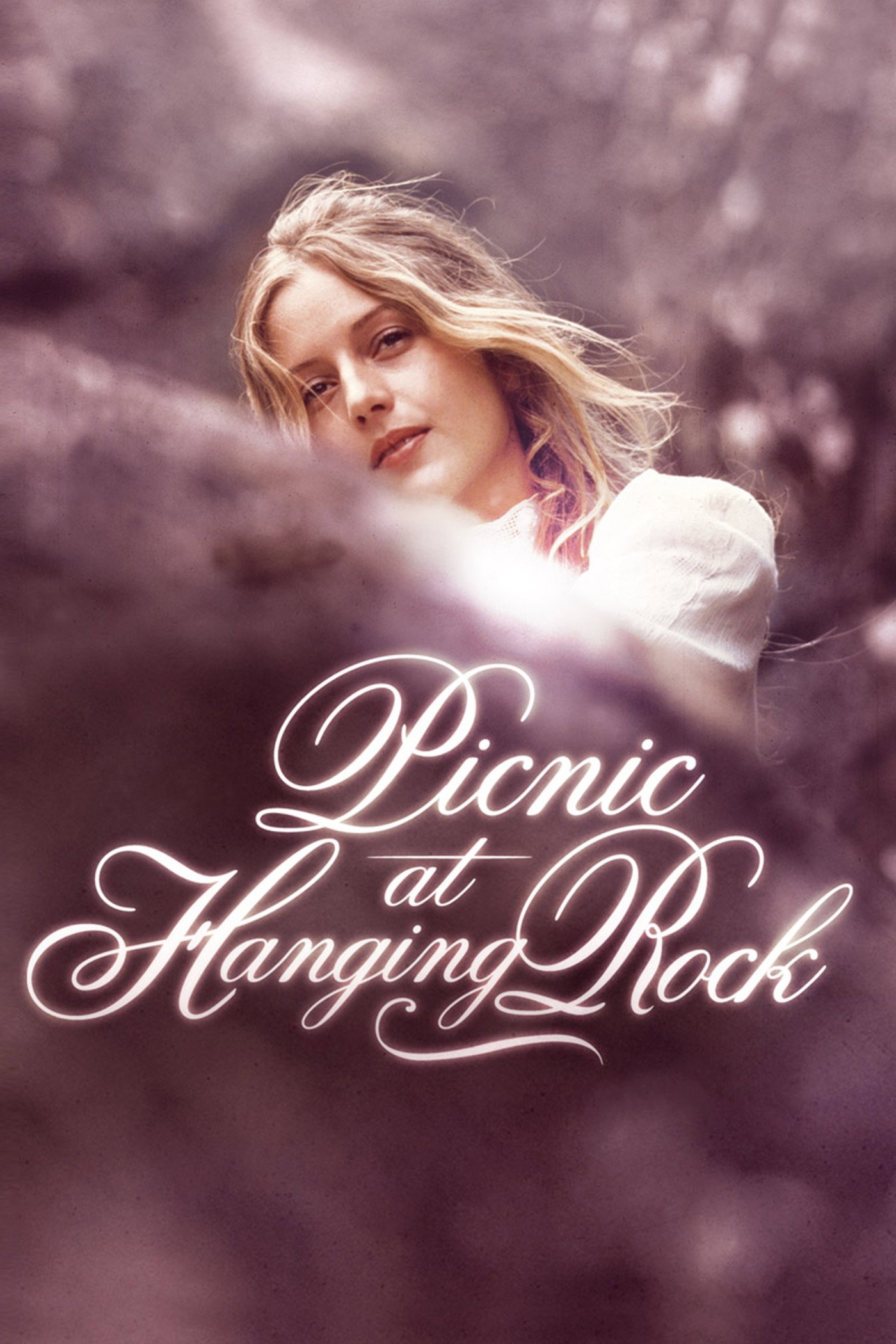
1975 · Adolescent girls unsettle the adults around them in another troubling account of fascination.

Mustang poster

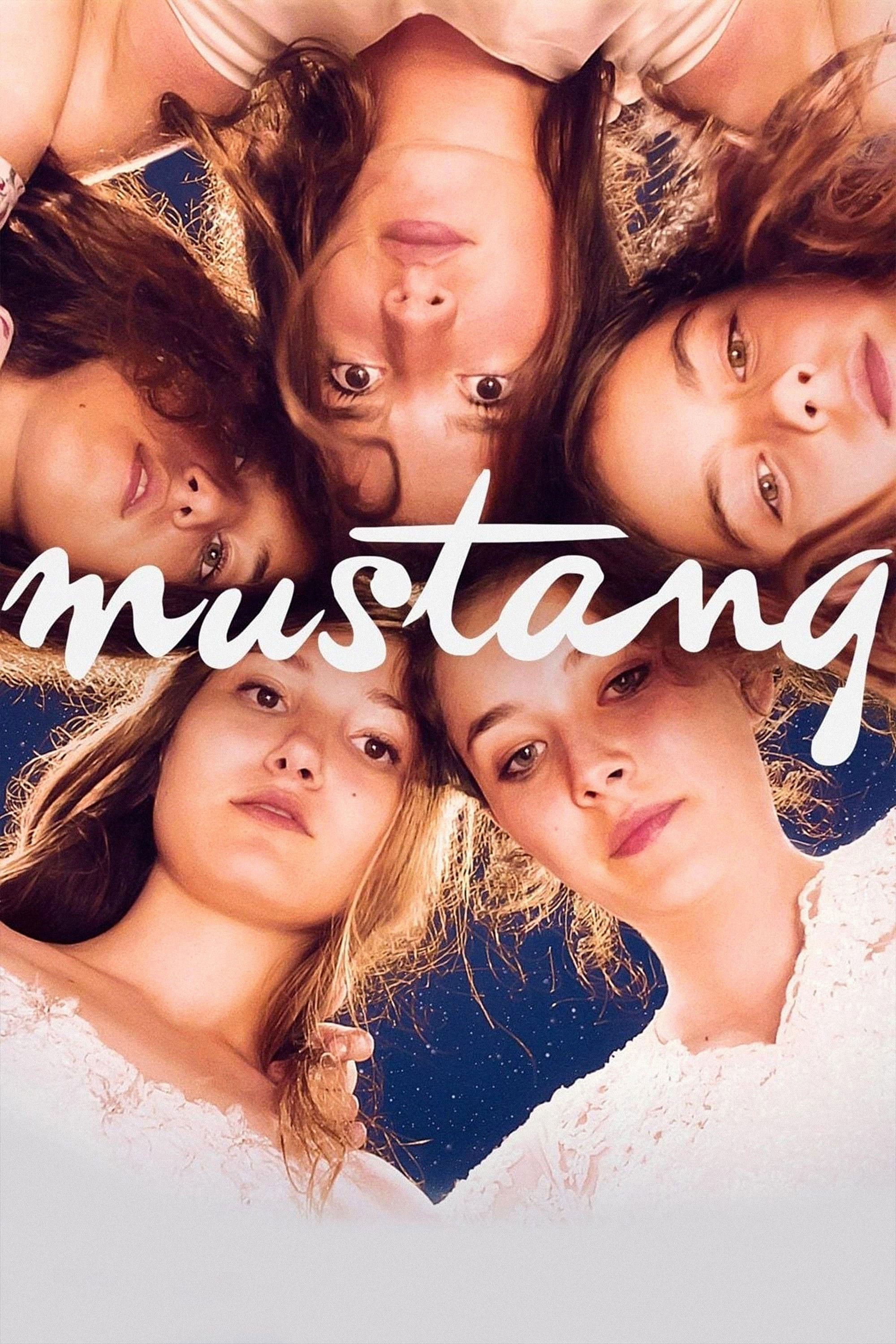
Mustang

2015 · Sisters face family restrictions, with their own voices given far more room.

The Spirit of the Beehive poster

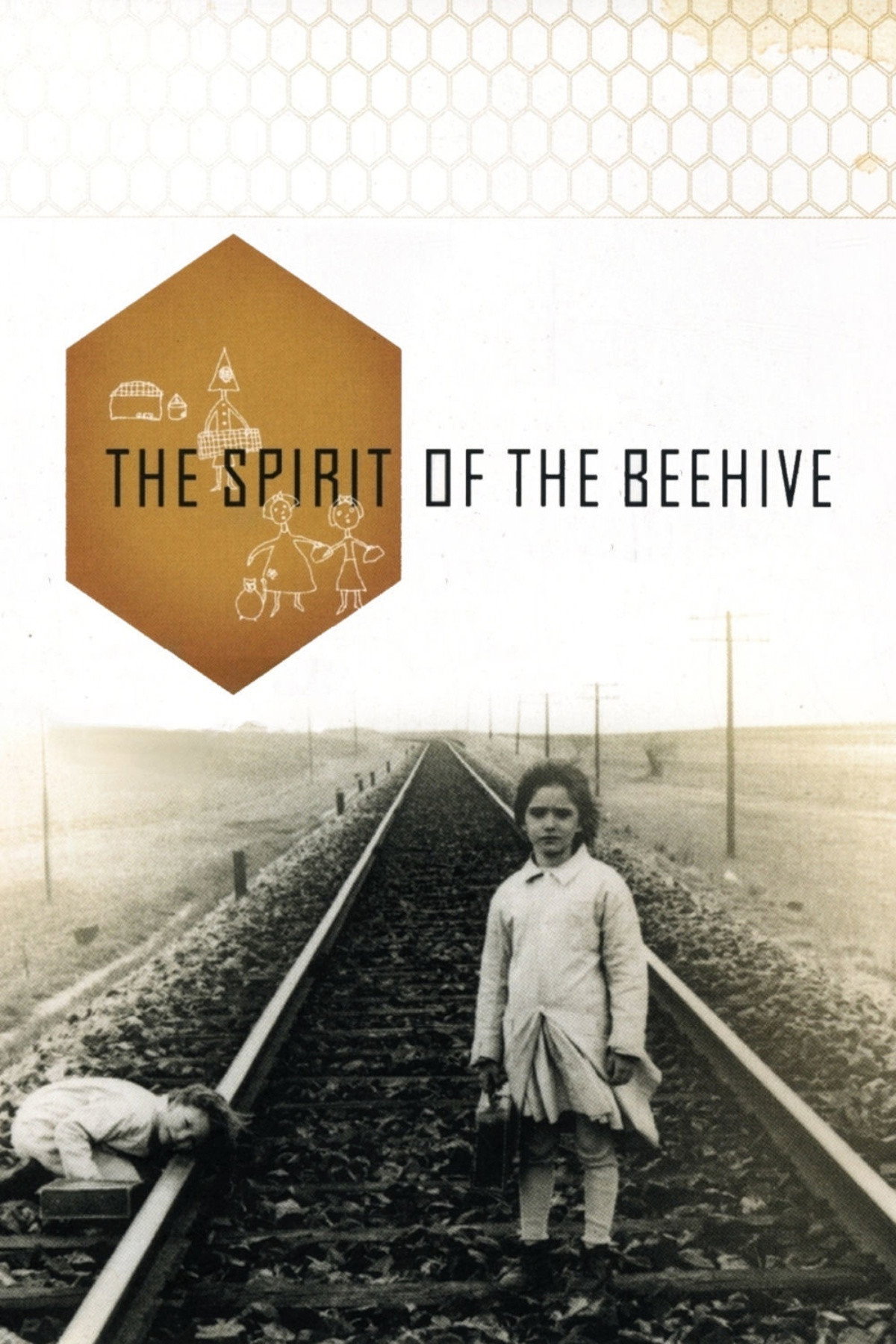
The Spirit of the Beehive

1973 · Childhood imagination offers uncertain shelter from an adult world full of silence.

Aftersun poster

Aftersun

2022 · A daughter’s memories reveal how much of a loved person remains unknowable.

Ghost World poster

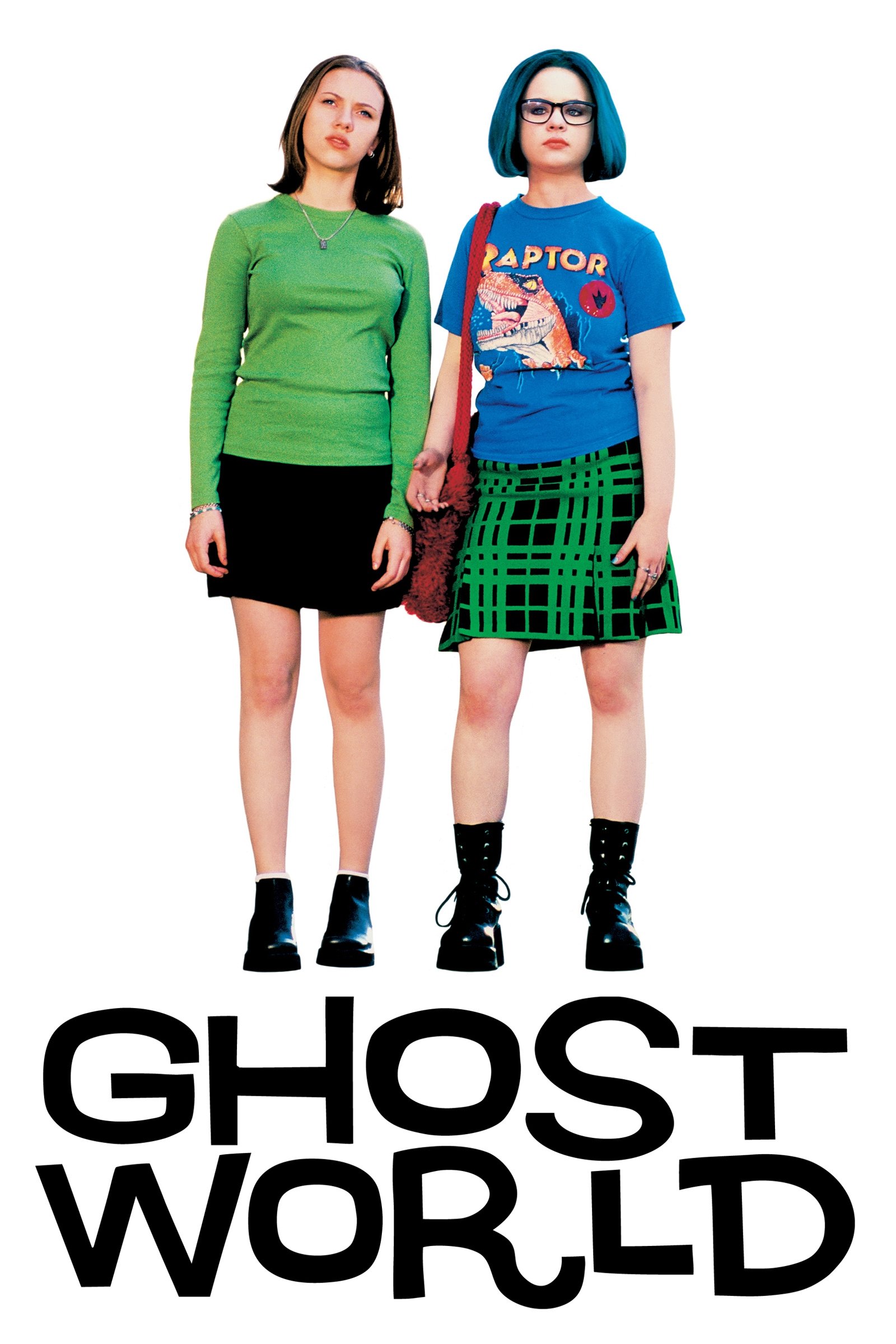
Ghost World

2001 · Dry humour and uneasy friendship make adolescence awkward without making it trivial.